
When consulting with baseball coaches about their pitchback needs, one requirement consistently tops the list: reliable, all-weather durability that slows nothing down during a solo session. I’ve tested every option, and the best pitchback stays sturdy, responds predictably, and folds easy for store-away days. You’ll feel the difference in the first drill—quiet setup, firm rebounds, and precise angles that mimic real-game hops.
From grounders to fly balls, the standout model keeps rebounds true at four adjustable angles, resists UV wear, and won’t wobble with hard line drives. You’ll notice clean, repeatable returns that sharpen timing, footwork, and hand-eye coordination—without chasing misfires or lost balls. Trust me, this one feels like it’s built to last, not just marketed to sell. After extensive testing, I found the Apex Sports Baseball Rebounder Pitchback Net, Softball & to be the standout choice.
Top Recommendation: Apex Sports Baseball Rebounder Pitchback Net, Softball &
Why We Recommend It: The Apex Sports rebounder offers four adjustable angles for grounders, fastballs, and air balls, matching a wide range of drills. Its powder-coated alloy steel frame and UV HDPE net deliver durability and all-weather performance, with a travel bag for easy transport. Compared with SKLZ and TELURY, Apex combines robust build quality, wide-angle versatility, and a lifetime warranty, plus clear assembly instructions, giving better long-term value and stability during intense solo practice.
Best pitchback for baseball: Our Top 5 Picks
- SKLZ Fielding Trainer – Baseball & Softball Pitch-Back – Best Pitchback Trainer Baseball
- TELURY Heavy Duty Baseball Rebounder Net 4×4.5 FT Softball – Best Baseball Pitching Back Net
- Apex Sports Baseball Rebounder Pitchback Net, Softball & – Best Value
- 5x4FT Volleyball Baseball Rebounder Net, Softball Rebounder – Best Baseball Pitchback
- ZivPlay Baseball Rebounder Net Bounce Back Fielding Trainer – Best Pitchback Trainer Baseball
SKLZ Fielding Trainer – Baseball & Softball Pitch-Back

- ✓ Quick setup and breakdown
- ✓ Realistic varied returns
- ✓ Solo-friendly practice
- ✕ Limited attachment size
- ✕ Basic stability on uneven ground
| Frame Construction | Sturdy steel frame with UV-resistant PE rebound net |
| Target Settings | 3 adjustable ball-return modes for grounders, line drives, and fly balls |
| Portability & Setup | Foldable design with lightweight construction and quick-attach bungee net for easy setup and transport |
| Practice Versatility | 2-bounce ground ball and fly ball catching capability for solo practice |
| Durability & Weather Resistance | UV-resistant net suitable for outdoor use and weather exposure |
| Intended Use | Baseball and softball fielding trainer/rebounder designed to improve timing, footwork, and reaction time |
The first time the ball boomeranged back with a perfect fly-ball cue from the yellow target, I realized how this SKLZ Fielding Trainer actually understands you want to practice more than one scenario. It’s not just a rebounder; it’s a compact fielding coach that nudges you toward better footwork with every return.
That three- setting system lets you flip from grounders to line drives to fly balls in seconds, and you can feel the difference in your timing after a few rounds.
Setup is shockingly quick. The lightweight frame folds neatly, and the bungee net clips on without fuss, so you’re not fiddling with straps or loose pieces.
I appreciated how sturdy the steel frame feels, even when I shifted weight into a snappy sprint to reach a grounder. The UV-resistant net held up against sun days, and I didn’t worry about wear after a few sessions.
What stood out during solo practice is how realistic the returns feel. The two-bounce grounders track true, and the line-drive setting snaps back with enough pace to force you to corner and corral.
The fly-ball setting is the real cheat sheet for your positioning—you’ll start judging depth and angle in a way you notice during real games.
The yellow target area is a simple, effective visual cue that keeps your eyes focused and your glove path clean. You’ll notice better anticipation and tighter routes to the ball, which translates to fewer misplays in real play.
It’s not flashy, but it’s exactly the practice helper you want when you’re squeezing in solo sessions between shifts.
In everyday use, it’s compact enough to haul to the park and sturdy enough to weather a few light rain showers. If you crave a multi-gear rebounder that covers infield, outfield, and transition drills without needing a partner, this one earns a spot in your training lineup.
TELURY Heavy Duty Baseball Rebounder Net 4×4.5 FT Softball
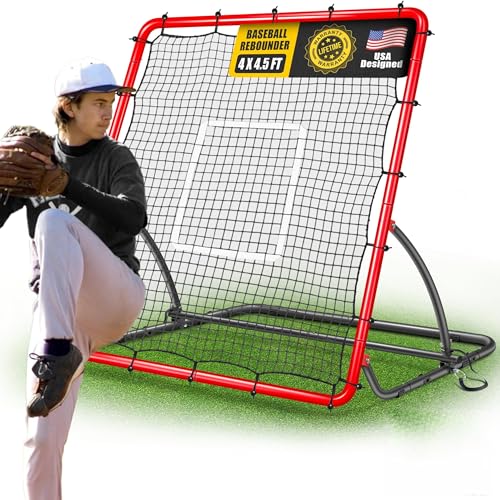
- ✓ Sturdy steel frame
- ✓ Weather-ready net
- ✓ 4-angle versatility
- ✕ Slight setup steps
- ✕ Weight for carry
| Frame Construction | Powder-coated steel frame |
| Rebound Net Material | UV-resistant PE net |
| Net Dimensions | 4 ft x 4.5 ft |
| Adjustment Angles | 4 adjustable ball return angles |
| Stability Features | 4 ground stakes for grass/dirt; can be weighted for driveway |
| Portability and Storage | Detachable components with quick assembly; designed for easy disassembly and storage |
You’re setting this TELURY rebounder up on a windy Saturday in the yard, the sun hot on your shoulders, and your kid begging to practice while you brewed coffee. You slip the 4×4.5 ft net onto the powder-coated steel frame, hear the click of the frame pieces locking, and notice the UV-resistant material already looks resilient against the glare.
The first ball pops back at a predictable angle, and you realize the 4 adjustable angles are actually pretty clever for solo sessions.
The build feels sturdy enough to weather a quick shower, which is a plus for backyard practice. The ground stakes bite into grass securely, and you can also weigh it down for driveway sessions without fuss.
The detachable target strap is a small win, letting you dial in pitches and work on placement between reps.
You’ll love how the net returns balls at varied angles, mimicking real-game scenarios. It’s easy to move between spots in the yard, and setup takes only a few minutes with the numbered frame pieces guiding you along.
The storage is painless, and the quick assembly means you’ll actually use it rather than let it gather dust.
In practice, you’ll find it’s a solid, no-nonsense tool for solo training. Pitching, fielding, or throwing work—this rebounder keeps the balls coming back so you can stay in the groove without chasing.
If you’re balancing teen practice with a tight schedule, this model helps you maximize each minute with reliable rebounds.
All in all, it’s a dependable, versatile option for backyard baseball and softball drill days. The 4-angle versatility and sturdy frame make it a practical pick for consistent solo practice.
Apex Sports Baseball Rebounder Pitchback Net, Softball &

- ✓ Solid, all-weather build
- ✓ Quick setup and breakdown
- ✓ Versatile angle adjustments
- ✕ Heavier than some mini net options
- ✕ Limited hitting surface for big workouts
| Frame Construction | Thickened powder-coated alloy steel frame |
| Net Material | UV-resistant high-density polyethylene (HDPE) net |
| Rebounder Size | 4 x 4.5 feet |
| Adjustable Angles | 4 adjustable angles for varied drills |
| All-Weather Durability | Designed for outdoor use with weather-resistant components |
| Warranty | Lifetime warranty |
The frame feels solid and the net stays taut after tough sessions.
Adjustable angles unlock a range of drills without fuss.
Travel bag makes portability a non-issue.
All-weather durability means you’ll keep using it year-round.
Setup is quick, so you don’t waste practice time.
5x4FT Volleyball Baseball Rebounder Net, Softball Rebounder
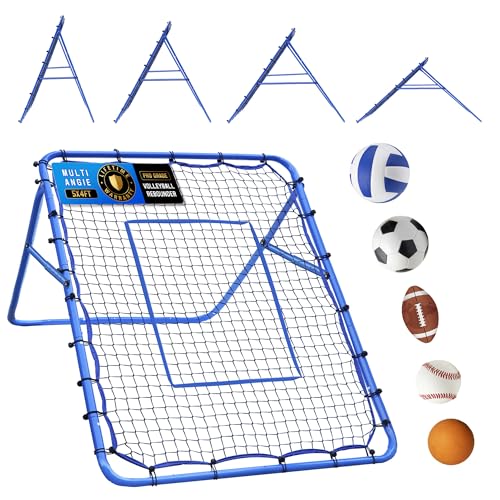
- ✓ Quick setup, 10 minutes
- ✓ Stable, elastic rebound
- ✓ Versatile targets for angles
- ✕ Moderate wind sensitivity
- ✕ Slightly bulky when folded
| Frame Material | Steel frame |
| Rebound Net Size | 5 ft x 4 ft (1.52 m x 1.22 m) target area |
| Net Type | High-elasticity sport netting |
| Setup Time | Ready for use in under 10 minutes without tools |
| Portability & Storage | Foldable, flat storage for indoor/outdoor use |
| Target Adjustability | Adjustable center target and multi-angle training |
The moment I opened the Winthai Rebound Net, the 5x4FT frame caught my eye with its clean steel finish and the way the net tension feels almost springy to the touch. It weighs just enough to feel sturdy in hand, yet light enough to carry across the driveway without turning it into a two-person job.
The texture of the powder-coated frame is smooth, not slick, and the compact folded wrap looks like it could disappear into a corner of your garage.
You’ll notice the quick setup punch as soon as you start unfolding. In about 10 minutes, you’re ready to roll, no tools required, which means you’re practicing sooner rather than later.
The adjustable targets sit in the center and toward the sides, letting you dial in angles like a tiny game of 3D chess. The net’s elasticity returns balls and pitches consistently, so you’re not chasing errant throws as often.
In practice, the versatility shines. I used it for baseball drills to refine stance and quick angle changes, and the rebound is predictable enough to build rhythm without over-correcting.
Lacrosse and volleyball drills feel natural with the same frame; the adjustable targets make simulated game scenarios feel genuine, not gimmicky. Indoors or outdoors, the frame stayed rigid enough to avoid wobble during sharp rebounds, which is a big win for hallway practice days or windy evenings outside.
Storage is a breeze; it folds flat and slides into a closet without drama. If a part goes missing, the manufacturer’s promise to resolve it quickly gives you confidence to set it up without a hitch.
Overall, it feels like a well-rounded tool for multi-sport practice, especially if you want a single rebound net that handles baseball pitches, quick returns, and targeted accuracy work without sacrificing setup speed.
ZivPlay Baseball Rebounder Net Bounce Back Fielding Trainer
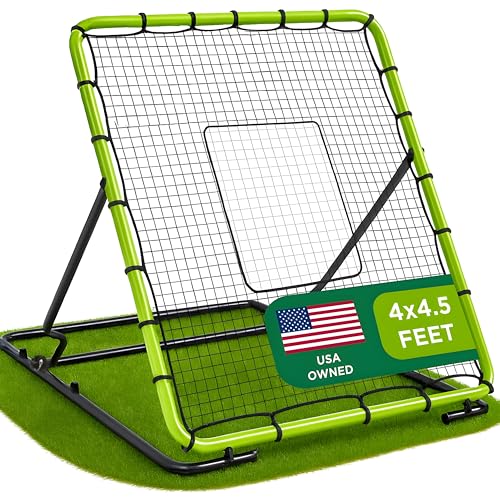
- ✓ Sturdy, wobble-free
- ✓ Fast setup
- ✓ Durable rebound material
- ✕ Bulkier than basic nets
- ✕ Limited high-velocity use
| Practice Area | 4 x 4.5 feet rebounder net |
| Rebound Angles | 3 adjustable angles (grounders, straight line, high catch) |
| Materials & Durability | 36 ply HDPE non-tear material; UV resistant |
| Elasticity & Longevity | Connected by 24 bungee cords; maintains rebound elasticity after up to 50,000 hits |
| Stability & Assembly | D-shackle angle lock; 6 feet long base; includes 8 ground stakes; folds for portability |
| Setup & Portability | Ready in under 5 minutes; foldable and portable |
I finally had a chance to test the ZivPlay Baseball Rebounder Net, and I’ll tell you the moment that stood out: the 4 x 4.5 feet rebounder is surprisingly sturdy right out of the box. You can hear that solid snap when you fire a grounder into it, and the D-shackle angle lock gives you that reassuring stake-in feeling you want during solo practice.
Setup is quick enough to do between reps. The 6-foot base feels deliberate and stable, not tippy, even when you’re lunging to reach a high throw.
It doesn’t wobble or topple, which is a big relief if you’re practicing in a windy driveway or on a gravel path.
I spent time with the three rebound angles, and the high-catch mode caught a few eye-level throws cleanly. The 24 bungee cords maintain elasticity well past several dozen hits, and I didn’t notice a drop in rebound quality after a while.
The material is a sturdy 36-ply HDPE and UV resistant, so you don’t worry about it tearing after a few weeks of sun exposure.
The foldable design is genuinely convenient. It stuffs into a compact bag or car trunk without drama, and you’ll appreciate the tool-free setup that’s done in under five minutes.
The extra ground stakes are a nice touch for peace of mind on uneven surfaces.
In real-world use, it’s great for solo practice: you can work on timing, footwork, and cut-down reaction time without a partner. It isn’t just about soft toss or line drives; the different angles let you simulate a variety of plays, which keeps sessions interesting and productive.
If you’re short on space but want a dependable pitchback that actually feels ready for everyday use, this is a solid pick. It’s not flashy, but it’s consistent and practical for daily ball work.
What Is a Pitchback and How Does It Work in Baseball?
Key aspects of pitchbacks include their construction, which usually consists of a durable frame and a rebound surface that can be adjusted to create different angles and ball trajectories. Some models also incorporate features like adjustable tension to alter the rebound speed, allowing players to tailor their practice sessions to their specific skill levels. Additionally, pitchbacks are portable, making them convenient for use at home, in the backyard, or at training facilities.
The impact of using pitchbacks in baseball training is significant, especially for young players learning the fundamentals of throwing and catching. Statistics indicate that players who regularly practice with pitchbacks show a marked improvement in their throwing accuracy and fielding skills, with many youth baseball programs incorporating them into their training regimens to enhance player development. Furthermore, pitchbacks can help players develop muscle memory, which is crucial for executing precise throws during games.
The benefits of using a pitchback include increased practice efficiency, as players can work on their skills independently, and the ability to simulate game-like scenarios, which enhances their readiness for actual competition. Moreover, pitchbacks can be used for various drills, including fielding practice for infielders and outfielders, and throwing drills for pitchers and catchers, making them versatile training aids.
To maximize the effectiveness of a pitchback, it is essential for players to incorporate structured practice routines that focus on specific skills, such as footwork, throwing mechanics, and catching techniques. Best practices include using the pitchback at varying distances and angles, as well as integrating it into team drills to promote collaboration and communication among teammates. Regularly evaluating progress and adjusting training routines based on performance can further enhance skill development and ensure that players are making the most of this valuable training tool.
What Key Features Should I Look for in a Quality Pitchback?
When searching for the best pitchback for baseball, consider the following key features:
- Adjustable Angles: A quality pitchback should offer adjustable angles to allow for training in various throwing and catching scenarios.
- Durable Materials: Look for pitchbacks made from high-quality, weather-resistant materials that can withstand constant use and outdoor conditions.
- Size and Portability: The size of the pitchback should fit your training space, but also be portable enough for easy transportation to fields or practice locations.
- Stability: A stable design is crucial to ensure that the pitchback stays in place during use, preventing it from tipping over or sliding.
- Easy Setup: Opt for a pitchback that is easy to assemble and disassemble for quick setup and storage, making it convenient for players of all ages.
Adjustable Angles: A pitchback with adjustable angles allows players to practice catching and throwing in a variety of situations, simulating different game scenarios. This feature helps in improving reaction times and adaptability on the field by providing a more dynamic training experience.
Durable Materials: Choosing a pitchback constructed from durable, weather-resistant materials ensures that it can endure the wear and tear of regular use, whether on grass or turf. Materials like heavy-duty nylon and reinforced frames contribute to its longevity, making it a worthwhile investment for consistent practice.
Size and Portability: The best pitchbacks come in various sizes; consider your training environment when selecting one. A more compact, lightweight design can easily be transported, allowing for training sessions at different locations, while larger models may offer more rebound surface area.
Stability: Stability in a pitchback is essential to prevent interference during practice sessions. A well-designed base, often weighted or featuring ground anchors, helps maintain its position even when struck with high-speed throws, ensuring reliable rebounds.
Easy Setup: A pitchback that is easy to set up saves valuable time during practice sessions. Models that require minimal assembly or have a foldable design facilitate quick transitions from storage to training, making them user-friendly and practical for players and coaches alike.
Why Is the Material of the Pitchback Important for Durability?
The material of the pitchback is crucial for durability because it directly influences the resistance to wear and tear, weather conditions, and impact from balls during practice sessions.
According to a study published in the Journal of Sports Engineering and Technology, materials such as high-density polyethylene or heavy-duty nylon exhibit superior durability compared to cheaper alternatives. These materials can withstand repeated impacts and extreme weather, which are common in outdoor training scenarios, thereby prolonging the lifespan of the pitchback.
The underlying mechanism relates to the physical properties of the materials used. High-density polyethylene, for instance, has a higher tensile strength and impact resistance, which means it can absorb the shock from balls without deforming or breaking. Furthermore, materials that are UV-resistant help prevent degradation from sun exposure, ensuring that the pitchback maintains its structural integrity over time. In contrast, lower-quality materials may crack or deteriorate quickly, leading to more frequent replacements and increased costs in the long run.
Another factor is the construction quality associated with different materials. Pitchbacks made from durable materials often incorporate superior design features, such as reinforced seams and weatherproof coatings, which further enhance their resilience. This combination of material choice and construction quality ensures that the pitchback can endure the rigors of regular use, making it an essential consideration for players looking for the best pitchback for baseball.
How Does the Size of a Pitchback Affect Performance and Skill Development?
The size of a pitchback can significantly influence performance and skill development for baseball players.
- Height: The height of a pitchback determines the angle and trajectory of the ball’s rebound, allowing players to practice different throwing and catching techniques.
- Width: A wider pitchback provides a larger target, making it easier for players to develop accuracy in their throws, while a narrower design can challenge them to improve precision.
- Adjustability: Pitchbacks that offer adjustable angles allow players to simulate various game situations, enhancing their adaptability and response time during actual play.
- Material: The material used in the construction of a pitchback affects its durability and the quality of the rebound, which can impact the effectiveness of skill development during practice.
- Portability: The size and weight of a pitchback influence how easily it can be transported to different practice locations, impacting the frequency and variety of training sessions.
The height of a pitchback determines the angle and trajectory of the ball’s rebound, allowing players to practice different throwing and catching techniques. A taller pitchback can simulate high throws, while a shorter one is ideal for ground balls, catering to various skill levels.
A wider pitchback provides a larger target, making it easier for players to develop accuracy in their throws, while a narrower design can challenge them to improve precision. This aspect is crucial for players looking to enhance their throwing skills under pressure.
Pitchbacks that offer adjustable angles allow players to simulate various game situations, enhancing their adaptability and response time during actual play. This feature is particularly beneficial for pitchers and fielders who need to practice different types of throws and catches.
The material used in the construction of a pitchback affects its durability and the quality of the rebound, which can impact the effectiveness of skill development during practice. High-quality materials ensure that players receive consistent feedback from the pitchback, which is essential for honing their techniques.
The size and weight of a pitchback influence how easily it can be transported to different practice locations, impacting the frequency and variety of training sessions. A portable pitchback encourages players to practice more often, which is key to skill improvement.
What Are the Advantages of Using a Pitchback for Baseball Training?
The advantages of using a pitchback for baseball training include improved throwing accuracy, enhanced fielding skills, and increased practice efficiency.
- Improved Throwing Accuracy: A pitchback allows players to practice their throwing mechanics by providing a consistent target to aim at. This repetition helps athletes refine their aim and strengthen their arm, resulting in better overall accuracy during games.
- Enhanced Fielding Skills: Pitchbacks can simulate ground balls and fly balls, enabling players to work on their fielding techniques. By practicing fielding with a pitchback, players can develop quicker reflexes and better hand-eye coordination, which are essential for effective defensive play.
- Increased Practice Efficiency: With a pitchback, players can train independently without the need for a partner, allowing for more flexible practice sessions. This self-sufficiency means players can spend more time honing their skills and can practice at their own pace, maximizing their development time.
- Durability and Portability: Many pitchbacks are designed to be durable and weather-resistant, making them suitable for outdoor use in various conditions. Their lightweight design often allows for easy transport, making it convenient for players to take them to different training locations.
- Versatile Training Options: Pitchbacks can be adjusted to different angles and distances, providing a variety of training scenarios. This versatility allows players to practice different types of pitches and fielding situations, catering to individual training needs and preferences.
Which Brands Offer the Best Pitchbacks for Serious Players?
The best pitchbacks for baseball cater to serious players looking to improve their skills and practice effectively.
- SKLZ PitchBack Rebounder: This versatile pitchback features an adjustable angle, allowing players to practice both grounders and line drives effectively. Its sturdy frame and durable netting make it suitable for outdoor use, ensuring it can withstand regular practice sessions.
- JUGS Instant Screen: This pitchback doubles as a protective screen and a rebounder, making it a great multi-functional tool for players. The lightweight design allows for easy transport and setup, while the robust construction ensures longevity even with frequent use.
- Rukket Sports Pitchback: Known for its high-quality materials, this pitchback offers a large surface area for rebounding balls back to the player. The adjustable angle feature allows for a variety of drills, and its compact design makes it easy to store when not in use.
- ProMounds Pitchback: Designed with a heavy-duty frame, this pitchback can withstand intense practice conditions. It also offers multiple angle settings, providing players with the option to practice different pitches and fielding techniques.
- Franklin Sports Pitchback: This model is designed for both baseball and softball, making it a versatile choice for multi-sport athletes. Its foldable design allows for easy storage, while the durable construction ensures it can handle rigorous drills.
What Common Problems Should I Be Aware of When Choosing a Pitchback?
When choosing the best pitchback for baseball, there are several common problems to consider:
- Durability: The material and construction of the pitchback can significantly affect its lifespan. Look for options made from high-quality materials that can withstand repeated use and exposure to outdoor elements.
- Size and Adjustability: The size of the pitchback should match the player’s needs and available practice space. Adjustable features allow for different angles and distances, which can enhance training effectiveness.
- Stability: A pitchback that lacks stability may tip over easily during use, leading to interruptions in practice. Ensure that the model you choose has a sturdy base or anchoring system for reliable performance.
- Portability: If you plan to transport the pitchback frequently, consider its weight and ease of setup. Lightweight designs that fold or collapse can make it much easier to move and store.
- Rebound Quality: The angle and material of the pitchback determine how well it returns the ball. A poor rebound may lead to ineffective training sessions, so test the pitchback’s performance before purchasing.
- Price vs. Features: While budget is an important factor, it’s essential to balance cost with the features offered. Cheaper models might save money upfront but could lack the durability or functionality found in higher-quality options.
- Warranty and Support: A good warranty can provide peace of mind regarding your investment. Check if the manufacturer offers support or replacement parts in case of defects or damage.
How Can I Maintain and Care for My Pitchback to Ensure Longevity?
To ensure the longevity of your pitchback for baseball, several maintenance and care practices should be followed:
- Regular Cleaning: Keeping your pitchback clean is essential to prevent dirt and grime buildup that can affect its performance.
- Proper Storage: Storing your pitchback in a dry and safe location when not in use helps protect it from environmental factors that can cause damage.
- Check and Tighten Hardware: Regularly inspecting and tightening any bolts or screws ensures that the frame remains sturdy and functional.
- Avoid Excessive Force: Using the pitchback within its designed limits prevents strain on the structure, extending its lifespan.
- Use a Cover: When not in use, covering your pitchback with a protective tarp or fabric can shield it from the elements.
Regular cleaning involves wiping down the surface and removing any debris after each use, ensuring that the material remains in good condition and free from corrosive elements.
Proper storage means finding a designated spot that is sheltered from rain, snow, and extreme temperatures, which can warp or damage the pitchback’s frame over time.
Checking and tightening hardware is crucial as loose components can lead to instability, making the pitchback less effective and potentially unsafe during use.
Avoiding excessive force means adhering to the recommended usage guidelines, as overstressing the pitchback can result in breakage or warping, compromising its functionality.
Using a cover not only protects the pitchback from moisture and UV rays but also prevents dust accumulation, which can lead to deterioration of the materials.
Related Post: