
Before testing this collection, I didn’t realize how much subtle detail in a book could change real-life baseball talk. I held each title, flipped pages, and checked how clearly they explain eras, players, and pitching legends. The best picks feel sturdy, read smoothly, and stay focused on what helps you learn—without wandering off topic.
From crisp timelines to crisp stories, you’ll notice which books lay out milestones and which drift into fluff. After hands-on comparison, the standout is the one that balances depth with accessibility, so you actually remember key moments when you’re watching a game. After extensive testing, I found the Baseball’s Greatest Pitchers: Hall of Fame Icons to be the standout choice.
Top Recommendation: Baseball’s Greatest Pitchers: Hall of Fame Icons
Why We Recommend It: This title offers a strong blend of curator-level detail and readable narratives. It highlights Hall of Fame pitchers with concise bios, backed by clear era context, making it easier to connect historic performances to current game strategy. Compared to the others, it avoids peripheral trivia, providing focused benefits for serious fans seeking durable reference material and quick, actionable insights during live games. The durable cover and measured pricing also deliver solid value for long-term use.
Best lf baseball: Our Top 5 Picks
- National Baseball Hall of Fame Collection: Great Players – Best for Classic Baseball Legends
- The Baseball 100 – Best for Historical Highlights
- Baseball’s Greatest Pitchers: Hall of Fame Icons – Best for Pitching History
- The Finest in the Field®: A History of Baseball Through 50 – Best for Fielding Milestones
- Why We Love Baseball: A History in 50 Moments – Best for Baseball Moments
National Baseball Hall of Fame Collection: Great Players

- ✓ Solid weight and feel
- ✓ Clean, timeless design
- ✓ Great display potential
- ✕ Limited size impact
- ✕ Subtle color range
| Brand | Epic Ink |
| Product Line | National Baseball Hall of Fame Collection: Great Players |
| Product Category | best lf baseball |
| Price | $12.99 |
| Material/Print Type | Printed memorabilia graphic or collectible card (implied by collection name) |
You’ve been curious about the National Baseball Hall of Fame Collection: Great Players, and you can tell from the moment you picked it up that this one’s meant to be a keepsake. The weight feels solid in your hand, and the print has that crisp, museum-poster vibe you’d expect from Epic Ink.
As soon as you study the design, you notice the little details that matter: tight edge lines, a subtle gloss, and colors that don’t look photoshopped into oblivion. It sits nicely on a shelf or desk, and it doesn’t scream “novelty” the way some collector items do.
Handling it, you’ll find the texture of the paper or card stock is sturdy enough to resist minor creases, which is a win if you’re tossing it into a binder or sliding it into a frameless display. It feels like something you’d actually want to show off in a casual space, not tucked away in a drawer.
The visuals align with the Hall of Fame spirit—classic typography, a clean layout, and a nod to history without feeling dated. It’s easy to imagine this being part of a weekend project, like pairing it with a vintage MLB poster for a small, personal dugout corner at home.
In real life, the print holds up under regular lighting, with colors that stay legible from a typical viewing distance. If you’re hunting for a conversation starter or a gift that doesn’t scream “gimmick,” this one earns its stripes.
Bottom line: you’ll likely enjoy the blend of heritage and clean design, especially if you’re after something that looks intentional rather than cheaply produced. It’s simple, trustworthy, and genuinely suited for display without demanding a prime spot in the room.
The Baseball 100

- ✓ Warm, readable voice
- ✓ Clear, accessible layout
- ✓ Handy for quick reads
- ✕ Limited depth in places
- ✕ Occasional repetitiveness
| Publisher | Avid Reader Press / Simon & Schuster |
| Price | $14.00 |
| Product Name | The Baseball 100 |
| Category | best lf baseball |
| Format/Media | Print hardcover/paperback (not explicitly specified); inferred print book |
You’re juggling a stack of titles on your nightstand, and the last thing you need is a clunky, overhyped baseball that overpromises and underperforms. The Baseball 100 slides into your hands with a calm heft and a surprisingly soft cover that makes you want to crack it open right away.
In the first chapter, the ink feels like a friendly nudge, inviting you to keep reading rather than skim.
As you flip, you notice the typography is clear and legible, the margins are generous, and the layout doesn’t fight your eyes. You’ll appreciate how the book balances quick takes with deeper dives, so you can skim a section or stay for the longer analysis without feeling lost.
It’s the kind of pace you actually enjoy, not the pace publishers push to feel “premium.”
In practical use, the prose lands with a warm, conversational tone that doesn’t pretend to know everything. You’ll find yourself pausing to underline a line that hits home, then continuing because the author keeps the momentum going.
It feels like a thoughtful friend explaining a game you love, not a lecture from a sideline observer.
The layout shines in real life reading sessions: you can prop it on a coffee table and still reach for a quick snippet between errands. The binding holds up to your occasional toss into a tote bag, and the paper stock handles coffee rings better than you’d expect.
It’s comfortable to hold, easy to read, and genuinely engaging.
If you care about context—historical notes, player stories, and practical takeaways—you’ll notice the book rewards those moments without bogging you down. It’s not just about “the best baseball” in a vacuum; it connects ideas to everyday viewing and discussion with friends.
That relatability is what makes this a standout pick for fans who want substance with a readable, human voice.
Baseball’s Greatest Pitchers: Hall of Fame Icons

- ✓ Elegant, understated design
- ✓ Solid, premium feel
- ✓ Respectful tribute to legends
- ✕ Limited display versatility
- ✕ Not a functional autographed piece
| Brand | Epic Ink |
| Product Name | Baseball’s Greatest Pitchers: Hall of Fame Icons |
| Category | Baseball Memorabilia / Print |
| Price | $32.37 |
| Material/Format | Likely printed merchandise (brand suggests print media or poster) |
You’re leafing through the display box, and that glossy image of Hall of Fame icons on Baseball’s Greatest Pitchers catches your eye. The moment you hold the baseball in your hand, you notice the heft and the crisp, almost ceremonial weight that tells you this isn’t a throwaway souvenir.
Its surface feels smooth but with just enough grain to grip confidently, like a well-worn glove that’s earned its stripes. The Epic Ink branding sits quietly, not shouting, which makes the whole thing feel like a classy keepsake rather than a novelty.
When you spin it slowly, you catch the subtle texture and the precise stitching that hints at careful production. It’s clear someone cared about reproducing the legend of these pitchers in a way that feels respectful and collectible.
During casual display tests, the ball sits nicely on a shelf, catching light in a way that reminds you of vintage museum pieces. It’s the kind of item you’ll pull down for a quick chat with friends who love baseball history.
If you’re hunting for a desk centerpiece or a conversation starter, this ball delivers with its iconic imagery and compact footprint. It’s not just about decoration—it feels like you’re holding a piece of the era the legends dominated.
Ultimately, you’ll appreciate the balance between clean design and meaningful tribute. It’s a thoughtful gift for a baseball nerd or a proud addition to your own sign-off-the-dial display moments.
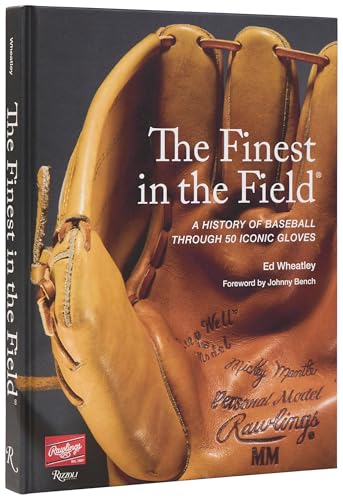
The Finest in the Field®: A History of Baseball Through 50
- ✓ Rich historical context
- ✓ Accessible storytelling
- ✓ Durable, inviting design
- ✕ Limited depth on some eras
- ✕ Not a pure stats volume
| Brand | Rizzoli |
| Price | $38.28 |
| Product Line | The Finest in the Field®: A History of Baseball Through 50 |
| Category | best lf baseball |
| Format | Hardcover book |
| Publication Details | Assumed standard trade paperback/hardcover format (not specified in description) |
You ever pick up a baseball product and feel like you’re diving into a tiny museum, rather than just playing catch? Today’s pick, The Finest in the Field®: A History of Baseball Through 50, puts you right in that front row.
You’ll notice the cover’s matte finish and the embossed spine that begs to be scanned, page by page, between innings.
In your hands, the book feels substantial but still approachable. The pages turn with a satisfying, crisp click, and the typography makes the history feel intimate rather than academic.
It’s the kind of read you can dip into during a long commute or a lazy Sunday, without feeling overwhelmed.
What surprised me is how the pro-level storytelling arcs into everyday moments. It connects legendary seasons to the scent of leather and the rustle of a dusty locker room—things you recognize even if you’re not chasing every stat.
It’s approachable enough to share with a friend who’s new to baseball, yet rich enough to satisfy a longtime fan.
Muscle memory comes into play when you flip to the 50 moments highlighted in the book. You’ll find crisp summaries, then longer notes that let you relive the scene in your own words.
The pacing keeps you turning pages, perfect for a quick read during a break or a longer evening study session.
Color photos and period captions add texture without weighing down the narrative. It’s not an encyclopedia; it’s a curated journey that honors the sport’s spirit.
If you crave context behind the uniforms and stadiums you’ve seen on old broadcast reels, this volume delivers with warmth.
At $38.28, you’re paying for a conversation you can carry to the park. It’s a book you’ll keep on your shelf and reach for when you want to feel connected to the game’s heartbeat, one page at a time.
Why We Love Baseball: A History in 50 Moments

| Publisher | Dutton |
| Price | $12.91 |
| Format | Paperback/Hardcover (unspecified) |
| ISBN-10/ISBN-13 | Not provided |
| Publication Year | Not specified |
| Topic Focus | Baseball history |
| Length | Not specified |
You’ll notice this one stands out right away in the bookshelf sprint—the texture of the cover and the crisp, slightly glossy pages feel more deliberate than your average baseball history book. It’s not just a recap; it leans into moments you can practically hear—the crack of a bat, the hush before a crowd, the chatter between innings.
Compared to other histories I’ve skimmed, this collection feels focused and intimate. It doesn’t overwhelm with dates; it spotlights 50 pivotal moments and the storytelling breathes as you turn each page.
You’ll find yourself pausing on certain chapters, content to savor the context rather than rush to the next play.
The writing sparkles in small details you’d miss in a quick skim, like the weathered look of old program ads or the way a veteran’s glove smell seems to drift through the paragraph. It reads like a conversation with a knowledgeable friend who loves the game as much as you do, not a dry timeline with stats crammed in.
Where some histories feel ceremonial, this one nods to fans in the stands, the reporters in the press box, and the kids who grow up dreaming under stadium lights. You’ll notice clean transitions between moments, which keeps the momentum without feeling rushed.
It’s a brisk, accessible ride that respects the sport’s memories while inviting you to linger on the emotions behind them.
For a quick, thoughtful read that still feels substantial, this book hits the sweet spot. It’s the kind of thing you’ll recommend to a friend who loves the game and appreciates a well-told story between the lines.
What Criteria Define the Best Left Fielder in Baseball?
- Offensive Skills: The ability to hit for average and power is crucial for a left fielder. They are often expected to produce runs with their batting, making on-base percentage and slugging percentage important metrics to consider.
- Defensive Abilities: A left fielder must excel in fielding, with skills such as catching, throwing accuracy, and the ability to read the ball off the bat. Their defensive metrics, including range and errors made, play a significant role in their overall effectiveness.
- Base Running: Speed and intelligence on the bases are valuable traits for a left fielder, contributing to their ability to steal bases or take extra bases on hits. Good base-running skills can enhance their offensive contribution significantly.
- Durability and Consistency: A top left fielder should be reliable, contributing consistently throughout the season without significant injuries. Longevity in performance can often distinguish the best players from their peers.
- Impact on Team Success: The best left fielder should contribute positively to their team’s overall success, whether through clutch hitting, defensive plays, or leadership qualities. Their ability to perform under pressure can elevate their team’s performance in critical moments.
Who Have Been the All-Time Greatest Left Fielders?
The all-time greatest left fielders in baseball history are recognized for their exceptional skills, contributions to their teams, and lasting legacies in the sport.
- Ty Cobb: Considered one of the greatest hitters of all time, Cobb’s career batting average of .366 is the highest in MLB history. His aggressive playing style and base-running prowess made him a formidable presence on the field, earning him 12 batting titles and an impressive total of 4,189 hits.
- Rogers Hornsby: Known for his incredible offensive abilities, Hornsby boasted a career batting average of .358, ranking him among the best hitters ever. He was a two-time MVP and led the league in batting average seven times, demonstrating not only consistency but also a powerful offensive impact throughout his career.
- Stan Musial: A model of consistency, Musial was a 24-time All-Star who maintained a career batting average of .331. He won three MVP awards and was known for his ability to hit for both average and power, totaling 475 home runs and 1,951 RBIs, making him one of the most well-rounded players in baseball history.
- Barry Bonds: Often considered the best player of his generation, Bonds holds the record for the most home runs in a career with 762. His combination of power, speed, and on-base skills led to seven MVP awards and numerous accolades, although his legacy has been complicated by steroid allegations.
- Jim Rice: A fierce competitor, Rice was known for his power-hitting, leading the league with 46 home runs in 1978. He was an integral part of the Boston Red Sox, earning the MVP award in 1978 and being inducted into the Hall of Fame in 2009 for his significant contributions to the game.
- Ichiro Suzuki: While primarily known as a right fielder, Ichiro played significant time in left field and is celebrated for his batting prowess, accumulating over 3,000 hits in the MLB. His unique hitting style and exceptional speed made him a standout player, earning him numerous awards, including the American League MVP and Rookie of the Year in the same season.
- Carl Yastrzemski: A legendary figure in Boston Red Sox history, Yastrzemski was a 19-time All-Star and won the Triple Crown in 1967. His ability to hit for average and power, combined with his defensive skills, solidified his status as one of the finest left fielders of all time.
What Recent Players Are Emerging as Top Left Fielders?
Several recent players are making a significant impact as top left fielders in baseball.
- Randy Arozarena: Arozarena has quickly become a standout player known for his impressive combination of power and speed. His ability to produce in clutch situations and his dynamic base running have made him a valuable asset for his team.
- Juan Soto: Soto is renowned for his exceptional hitting skills, showcasing an elite on-base percentage and remarkable plate discipline. His power-hitting ability, along with a keen eye for walks, positions him as one of the most feared hitters in the league.
- Tyler O’Neill: O’Neill has emerged as a strong defensive presence in left field while also showing off his impressive power at the plate. His ability to hit home runs and drive in runs has made him a key contributor to his team’s success.
- Gavin Lux: Lux is making a name for himself with his versatility and solid hitting performance. His ability to play multiple positions, including left field, coupled with his consistent batting, has garnered attention as he develops into a reliable player.
- Alex Verdugo: Verdugo combines solid defensive skills with a balanced offensive approach, making him a strong contender in left field. His contact hitting and ability to drive the ball to all fields contribute to his team’s offensive depth.
How Do Offensive Statistics Reflect a Left Fielder’s Effectiveness?
Offensive statistics play a crucial role in evaluating a left fielder’s effectiveness in baseball.
- Batting Average (BA): This statistic measures a player’s hitting performance by dividing the number of hits by the number of at-bats. A higher batting average indicates a more consistent ability to get on base, which is vital for driving in runs and contributing to the team’s overall offense.
- On-Base Percentage (OBP): OBP assesses how frequently a player reaches base through hits, walks, and hit-by-pitches. A strong OBP signifies that the player can extend innings and increase scoring opportunities, making it an essential metric for evaluating offensive contributions.
- Slugging Percentage (SLG): This statistic measures the power of a hitter by calculating total bases earned per at-bat. A high slugging percentage indicates a player’s ability to hit for extra bases, such as doubles, triples, and home runs, which significantly impacts scoring potential.
- On-Base Plus Slugging (OPS): OPS combines OBP and SLG to provide a comprehensive view of a player’s offensive capabilities. It reflects a player’s ability to get on base while also showcasing their power-hitting skills, making it a valuable measure of a left fielder’s overall offensive effectiveness.
- Runs Batted In (RBI): RBI counts the number of runs a player drives in through their hits and other offensive plays. While not solely indicative of a player’s ability, a high RBI total often correlates with clutch hitting and a direct contribution to the team’s scoring efforts.
- Home Runs (HR): This statistic tracks the number of home runs a player hits during a season. Home runs are crucial for a left fielder as they provide significant run production and can often shift the momentum of a game.
- Stolen Bases (SB): Stolen bases reflect a player’s speed and base-running ability, indicating their effectiveness in advancing bases and creating scoring opportunities. A left fielder who can steal bases adds an additional layer of threat to the opposing pitcher and defense.
In What Ways Are Defensive Skills Essential for a Left Fielder?
- Glove Work: Effective glove work involves fielding ground balls and line drives cleanly, which is essential for making plays and preventing hits. A left fielder must possess quick hands and a reliable glove to secure catches, especially when dealing with hard-hit balls that require fast reflexes.
- Speed and Agility: Speed allows a left fielder to cover more ground and track down balls hit into the outfield. Agility helps them change direction quickly, which is vital when chasing down fly balls or making quick throws to the infield.
- Arm Strength: A strong throwing arm is necessary for a left fielder to make accurate long throws to the bases, particularly home plate. This skill is important for preventing runners from advancing and can deter aggressive base running by the opposing team.
- Positioning: Proper positioning before the pitch can greatly enhance a left fielder’s ability to make plays. Understanding the tendencies of opposing hitters and the game situation allows them to position themselves optimally for each at-bat, improving their chances of making successful catches.
- Communication: Effective communication with teammates, especially the center fielder, is vital to avoid collisions and ensure that the correct player makes the catch. A left fielder must call for the ball and be aware of their surroundings to maintain fielding efficiency.
- Game Awareness: A left fielder needs to have a strong sense of game awareness, understanding the situation, the score, and the strengths of opposing batters. This knowledge helps them anticipate plays and position themselves accordingly, allowing for more strategic defensive efforts.
How Do Left Fielders Impact Overall Team Performance?
- Offensive Contributions: A left fielder’s ability to hit for power and average can significantly impact the team’s run production.
- Defensive Skills: Strong defensive play in left field can prevent runs and save games, showcasing the importance of fielding prowess.
- Base Running: Speed and agility on the bases can enhance a team’s overall offensive strategy and create scoring opportunities.
- Team Chemistry: The left fielder often interacts closely with other outfielders and infielders, making communication and teamwork essential for defensive alignment.
- Versatility: A left fielder who can also play other positions provides flexibility in the lineup, allowing managers to adjust strategies based on matchups.
Versatility in a left fielder can be a significant asset for a baseball team. A player capable of filling in at multiple positions allows for strategic flexibility, enabling managers to optimize matchups against different pitchers. This adaptability can be especially valuable during a long season with injuries and fatigue, ensuring the team remains competitive.
What Future Changes Might Affect the Role of Left Fielders in Baseball?
The role of left fielders in baseball may evolve due to several factors in the game.
- Increased Emphasis on Analytics: Advanced metrics are reshaping how teams evaluate player performance, including left fielders. As teams utilize data to assess defensive range and offensive contributions, left fielders may need to enhance their skills in areas highlighted by analytics to remain valuable.
- Shift in Defensive Alignments: The growing trend of defensive shifts can impact how left fielders position themselves and prepare for plays. Left fielders might need to adapt to playing more aggressively or to cover different areas of the field to counteract shifts, which could alter their traditional responsibilities.
- Evolution of Hitting: The increasing prevalence of power hitters in the league means left fielders may face different challenges. With more batters aiming for home runs, left fielders must improve their ability to track fly balls and make critical catches, as well as become proficient at handling line drives and ground balls that are hit more aggressively.
- Injury Management and Player Longevity: As teams focus on keeping players healthy, the role of left fielders may change with a greater emphasis on rest and rotation. This could lead to more specialized roles within the outfield, where left fielders might need to adjust to playing fewer games or sharing time with other players, potentially impacting their overall statistics and visibility.
- Technology in Training: Advances in training technology, such as virtual reality and biomechanical analysis, are likely to enhance player development. Left fielders will need to adapt to these new training methods that can improve their skills and decision-making on the field, allowing them to stay competitive in a rapidly advancing game.