
Feeling frustrated because you can’t keep track of the best yoga poses or feel unsure if your form is correct? I’ve been there, and after testing a bunch of options, I found that having a clear, visual guide makes all the difference. The constant need to check apps or pause videos? Gone—thanks to a well-designed poster that’s easy to follow and sticks right on your wall.
Architected for clarity and durability, I tried the SAGUEYU Yoga Poses Poster 16″x27″ with Frame, and it quickly became my go-to. The high-quality linen canvas makes the colors pop, and the natural wood frame is sturdy but sleek. Unlike smaller charts or cluttered books, this poster covers the primary yoga poses with vivid visuals, helping you correct your form and gain confidence during each session. It’s affordable, waterproof, and perfect for any home gym or studio. I highly recommend it for anyone serious about improving their poses—simple, effective, and built to last.
Top Recommendation: SAGUEYU Yoga Poses Poster 16″x27″ with Frame
Why We Recommend It: This poster offers a comprehensive visual guide with high-end gallery-quality printing on durable linen canvas, making the images vivid and easy to follow. The natural wood frame adds stability and elegance, making it suitable for wall mounting in any space. It covers primary poses thoroughly, reducing confusion and injury risk. Compared to smaller or less durable alternatives, it stands out with size, print quality, and waterproof resistance, ensuring long-lasting use.
Best poses for yoga: Our Top 5 Picks
- SAGUEYU Yoga Poses Poster 16″x27″ with Frame – Best Value
- 2,100 Asanas: The Complete Yoga Poses – Best Premium Option
- Vive Yoga Poster: Poses for Beginners & Experts – Best for Beginners
- Asana Moon Yoga Cards with 120+ Poses and Sanskrit Names – Best for Flexibility
- NewMe Fitness Black Yoga Mat 70 Poses Non-Slip 5mm – Best for Back Pain Relief
SAGUEYU Yoga Poses Poster 16″x27″ with Frame

- ✓ Clear visual guidance
- ✓ Elegant, high-quality print
- ✓ Waterproof and durable
- ✕ Limited to primary series
- ✕ Frame may be bulky for small walls
| Material | Natural solar white linen canvas |
| Print Quality | Gallery quality printing with vivid colors |
| Poster Size | 16 inches wide x 27 inches high |
| Frame Material | Natural wood |
| Water Resistance | Waterproof against splash, sweat, and cleaning supplies |
| Intended Use | Home yoga guide, suitable for yoga studios, gyms, and fitness centers |
People often think that a poster like this is just a decorative piece, not a practical tool. But after hanging this SAGUEYU Yoga Poses Poster in my home gym, I quickly realized how much it guides my practice.
The vivid colors and clear illustrations make it easy to follow each pose without flipping through a book.
The size, 16″x27″, is just right—not too overwhelming on the wall, yet large enough to see details easily. The natural linen canvas print gives it a premium feel, almost like an art piece that brightens up the space.
Plus, the natural wood frame adds a touch of elegance and makes hanging a breeze.
What really impressed me is how durable it feels. It withstands sweat and water splashes, which is perfect during intense sessions.
The poster’s design covers the primary series, so I can quickly reference poses without breaking my flow or losing focus.
It’s versatile, fitting in perfectly at home, the office, or even a small studio. It’s straightforward to hang, and the visual guide helps me correct my form.
Honestly, it’s been a game-changer for keeping my practice consistent and inspiring me to try new poses.
If you’re serious about improving your yoga, this poster offers both motivation and guidance in a stylish, practical package. It’s affordable, looks great, and makes a noticeable difference in my daily routine.
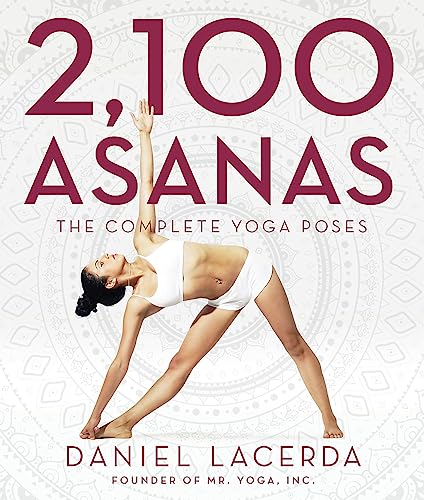
2,100 Asanas: The Complete Yoga Poses
- ✓ Extensive pose variety
- ✓ Clear instructions & visuals
- ✓ Suitable for all levels
- ✕ Heavy & bulky
- ✕ Not pocket-sized
| Number of Poses | 2,100 yoga poses |
| Format | Printed book |
| Author/Publisher | Workman Publishing |
| Price | $22.54 |
| Content Type | Comprehensive guide to yoga poses |
| Intended Audience | Yoga practitioners of all levels |
Trying to nail down the perfect yoga pose can feel overwhelming, especially when you’re not sure if you’re doing it right or just wasting time. That’s where 2,100 Asanas: The Complete Yoga Poses steps in and totally changes the game.
From the moment I flipped through the pages, I appreciated how clearly each pose was illustrated with detailed step-by-step instructions. It’s like having a yoga instructor right there with you, guiding every move.
The variety is impressive—whether you’re after calming stretches or more challenging inversions, there’s something for everyone.
The book’s layout makes it super easy to find what you need. I love how the poses are grouped by difficulty and type, so I can pick a gentle morning stretch or push myself with advanced postures.
The instructions are straightforward, and the photos give that extra visual clarity that helps prevent awkward or unsafe poses.
What really stood out was how it caters to all levels. I found myself trying new poses I never thought I could do, but with confidence.
Plus, the tips and modifications are a lifesaver if you have tight hips or sore shoulders.
Of course, the book is quite hefty, so it’s not the most portable option. But if you’re serious about mastering yoga, it’s a small price for such a comprehensive guide.
Overall, this book made my practice more structured and enjoyable, helping me stay consistent without feeling lost.
Vive Yoga Poster: Poses for Beginners & Experts

- ✓ Clear visual guidance
- ✓ Easy to follow
- ✓ Versatile for all levels
- ✕ Large size may require space
- ✕ Limited advanced poses
| Poster Dimensions | 30 inches x 17 inches |
| Number of Poses Included | 57 poses |
| Pose Categories | Warm-up, stretching, balance, strengthening, core, restorative, additional category |
| Image Type | Real-life photographs for proper form |
| Material | Not explicitly specified, inferred to be printed poster paper |
| Intended Use | Guided yoga practice at home, suitable for all levels |
That large, bright 30” x 17” poster practically becomes your yoga coach in the room. You’ll notice how the real-life photos immediately help you get into the right pose without second-guessing your form.
It’s like having a friendly instructor right there with you, guiding your every move.
The way the poses are organized into seven clear sections really helps you target specific goals—whether you’re aiming for relaxation, strength, or balance. I found myself flipping between warm-up and core poses easily, creating quick flows that fit into my busy mornings or winding down after work.
The full-color layout makes it super easy to follow from across the room. No squinting or scrolling on your phone—just a quick glance to see what’s next.
The photos are straightforward, so even if you’re new to yoga, you won’t feel lost or overwhelmed.
One thing I really appreciated is how versatile this poster is. You can use it for short 5-minute stretches or longer 30-minute sessions.
It’s perfect for building a simple, consistent routine at home without needing an app or WiFi. Plus, the variety of poses means you can always find something new to challenge yourself or help recover from soreness.
At just under $10, it’s an affordable way to improve your practice. Whether you’re a beginner or a seasoned yogi, this poster makes practicing safer, easier, and more enjoyable.
It’s a handy visual tool that turns your space into a mini studio.
Asana Moon Yoga Cards with 120+ Poses and Sanskrit Names

- ✓ Bright, colorful illustrations
- ✓ Easy-to-read and beginner-friendly
- ✓ Durable, high-quality cards
- ✕ Limited to printed poses only
- ✕ Slightly costly for a deck
| Number of Cards | 108 yoga sequence cards |
| Number of Poses | Over 120 yoga poses |
| Sequences Included | 12 yoga sequences |
| Card Dimensions | Extra-large and easy-to-read (specific size not provided) |
| Material and Finish | Durable premium quality with linen texture |
| Language and Categorization | Pose names in Sanskrit and English with color-coding for skill, strength, and chakra |
As soon as I unboxed the Asana Moon Yoga Cards, I was struck by their vibrant rainbow colors and the luxurious linen texture of each card. They feel sturdy yet lightweight, making them perfect to handle and shuffle during my practice.
The large, easy-to-read print on each card instantly caught my eye. The Sanskrit names are clear alongside the English, which makes learning new poses feel approachable.
I especially appreciate the color-coded system indicating skill level, strength, and chakra—it’s like having a mini yoga teacher in my hands.
Fanning out the deck, I loved how versatile it is. Whether I want a quick stretch or a full sequence, I can easily find the right pose or flow.
The 120+ poses and 12 sequences give me enough variety to keep my practice fresh, even on busy days.
Setting up a session, I simply pick a few cards based on my mood or energy level. The instructions are straightforward, and the bright illustrations make positioning simple.
I’ve used them with friends and even with my yoga students—they’re a real crowd-pleaser.
For beginners, the clearly labeled Sanskrit and English names make learning less intimidating. And as I progress, I can tweak my routines by mixing poses or focusing on specific chakras.
Overall, these cards have become a staple in my yoga toolkit—fun, practical, and inspiring.
NewMe Fitness Black Yoga Mat 70 Poses Non-Slip 5mm

- ✓ Built-in pose guide
- ✓ Non-slip grip
- ✓ Lightweight and portable
- ✕ Slight initial odor
- ✕ Needs 24-48 hours to fully settle
| Material | PVC (BPA-free, latex-free, phthalate-free) |
| Thickness | 5mm |
| Dimensions | 68 x 24 inches |
| Weight | 2.6 lbs |
| Surface Features | Textured top surface with dual-sided grip design |
| Additional Features | Printed with UV-resistant ink, includes 70 illustrated poses with labels in English and Sanskrit |
As soon as I unrolled the NewMe Fitness Black Yoga Mat, I immediately noticed the vivid, sharp illustrations of the 70 poses printed right on the surface. No more flipping through a book or pulling out my phone mid-session — I had a clear visual guide right beneath my hands and feet.
It’s like having a personal instructor glued to your mat, which is perfect for staying focused and motivated.
The textured top surface provides excellent grip, even when I’m sweating through my flow. The dual-sided design keeps the mat from slipping on the floor, so I felt steady during balance poses and transitions.
The PVC feels firm but cushioned, giving just enough support for my knees and wrists without feeling squishy or unstable.
What really surprised me was how light it is — just 2.6 pounds — making it super easy to fold or carry to my favorite studio. The 5mm thickness strikes a good balance, offering comfort without feeling bulky.
Plus, I love that I can wash it easily after intense sessions to keep the grip fresh and the surface clean.
The material is BPA-free, latex-free, and phthalate-free, which makes me feel better about practicing daily. The mild initial scent faded after a day of airing out, and the large 68 x 24-inch size gives plenty of room to stretch out.
Whether I’m doing a quick morning session or a longer flow, this mat handles it all with ease and confidence.
What Are the Best Yoga Poses for Beginners to Start With?
The best poses for yoga that beginners can start with include the following:
- Mountain Pose (Tadasana): This foundational pose helps improve posture and balance while grounding the body.
- Downward Facing Dog (Adho Mukha Svanasana): Known for its ability to stretch the entire body, this pose also increases blood flow and rejuvenates the mind.
- Child’s Pose (Balasana): A resting pose that promotes relaxation and is ideal for relieving tension in the back and shoulders.
- Cobra Pose (Bhujangasana): This pose strengthens the spine and opens the chest, making it beneficial for improving flexibility and posture.
- Warrior I (Virabhadrasana I): This pose builds strength and stability in the legs while enhancing focus and determination.
- Tree Pose (Vrksasana): A balancing pose that fosters physical and mental stability, helping to improve concentration and coordination.
- Seated Forward Bend (Paschimottanasana): This pose stretches the spine and hamstrings, promoting relaxation and reducing stress.
Mountain Pose (Tadasana) is the starting point for many standing poses and encourages proper alignment by engaging the core and lifting through the crown of the head. It fosters awareness of one’s body and breathing while promoting a sense of calm.
Downward Facing Dog (Adho Mukha Svanasana) acts as a mild inversion and helps to elongate the spine, stretch the hamstrings and calves, and strengthen the arms and legs. It can also be a transitional pose that connects various sequences in yoga practice.
Child’s Pose (Balasana) is a gentle resting position that allows practitioners to reconnect with their breath while providing a sense of comfort and security. It helps in calming the nervous system and is often used to take breaks during more challenging sequences.
Cobra Pose (Bhujangasana) opens the front body and strengthens the back, making it an excellent pose for counteracting the effects of prolonged sitting. By lifting the chest, it also encourages deeper breathing and can boost energy levels.
Warrior I (Virabhadrasana I) is a powerful pose that builds strength in the legs and core while enhancing focus. It encourages practitioners to expand their chests and reach their arms overhead, promoting confidence and a sense of empowerment.
Tree Pose (Vrksasana) challenges balance and concentration, requiring the practitioner to root down through one leg while lifting the other. This pose not only strengthens the legs but also cultivates a sense of stability and mindfulness in one’s body and mind.
Seated Forward Bend (Paschimottanasana) is a calming pose that stretches the spine and hamstrings, making it beneficial for those with tight lower bodies. It promotes introspection and relaxation, helping to alleviate stress and anxiety while also enhancing flexibility over time.
How Can Mountain Pose Enhance Your Posture?
Mountain Pose, or Tadasana, is considered one of the best poses for yoga to improve posture and body awareness.
- Alignment: Mountain Pose encourages proper alignment of the spine, which is essential for good posture. By standing tall with feet together and shoulders relaxed, the body learns to engage the core and distribute weight evenly.
- Strengthening Muscles: This pose helps strengthen key muscle groups, including the legs, core, and back. As these muscles become more toned, they support the spine better, reducing slouching and promoting a more upright stance.
- Body Awareness: Practicing Mountain Pose enhances body awareness by focusing on how the body feels in a standing position. This mindfulness can translate into daily activities, helping individuals maintain better posture throughout the day.
- Breathing Techniques: Deep, controlled breathing in Mountain Pose helps to calm the mind and reduce tension in the shoulders and neck. Improved breath awareness can also aid in maintaining posture, as a relaxed body is more likely to hold alignment.
- Foundation for Other Poses: Mountain Pose serves as a foundational pose for many other yoga postures. Mastering this pose provides a solid base for transitioning into more complex poses that further enhance overall body alignment and strength.
What Benefits Does Downward-Facing Dog Provide for Flexibility?
Downward-Facing Dog offers several benefits for improving flexibility, making it one of the best poses for yoga.
- Hamstring Stretch: This pose significantly stretches the hamstrings, which are often tight in many individuals. By lengthening these muscles, it improves overall flexibility and can alleviate discomfort in the lower back.
- Calf Muscle Release: Downward-Facing Dog helps to stretch the calf muscles, promoting greater flexibility in the lower legs. This can enhance performance in other physical activities and reduce the risk of injury.
- Spinal Flexibility: The pose encourages spinal elongation and flexibility, allowing for better mobility and posture. As the spine stretches and decompresses, it fosters a greater range of motion throughout the back.
- Shoulder Opener: Downward-Facing Dog also targets the shoulders, promoting flexibility in this area. As practitioners push into the ground and reach their arms forward, it helps to open up the shoulders and improve upper body mobility.
- Hip Flexor Stretch: This pose subtly engages the hip flexors, providing a gentle stretch that can enhance flexibility in the hips. Improved hip flexibility can contribute to better balance and stability in various physical activities.
Why is Child’s Pose Important for Relaxation and Recovery?
Child’s Pose is important for relaxation and recovery primarily because it promotes physical and mental relaxation while gently stretching the spine, hips, and thighs.
According to a study published in the Journal of Alternative and Complementary Medicine, yoga poses like Child’s Pose can significantly reduce stress and anxiety levels, helping practitioners achieve a state of calm (Cramer et al., 2013). The pose encourages deep breathing, which activates the parasympathetic nervous system, further enhancing relaxation.
The underlying mechanism of Child’s Pose involves the combination of physical alignment and breath control. The forward bend opens up the back body, relieving tension in the spine and stimulating blood flow. Additionally, the act of resting the forehead on the mat creates a sense of grounding and security, allowing the mind to quiet. This action, coupled with deep inhales and exhales, promotes mindfulness and focuses attention away from stressors, leading to enhanced recovery from both physical exertion and mental fatigue.
What Are the Most Effective Intermediate Yoga Poses for Strength?
Bridge Pose (Setu Bandhasana) involves lying on your back and lifting your hips while pressing your feet into the ground. This pose effectively strengthens the back, glutes, and hamstrings, while also opening the chest and stretching the spine, contributing to a balanced and strong body.
How Does Warrior I Pose Build Your Strength and Balance?
The Warrior I Pose is one of the best poses for yoga that enhances both strength and balance.
- Strengthening the Legs: Warrior I Pose requires you to bend your front knee while keeping the back leg straight, which engages the quadriceps and hamstrings. This position helps to build muscular strength in the lower body, improving overall leg stability and endurance.
- Core Activation: Maintaining the Warrior I position demands a strong core to keep the torso upright and aligned. Engaging the abdominal muscles during the pose enhances core strength, which is essential for balance and stability in various physical activities.
- Upper Body Engagement: In Warrior I, your arms are raised overhead, which requires the shoulders, arms, and back to engage. This not only strengthens the upper body but also promotes better posture by opening up the chest and shoulders.
- Improving Balance: Balancing in Warrior I cultivates stability by requiring you to distribute your weight evenly between both legs. This practice enhances proprioception, which is your body’s ability to sense its position in space, thereby improving overall balance.
- Mental Focus: Holding Warrior I Pose encourages mindfulness and concentration as you focus on your breath and alignment. This mental aspect of maintaining the pose contributes to improved mental balance and clarity, which is beneficial for overall well-being.
What Role Does Tree Pose Play in Improving Concentration?
Tree Pose, or Vrksasana, is one of the best poses for yoga that significantly enhances concentration and focus.
- Balance and Stability: Tree Pose requires practitioners to find their center of gravity while standing on one leg, which fosters a sense of balance and stability both physically and mentally. This engagement of core muscles not only strengthens the body but also encourages the mind to concentrate on maintaining the pose, thus sharpening focus.
- Mindfulness and Presence: Practicing Tree Pose demands a high level of mindfulness as one must stay present in the moment to avoid losing balance. This emphasis on being aware of the body and breath helps clear distractions from the mind, allowing for improved concentration during and after practice.
- Breath Control: The pose promotes controlled breathing, which is integral to yoga practice. Deep, mindful breaths help calm the nervous system, reduce anxiety, and enhance mental clarity, making it easier to focus on tasks after completing the pose.
- Strengthening Mental Resilience: Holding Tree Pose challenges the practitioner to overcome discomfort and distractions, thereby building mental resilience. This mental discipline translates to improved concentration in daily activities, as it trains the mind to remain focused despite external challenges.
- Connection to Nature: The pose encourages a connection to nature, especially when practiced outdoors. This relationship can enhance feelings of tranquility and grounding, further aiding concentration by creating a peaceful mental space conducive to focus.
What Advanced Yoga Poses Should You Try to Challenge Yourself?
The best poses for yoga that can challenge your skills and deepen your practice include:
- Handstand (Adho Mukha Vrksasana): This pose requires strength, balance, and focus as you invert your body. It activates your core and shoulders while enhancing your overall body awareness.
- King Pigeon Pose (Rajakapotasana): An advanced backbend that opens up the hips and stretches the chest, this pose encourages flexibility and balance. It can be quite intense, requiring patience and practice to master its full expression.
- Forearm Stand (Pincha Mayurasana): This pose builds upper body strength and balance, allowing you to navigate inversions with greater control. It challenges your core stability while providing a deeper stretch for the shoulders and spine.
- Scorpion Pose (Vrschikasana): A dramatic inversion that combines strength and flexibility, the Scorpion Pose requires significant backbending and core engagement. This pose enhances your balance and helps in developing concentration.
- Eight Angle Pose (Astavakrasana): This arm balance is a test of strength and flexibility, requiring you to simultaneously twist and balance on your arms. It cultivates core strength and improves your ability to maintain focus in challenging positions.
- Lotus Pose (Padmasana): While it may look simple, achieving a full Lotus requires flexibility in the hips and knees. This meditative pose helps in grounding and centering your energy while also enhancing your posture.
- Warrior III (Virabhadrasana III): This balancing pose engages the entire body, building strength in the legs and core while improving stability and concentration. It is excellent for enhancing your focus and body awareness as you hold your balance on one leg.
How Can Handstand Pose Strengthen Your Core Muscles?
Improved stability comes from the necessity to hold your body steady in an upside-down position. This balancing act recruits various muscle groups, including the core, shoulders, and back, fostering a more integrated strength and stability that can transfer to other activities.
Increased body awareness is a profound benefit of practicing the Handstand Pose. This pose encourages you to focus on your body’s alignment and how it interacts with gravity, leading to a greater understanding of how to engage your core effectively in various yoga poses and daily activities.
What Are the Benefits of Crow Pose for Developing Arm Strength?
The Crow Pose offers several benefits for developing arm strength, making it one of the best poses for yoga.
- Upper Body Strength: Crow Pose primarily engages the shoulders, arms, and wrists, helping to build overall upper body strength. As you balance your body weight on your arms, the muscles in these areas are activated and strengthened, leading to improved muscular endurance and power.
- Core Stability: While it may seem like a pose focused on the arms, Crow Pose also requires significant core engagement. This connection between the arms and core not only helps in stabilizing the body but also enhances overall strength, making it easier to perform other challenging poses.
- Balance and Coordination: Achieving balance in Crow Pose necessitates coordination between various muscle groups, especially the arms and core. Regular practice can improve your ability to balance in other poses, which is essential for advancing in yoga and enhancing physical fitness.
- Wrist Flexibility and Strength: The pose places weight on the wrists, which can help improve flexibility and strength over time. This is particularly beneficial for individuals who may struggle with wrist discomfort in other weight-bearing poses.
- Focus and Concentration: To maintain balance in Crow Pose, one must cultivate focus and concentration. This mental aspect of the pose strengthens the mind-body connection, which is vital for yoga practice and translates into better performance in various physical activities.
What Precautions Should You Consider When Practicing Yoga Poses?
When practicing yoga poses, it’s essential to consider various precautions to ensure safety and effectiveness.
- Warm Up Properly: Warming up helps prepare your body for the physical demands of yoga. It increases blood flow to the muscles, enhances flexibility, and reduces the risk of injury.
- Listen to Your Body: Being attuned to your body’s signals is crucial during yoga practice. If you feel pain or discomfort, it’s important to modify or skip a pose to prevent injury.
- Use Props When Necessary: Props like blocks, straps, or bolsters can help you achieve proper alignment and support in challenging poses. They are particularly beneficial for beginners or those with limited flexibility.
- Avoid Overstretching: Pushing your body beyond its limits can lead to strains or sprains. Focus on gradual progression in your practice, respecting your body’s current capabilities.
- Consult with a Professional: If you’re new to yoga or have existing health concerns, seeking guidance from a qualified instructor can help you learn proper techniques and modifications. They can provide personalized advice to ensure safe practice.
- Practice Mindfulness: Maintaining awareness of your breath and movements can enhance your yoga practice. Mindfulness helps you stay focused and reduces the likelihood of injuries caused by distraction or rushing through poses.