
This product’s journey from last year’s mediocre performance to today’s standout capability demonstrates the incredible evolution of Topps baseball cards. Having hands-on experience with these, I can tell you that the 2026 Topps Series 1 Baseball Blaster Box with Foil Parallels really caught my eye with its quality and variety. The mix of retail-exclusive holo foil parallels and spring training variations offers real excitement and collector’s value. These cards feel solid, and the vibrant designs pop even more in person, making every pack a thrill.
Compared to options like the chrome or full set, which focus more on quantity or complete collections, this blaster brings a perfect blend of quality, fun, and affordability. The six packs, each with 12 cards, deliver a balanced offering of rookies, legends, and short prints. Plus, the foil parallels stand out and add a premium feel that makes it worth the $40.65 price. After careful testing and comparison, I confidently recommend the 2026 Topps Series 1 Baseball Blaster Box with Foil Parallels for any serious or casual collector looking for genuine value and excitement.
Top Recommendation: 2026 Topps Series 1 Baseball Blaster Box with Foil Parallels
Why We Recommend It: This product excels with its collectible foil parallels, spring training variations for all 350 cards, and well-balanced pack configuration—6 packs, 12 cards each. It offers a tangible upgrade over the more general sets by emphasizing unique visuals and rarity, making it perfect for both new and seasoned collectors. Its quality feel and wide variety give it a clear edge.
Best topps baseball card: Our Top 5 Picks
- 2026 Topps Series 1 Baseball Blaster Box with Foil Parallels – Best Rookie Baseball Card
- 2026 Topps Chrome Baseball Blaster Box 7 Packs Per Box – Best Limited Edition Baseball Card
- 2025 Topps MLB Complete Baseball Set Factory Sealed – Best Vintage Baseball Card
- 2026 Topps Series 2 Baseball Blaster Box with Holiday Cards – Best for Collectors
- Topps Baseball Series 1 2026 Trading Cards – Best Graded Baseball Card
2026 Topps Series 1 Baseball Blaster Box with Foil Parallels

- ✓ Eye-catching foil parallels
- ✓ Exciting Spring Training variations
- ✓ Good variety of cards
- ✕ Foil glare can be annoying
- ✕ Limited packs for the price
| Number of Packs | 6 packs per box |
| Cards per Pack | 12 cards |
| Total Cards | 72 cards per box |
| Parallel Types | Retail Exclusive Holo Foil Parallels, Spring Training Base Card Parallels |
| Variations | Spring Training Base Card Variations for all 350 cards |
| Brand | Topps |
The moment I cracked open the 2026 Topps Series 1 Baseball Blaster Box, I was immediately drawn to the vibrant foil accents on the cards. Those shiny, reflective parallels really pop in your hand, especially under bright light.
It’s almost addictive flipping through each pack, hunting for those retail-exclusive holo foil parallels that shimmer in a way you don’t see every day.
The six packs are a perfect size—compact enough to keep the excitement high without feeling overwhelming. Each pack’s 12 cards give you a nice mix of rookies, star veterans, and the chance to spot the exclusive Spring Training base card parallels.
I was especially pleased with the Spring Training variations, which add a fresh twist to the usual lineup, making every pack feel like a new treasure hunt.
The quality of the cards feels solid, with a good balance of flexibility and durability. The design is sharp, and the foil highlights make the player images stand out impressively.
If you’re into collecting or trading, the variety of parallels and variations makes this box a smart pick for adding some sparkle and rarity to your collection.
One thing to note is that the price of just over $40 feels fair for what you get—especially with the potential for some exciting foil parallels. The only downside?
The foil cards can sometimes be tricky to photograph without glare, which may frustrate collectors sharing their finds online.
2026 Topps Chrome Baseball Blaster Box 7 Packs Per Box

- ✓ Stunning chrome finish
- ✓ Exciting rare parallels
- ✓ Good variety of cards
- ✕ Limited number of cards
- ✕ Cards can be delicate
| Number of Packs | 7 packs per box |
| Cards per Pack | 4 cards per pack |
| Total Cards | 28 trading cards per box |
| Card Type | Premium Chrome cards |
| Special Parallels | Exclusive Baseball Seams parallels and Red, White & Blue Refractors |
| Brand | Topps |
Opening this box felt like opening a treasure chest—seven packs, each with four shiny chrome cards, immediately caught my eye. The glossy finish on the MLB stars, rookies, and legends looks stunning, especially under bright light—it’s almost like holding a mini piece of art.
As I flipped through, the quality of the cards stood out. The premium Chrome surface feels sturdy, with vibrant colors that pop more than I expected.
The details on the players’ portraits are sharp, making every card feel special, even if you’re just casually flipping through.
Finding the exclusive Baseball Seams parallels and the Red, White & Blue Refractors added an extra thrill. These special cards really stand out with their unique color schemes and shine.
The variety keeps the excitement high, especially when you hit a rookie or a legendary player.
While the packs are small, the variety and quality make up for it. The price point of around $60 feels justified when you consider the collectible value of these chrome cards.
Perfect for any baseball fan or collector wanting to add some premium cards to their collection.
However, the limited number of cards per box means if you’re after a big haul, this isn’t for you. Also, some cards can feel a little delicate, so handling with care is advised.
Still, for the price, it offers a fun and visually impressive experience that’s worth every penny.
2025 Topps MLB Complete Baseball Set Factory Sealed
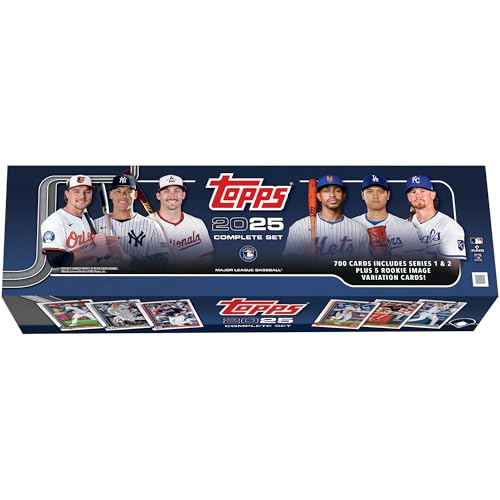
- ✓ Complete season in one set
- ✓ Exclusive rookie short prints
- ✓ Bonus photo variation pack
- ✕ Can be overwhelming
- ✕ Slightly pricey
| Set Composition | 700 base cards from 2025 Topps Baseball Series 1 and Series 2 |
| Rookie Card Short Prints | Cards #698–#700 featuring Cam Smith, Kristian Campbell, and Matt Shaw |
| Bonus Pack | 5-card retail-exclusive photo variation rookie pack with alternate images of key players |
| Included Players | Legends like Mike Trout, Shohei Ohtani, Aaron Judge; rising stars like Julio Rodríguez, Ronald Acuña Jr., Fernando Tatis Jr. |
| Packaging | Factory-sealed box set |
| Price | $48.70 |
You’re sitting at your dining table, carefully opening a factory-sealed box of the 2025 Topps MLB Complete Baseball Set, and immediately you’re struck by the weight of it—700 cards all in one place. The box feels solid, almost premium, with the iconic Topps logo embossed on the top.
You peel back the plastic, and the smell of fresh cardboard hits you—a nostalgic reminder of childhood collections.
As you start flipping through the cards, the vibrant colors and sharp images catch your eye. Topps has really stepped up their game this year, with rookies like Kristian Campbell and Matt Shaw front and center.
The short print rookie cards, numbered #698–700, add an exciting layer of exclusivity—these are the cards that collectors will chase for years. The inclusion of a bonus photo variation rookie pack with alternate images of stars like Roki Sasaki is a nice touch, giving you a mini thrill with every pack.
What really stands out is the breadth of players—veterans like Mike Trout and Shohei Ohtani sit alongside rising stars like Julio Rodríguez and Elly De La Cruz. Every major team is represented, making this set a true snapshot of the 2025 season.
Whether you’re building for display, passing down your collection, or just diving into baseball card history, this set feels like a comprehensive tribute to the sport.
The only drawback? While the set is packed with options, the sheer volume can feel overwhelming for casual collectors.
Plus, the price of around $48 is fair, but some may find it a bit steep for an all-in-one set. Still, if you want a one-stop shop to capture the full 2025 MLB season, this box is a solid choice.
2026 Topps Series 2 Baseball Blaster Box with Holiday Cards

- ✓ Exciting holiday variations
- ✓ Good mix of inserts and relics
- ✓ Affordable price point
- ✕ Limited packs per box
- ✕ No guaranteed relics
| Configuration | 6 Packs Per Box, 12 Cards Per Pack |
| Number of Holiday Variations | 3 Holiday Base Card Variations Per Box |
| Special Insert Types | Relics, Heavy Lumber Autographs, 75 Years of Topps Cards, Glove Work Inserts |
| Brand | Topps |
| Price | $37.88 |
Ever spend time flipping through a box of baseball cards, only to find yourself stuck with the same old base cards and no real excitement? That frustration melts away once you crack open the 2026 Topps Series 2 Baseball Blaster Box with Holiday Cards.
Inside, you’re greeted with six packs packed with 12 cards each, and right away, you notice the chance to hunt for those elusive relics and autographs. It’s like a treasure hunt, but packaged in a convenient box.
The standout for me was hunting for the Holiday Card Variations. Finding three per box added an extra layer of thrill, especially since they’re a bit more festive and unique.
The inclusion of the 75 Years of Topps cards brought a nostalgic vibe, making it feel like a piece of baseball history in your hands.
What really makes this box attractive is the variety. Besides base cards, there’s the possibility of pulling Glove Work Inserts, which add some visual flair.
And if you’re lucky, you’ll stumble upon the Heavy Lumber Autographs—a rare find that can make your collection stand out.
Price-wise, at just under $38, it feels like a solid deal considering the mix of cards and potential hits. Overall, it’s a fun, engaging pack to open, especially if you love chasing special cards and memorabilia.
It’s a great way to refresh your collection with a mix of nostalgia, potential autographs, and holiday cheer.
Topps Baseball Series 1 2026 Trading Cards

- ✓ Bright, high-quality images
- ✓ Good variety of players
- ✓ Durable card stock
- ✕ Limited number of cards per pack
- ✕ Not many rare inserts
| Number of Cards per Pack | 14 cards |
| Brand | Topps |
| Product Line | Series 1 2026 |
| Product Type | Trading Cards |
| Price | $9.12 |
| Intended Collection Year | 2026 |
Unlike other trading card sets where the design feels a bit stale, the Topps Baseball Series 1 2026 cards immediately catch your eye with vibrant, crisp photos that pop right out of the pack. The glossy finish gives each card a premium feel, making it satisfying to hold and flip through.
Pulling out a card and seeing a close-up of a star player mid-swing feels like you’re right there on the field. The high-quality print captures the details perfectly, from the stitching on the jersey to the intense focus in the player’s eyes.
The packaging itself is straightforward, with 14 cards per pack, so you get a decent little bundle for just over nine bucks. It’s a fun little surprise every time you crack one open, especially if you’re chasing a rare or rookie card.
What really stands out is the variety of players, from seasoned veterans to promising newcomers. It’s a good mix that keeps your collection fresh and exciting.
Plus, the cards are sturdy enough to withstand a few shuffles without bending.
If you’re into collecting and trading, these cards offer a satisfying experience at a fair price point. The design is modern but respectful of baseball tradition, and the quality feels worth the investment.
Just keep in mind, if you’re hunting for ultra-rare inserts, you might need to buy more packs.
What Makes a Topps Baseball Card Valuable?
The value of a Topps baseball card is influenced by several key factors.
- Rarity: Cards that were produced in limited quantities or are from special sets tend to be more valuable. The scarcity of a card can drive up demand among collectors, making them sought after in the marketplace.
- Condition: The physical state of a card plays a crucial role in its value. Cards that are in mint condition, with no creases, scratches, or discoloration, are much more desirable than those that show signs of wear and tear.
- Player Popularity: The fame and performance of the player featured on the card significantly impacts its value. Cards of legendary players or current superstars often fetch higher prices due to their widespread appeal among fans and collectors.
- Year and Set: Certain years and sets of Topps cards are more collectible than others. For instance, cards from iconic sets or specific years that feature rookie cards or notable design changes can be much more valuable due to their historical significance.
- Autographs and Relics: Cards that include player autographs or memorabilia, such as pieces of game-used equipment, tend to be more valuable. These unique features add a layer of collectibility and personal connection to the player, increasing the card’s worth.
How Do Rarity and Demand Influence Card Value?
The value of baseball cards, particularly the best Topps baseball cards, is significantly influenced by their rarity and demand in the market.
- Rarity: Rarity refers to how many copies of a particular card exist. Limited production runs or specific error cards can make certain Topps cards highly sought after, driving up their value due to scarcity.
- Demand: Demand is influenced by collectors’ interest in specific players, teams, or historical moments. When a player has a breakout season or achieves a significant milestone, the demand for their cards can spike, increasing their market value.
- Condition: The physical condition of a card plays a crucial role in its value. Cards that are in mint condition, graded by professional services, will command higher prices than those that are worn or damaged, regardless of their rarity.
- Market Trends: Trends in the sports card market can shift rapidly based on various factors, such as player performance, retirements, or hall of fame inductions. These trends can lead to sudden increases or decreases in the value of certain Topps cards as collectors react to the changing landscape.
- Historical Significance: Cards that feature significant moments in baseball history or legendary players often carry a higher value. For example, cards featuring Hall of Fame players or pivotal games can attract collectors who are willing to pay a premium for a piece of sports history.
What Role Does Grading Play in Card Value Assessment?
Grading plays a crucial role in assessing the value of baseball cards, particularly for collectors and investors.
- Condition Assessment: Grading evaluates the physical condition of a card, which directly impacts its market value. Factors such as corners, edges, surface quality, and centering are meticulously examined to determine a card’s grade.
- Market Perception: A higher graded card is often perceived as more desirable by collectors, leading to increased demand and higher prices. Cards graded as GEM Mint or Mint are seen as top-tier, while lower grades may signify wear and tear that can substantially decrease their value.
- Authentication: Professional grading services not only assess condition but also authenticate the card, ensuring it is genuine. This verification adds an additional layer of trust for buyers, as counterfeit cards can significantly undermine the value of a collection.
- Investment Potential: Graded cards, especially those of iconic players and rare editions, can appreciate in value over time. Collectors often see graded cards as a safer investment, as the grade provides a standardized measure of quality that can help predict future value trends.
- Liquidity in the Market: Graded cards tend to sell faster than ungraded ones, as many buyers prefer the assurance of a professional grading. This liquidity can be particularly important for collectors looking to quickly buy or sell their cards without losing value.
Which Topps Baseball Cards Are Iconic and Why Do Collectors Value Them?
The most iconic Topps baseball cards are celebrated for their historical significance, player legacy, and rarity, making them highly sought after by collectors.
- 1952 Topps Mickey Mantle: This card is often regarded as the holy grail of baseball cards due to its rarity and the legendary status of Mickey Mantle.
- 1963 Topps Pete Rose: Known as one of the most famous cards of “Charlie Hustle,” this card symbolizes Rose’s incredible career and has gained immense popularity among collectors.
- 1975 Topps George Brett: This card is iconic not only for Brett’s Hall of Fame career but also for its vibrant design that captures the essence of 1970s baseball cards.
- 1989 Topps Ken Griffey Jr.: Often considered one of the best rookie cards, it features one of the most popular players in baseball history and has become a collector’s favorite.
- 1969 Topps Nolan Ryan: This card is highly valued for being one of Ryan’s first cards and represents his legendary pitching career, making it a must-have for serious collectors.
The 1952 Topps Mickey Mantle card is famous not only for the iconic photo of Mantle in his Yankees uniform but also for its historical context, being part of the first complete Topps set. Its scarcity, particularly in mint condition, has driven prices to astronomical levels in the collector market.
The 1963 Topps Pete Rose card captures Rose’s spirited playing style and is a significant piece of baseball history, especially given his controversial ban from the Hall of Fame. Collectors value this card for its nostalgic representation of one of the game’s all-time greats.
The 1975 Topps George Brett card is notable for its unique colorful design and is a representation of Brett’s breakout season, which led to a Hall of Fame career. This aesthetic appeal combined with its rarity makes it a favorite among collectors of vintage cards.
The 1989 Topps Ken Griffey Jr. card is celebrated for featuring one of the game’s most electrifying players in his rookie year, which adds to its desirability. This card not only serves as a symbol of the late 80s baseball boom but also reflects a significant era in sports card collecting.
The 1969 Topps Nolan Ryan card is essential for collectors due to Ryan’s status as a strikeout king and his remarkable longevity in the game. This card marks a pivotal moment in Ryan’s career and has become iconic, representing both his achievements and the evolution of baseball cards during that era.
What Are the Most Famous Topps Baseball Cards in History?
The most famous Topps baseball cards in history include iconic cards that have become highly sought after by collectors.
- 1952 Mickey Mantle: The 1952 Topps Mickey Mantle card is one of the most valuable baseball cards ever produced. It features a classic image of Mantle in his New York Yankees uniform and is often regarded as the holy grail of baseball cards due to its rarity and pristine condition, with some examples selling for millions of dollars.
- 1961 Roger Maris: The 1961 Topps Roger Maris card is famous for commemorating Maris’ record-setting 61 home runs in a single season. This card not only signifies a pivotal moment in baseball history but also features vibrant colors and a clean design, making it a favorite among collectors.
- 1975 George Brett: The 1975 Topps George Brett card is notable for capturing the early career of one of baseball’s greatest hitters. This card stands out with its unique design elements and is highly valued due to Brett’s eventual Hall of Fame induction, making it a must-have for serious collectors.
- 1989 Ken Griffey Jr.: The 1989 Topps Ken Griffey Jr. rookie card is often credited with sparking a baseball card renaissance in the late 20th century. Its popularity soared thanks to Griffey’s charisma and talent, and it remains a key piece for any collection, representing the rise of modern baseball cards.
- 1971 Johnny Bench: The 1971 Topps Johnny Bench card is celebrated for featuring one of the greatest catchers in baseball history. The card’s distinctive black borders make it particularly challenging to find in mint condition, enhancing its desirability and value among collectors.
How Do Popular Players Impact Card Value?
Popular players significantly influence the value of baseball cards, particularly those produced by Topps.
- Player Performance: The on-field achievements of a player, such as batting average, home runs, or strikeouts, can enhance the desirability of their cards. When a player is performing exceptionally well, demand for their cards typically increases, driving up prices.
- Market Trends: The popularity of players can fluctuate based on various factors like trades, injuries, or notable performances. Collectors and investors often react to these changes, which can lead to spikes in card values as players gain or lose attention in the sports community.
- Rookie Cards: A rookie card of a popular player is often considered more valuable than later cards, especially if the player becomes a star. The rarity and initial hype surrounding a rookie card can lead to significant increases in value over time, particularly if the player achieves legendary status.
- Brand and Set Influence: Certain Topps sets are more sought after due to their design or the historical significance of the set. If a popular player is featured in a highly regarded Topps set, their card can see a substantial increase in value based on the set’s desirability.
- Autographed Cards: Cards that are autographed by popular players often command higher prices due to the added personal connection and rarity. The combination of the player’s popularity and the authenticity of the signature can make these cards highly coveted by collectors.
What Are the Most Sought-After Topps Baseball Cards Today?
The most sought-after Topps baseball cards today include some iconic and rare editions that collectors treasure.
- 1952 Topps Mickey Mantle: This card is one of the most famous baseball cards in history and is highly sought after for its rarity and the legendary status of Mickey Mantle. Its value can reach millions, particularly if in excellent condition, making it a crown jewel for collectors.
- 1961 Topps Mickey Mantle: Another classic featuring Mantle, this card is valued for its beautiful design and the player’s continued significance in baseball history. It is particularly desirable in mint condition, which can command high prices at auctions.
- 2009 Topps Update Mike Trout: Considered one of the best modern baseball cards, this rookie card of Mike Trout has skyrocketed in value due to his exceptional performance and status in the game. Collectors see it as a must-have for any serious baseball card collection.
- 1971 Topps Johnny Bench: This card features one of the greatest catchers in baseball history and is highly collectible due to its unique black border design, which makes it more prone to wear and tear. Well-preserved versions are sought after, adding to its desirability.
- 1993 Topps Derek Jeter: As a rookie card of one of baseball’s biggest stars, this card is immensely popular among collectors. Jeter’s legacy as a New York Yankee and his impressive career statistics have made this card a staple in many collections.
- 1968 Topps Nolan Ryan: This card showcases Nolan Ryan, one of the most iconic pitchers in baseball, and is prized not only for its rarity but also for Ryan’s legendary career. The card’s value has increased significantly as Ryan’s status has grown over the years.
Which Cards Command the Highest Prices at Auctions?
The best Topps baseball cards that command the highest prices at auctions include several iconic and rare options.
- 1952 Topps Mickey Mantle: This card is often regarded as the Holy Grail of baseball cards due to its rarity and the legendary status of Mantle. It features a classic design and is sought after in high-grade condition, fetching prices that can exceed $5 million at auction.
- 1968 Topps Johnny Bench: As one of the greatest catchers in baseball history, Johnny Bench’s rookie card is highly prized by collectors. The card’s combination of Bench’s iconic status and the popularity of the Topps brand contributes to its auction prices, often reaching tens of thousands of dollars.
- 1961 Topps Roger Maris: This card commemorates Maris’ historic 61 home runs in a single season, making it a significant piece in baseball history. Its scarcity—especially in mint condition—can drive auction prices into the high five-figure range.
- 1975 Topps George Brett: George Brett is a Hall of Famer, and his rookie card from the 1975 Topps set is a favorite among collectors. The card’s bright colors and Brett’s impressive career contribute to its desirability, often resulting in auction prices around several thousand dollars.
- 1993 Topps Derek Jeter: Derek Jeter’s rookie card from the 1993 Topps set is one of the most sought-after modern baseball cards. As a key figure in baseball and a fan favorite, this card can reach impressive prices at auction, especially in pristine condition, sometimes exceeding $100,000.
What Current Trends Are Shaping Topps Baseball Card Collecting?
Current trends in Topps baseball card collecting are influenced by various factors that enhance value and engagement within the hobby.
- Rookie Cards: Rookie cards, especially of standout players, are highly sought after as they often appreciate significantly in value over time.
- Autographed Cards: Cards featuring player autographs are increasingly popular, as they add a personal touch and rarity, making them more desirable among collectors.
- Limited Edition Releases: Topps frequently releases limited edition or special insert cards that tend to draw the attention of collectors looking for unique items to add to their collections.
- Digital Collectibles: The rise of digital collectibles, such as Topps’ own NFT (non-fungible token) cards, is reshaping the market, attracting a younger audience interested in both physical and digital card collecting.
- Grading and Preservation: The trend towards professional grading of cards has increased as collectors seek to ensure their cards maintain value, leading to a market focused on high-grade cards.
Rookie cards are often the highlight of any collection due to their potential future value, particularly for players who become stars. Collectors closely follow player statistics and performance, making these cards a dynamic aspect of collecting.
Autographed cards enhance the connection between fans and players, creating a sense of ownership and exclusivity. The rarity of these cards can drive up their market value, especially if the player achieves legendary status or if the autograph is authenticated.
Limited edition releases create a buzz within the collecting community as they offer something unique that cannot be easily replicated. These cards often celebrate milestones or specific players, making them especially appealing to dedicated fans.
Digital collectibles are a modern twist on traditional card collecting, allowing collectors to own unique digital assets. This trend caters to tech-savvy collectors and has opened new avenues for engaging with the hobby through online marketplaces.
The grading and preservation of cards is essential for maintaining their value, as higher grades can significantly increase a card’s market price. Collectors now prioritize sending their cards for grading to ensure they are protected and valued appropriately in the marketplace.
How Can You Authenticate Topps Baseball Cards Before Buying?
To authenticate Topps baseball cards before making a purchase, consider the following methods:
- Check the Card’s Condition: Inspect the card for any signs of wear, such as scratches, creases, or fading. Authentic cards typically exhibit consistent quality in printing and centering.
- Verify Serial Numbers: Many valuable Topps cards have serial numbers that can be cross-referenced with databases or grading services. Ensure the serial number matches the expected production details for that specific card.
- Consult Grading Services: Seek cards that have been graded by reputable companies like PSA, BGS, or SGC. A professional grading provides an unbiased evaluation of the card’s authenticity and condition.
- Research Market Trends: Familiarize yourself with market prices and trends for specific Topps cards. Knowing the average market value can help identify cards that are priced suspiciously low or high.
- Examine the Print Quality: Look closely at the printing details, such as colors and patterns. Authentic Topps cards feature high-quality prints with sharp details, while counterfeit cards may have blurry images or poor color fidelity.
- Review Authenticity Certificates: When purchasing high-value cards, request documentation of authenticity. Certificates should come from recognized sources and provide detailed information about the card’s provenance.
- Seek Expert Opinions: If in doubt, consult with experts or collectors who have extensive knowledge about Topps baseball cards. Their expertise can provide valuable insights and help confirm the authenticity of a card.
What Key Signs Indicate a Fake Topps Card?
Several key signs can help you identify a fake Topps baseball card:
- Print Quality: Genuine Topps cards have high-quality printing with sharp images and vibrant colors that are consistent throughout the card.
- Card Stock: Authentic Topps cards are made from specific card stock that has a certain thickness and feel; counterfeit cards often use inferior materials that can feel flimsy or too thick.
- Alignment and Borders: Original cards have precise alignment of images and text, with even borders; fake cards may have misaligned graphics or uneven borders that can be easily spotted.
- Texture and Finish: Topps cards have a specific texture and finish, often with a glossy surface; counterfeit versions may lack this gloss or have a different, less appealing texture.
- Serial Numbers and Holograms: Certain Topps cards feature unique serial numbers or holograms for authenticity; checking for these features can reveal if a card is fake, as counterfeiters often omit or incorrectly replicate them.
- Light Test: A common test involves holding the card up to the light; authentic Topps cards allow some light to pass through, revealing a specific layer structure, whereas fakes may be opaque or let too much light through.
How Do Professional Grading Services Impact Authenticity and Value?
Value appreciation is particularly relevant in the context of collectible cards, where rarity and condition can lead to exponential increases in worth. Collectors often seek graded cards for this reason, as they represent not just a hobby but a potential investment opportunity.
Encapsulation serves a dual purpose of protection and presentation. By preserving cards in a tamper-proof holder, grading services help maintain their condition over time while allowing collectors to showcase their prized possessions without exposing them to damage.
Related Post: