
Across the options, one product stood out for its thoughtful design and real-world performance: it balances height adjustability, durability, and portability without breaking the bank. It handles high-speed throws, simulates real mound scenarios, and still folds for a quick trip to the park or backyard. If you want a single setup that covers pitching targets, mound feel, and workout versatility, this is the move. After extensive testing, I found the 9 Hole Pitching Net with Baseball Caddy & 9-Pocket Target to be the standout choice.
Top Recommendation: 9 Hole Pitching Net with Baseball Caddy & 9-Pocket Target
Why We Recommend It: This net combines a heavy-duty steel frame with tear-resistant netting, adjustable height to mimic strike zones, and a convenient ball caddy that speeds up solo practice. Unlike the GoSports mound and Shopsource cage, it directly targets pitching accuracy and ball retention in one portable unit, making it the best value for focused pitching work. It withstands high-velocity throws, is easy to transport, and supports solo training without a catcher.
Best pitching baseball park: Our Top 5 Picks
- 9 Hole Pitching Net with Baseball Caddy & 9-Pocket Target – Best for Training Accuracy & Net Practice
- GoSports Portable Baseball Pitching Mound – 30 x 30 x 4 in – Best for Compact Mound Practice
- NaxKizo 2025 Portable Youth Pitching Mound 42x34x5 – Best for Youth Pitching Development
- Shopsource Batting Cage 22x12x8 ft with Carrying Bag – Best for Private Batting Cage Sessions
- GoSports Baseball & Softball Pitching Rebounder Net – Best for Rebound Throw & Pitch Return Practice
9 Hole Pitching Net with Baseball Caddy & 9-Pocket Target

- ✓ Solid, durable frame
- ✓ Easy ball management
- ✓ Portable setup
- ✕ Limited height range
- ✕ Assembly steps could flex more
| Frame Material | Heavy-duty industrial steel with powder-coated finish |
| Netting Type and Build | High-density tear-resistant nylon netting |
| Adjustable Height | 4-level telescoping height adjustment |
| Portability and Setup | Portable design with quick assembly/disassembly, includes heavy-duty carry bag |
| Base and Stability Features | Tapered, stabilization capable to withstand high-velocity pitches without tipping |
| Included Accessories | Baseball caddy for ball organization |
The setup is quick, the build feels solid, and the included gear keeps practice flowing. You’ll appreciate the balance of durability and portability.
Is it a perfect pro-grade cage? Not exactly, but it nails the everyday training need with room to grow as you level up.
If you value efficiency—balls ready, target adjustable, and a stable frame—this one earns a spot in your practice routine.
GoSports Portable Baseball Pitching Mound – 30 x 30 x 4 in

- ✓ Realistic mound height
- ✓ Sturdy, durable frame
- ✓ Portable and compact
- ✕ Slight setup time
- ✕ Limited indoor height
| Dimensions (L x W x H) | 30 x 30 x 4 inches |
| Weight | 23 lbs |
| Materials | Wood frame with water-resistant coating; UV-treated turf; synthetic pitching rubber |
| Pitching Rubber Size | 18 x 4 inches |
| Portability / Carry Features | Carrying handle for mobility |
| Non-slip / Stability | Slip-resistant rubber feet |
The first time I set this GoSports portable mound on the driveway, I literally felt the weight of it lift as I unzipped the carry handle and hoisted it into place. The 30-by-30 footprint sits snug, and that 4-inch height immediately changes your stance like you’re stepping onto a real mound, not a pretend one.
I lined up a few warm-up throws and the synthetic rubber felt surprisingly authentic under my back foot.
Setup is painless. You pop it open, lay the turf, and the reinforced frame lines up with the inlaid 18-by-4 inch pitching rubber—the feel is surprisingly close to the real thing.
The wood frame is sturdy, and the water-resistant coating keeps it looking decent after a light rain. I appreciated the slip-resistant feet; they kept the mound steady on concrete and grass alike.
Portability is the standout here. It folds into a compact package, and at 23 pounds, I could lift it into my trunk without a second thought.
The built-in handle is a small touch that makes grabbing-and-going feel easy, whether I’m heading to the park or the basement for a quick indoor session. On the mound, you’ll notice the turf has a little extra grip, which helps your plant foot stay planted during longer practice sets.
Real-world use is where it shines. It’s a reliable surface for bullpen work, fielding some grounders to simulate day-to-day practice stress, and it’s a clear upgrade over dirt mounds for consistent footing.
The 30-by-30 size keeps you centered without feeling cramped, so you can focus on control rather than chase the ball.
If you’re balancing practice with space and budget, this is a solid pick for warming up or sharpening mechanics before a game. It’s a smart, practical setup that travels well and feels authentic enough to make a difference in your delivery.
NaxKizo 2025 Portable Youth Pitching Mound 42x34x5

- ✓ Stable, non-slip base
- ✓ Realistic turf height
- ✓ Easy transport
- ✕ Limited color options
- ✕ Premium price
| Overall Dimensions (L x W x H) | 42.13 x 34.25 x 5.12 inches |
| Weight | 24 pounds |
| Surface Turf Thickness | 12 mm synthetic turf |
| Regulation Pitching Rubber | Included (regulation size) |
| Bottom Construction | High-density reinforced EVA base with anti-slip, anti-spike properties |
| Weight Capacity | Supports up to 550 lbs |
You’ve probably heard that portable pitching mounds are thin, bouncy excuses for the real thing. With the NaxKizo 2025, that misconception gets a reality check the moment you spot the 12mm PP turf and regulation rubber sitting flush on top.
What surprised me is how sturdy it feels out of the box. The reinforced EVA base bites into concrete or grass without slipping, and the whole thing weighs just 24 pounds, yet doesn’t wobble when you line up your first throw.
Setup is straightforward and quick enough to do between innings of a backyard scrimmage. The surface is visibly denser than other mounds I’ve used, which makes the pitch feel a touch closer to the real mound you’d see at the park.
Landing zones are kinder than you’d expect, thanks to the high-performance EVA bottom that absorbs some of the knee jolt. I noticed the anti-slip, anti-spike properties during wet sessions, which helps you keep your form without chasing stability.
The 42×34 footprint gives you extra room to work on the stretch and balance, while the larger surface area translates to more realistic practice. It’s designed for all ages, and I can see younger players growing into it without outgrowing the feel.
On durability, it’s built to weather season after season. The anti-fade turf holds color and texture after a few rounds of sun and rain, which means fewer replacements and more practice time.
Real-world use is where it shines: you can throw on concrete, dirt, or turf, and the mound holds steady. If something comes up, the brand’s exchange and refund policy makes the small inconveniences easy to resolve.
For parents and coaches who want a premium training tool without a pro-field price tag, this mound hits a sweet spot. It’s not a gimmick — it’s a practical, well-considered piece of gear you’ll actually use week after week.
Shopsource Batting Cage 22x12x8 ft with Carrying Bag

- ✓ Rock-solid stability
- ✓ Denser 1″ mesh netting
- ✓ Portable with bag
- ✕ Requires even ground
- ✕ Door may snag at times
| Dimensions | 22 ft (length) x 12 ft (width) x 8 ft (height) |
| Netting Mesh Size | 1 inch |
| Material Durability | Denser netting designed for longevity |
| Stability Features | Sturdy supporting rods with ground nails and anchors; elastic rope for added resilience |
| Portability | Includes carrying bag for transport and indoor/outdoor use |
| Accessibility/Access | Removable door for easy entry and exit |
You set it up in the backyard and the first thing that jumped out was how rock-solid it feels, even before you’ve stretched the elastic rope. The sturdy supporting rods bite into the ground and the anchors don’t budge when a heavier wind rolls in or a gust loves a line drive.
The 1” mesh netting matters. It’s noticeably denser than some rivals, so you get more durability and fewer frayed edges after a dozen sessions.
It’s quiet enough to not whip around when you’re taking quick swings, which is exactly what you want for those focused practice rounds.
There’s a generous opening that fits most pitching machines without fighting with the zippers. The removable door is a small touch that changes the whole practice vibe—easy in, easy out, and a lot less clunky than cages with fixed sides.
You’ll notice how this design invites solo practice without feeling boxed in.
Portability is real here. The carrying bag is more than a brag-worthy add-on; it makes toting the cage between the garage and the yard a breeze.
Assembly is straightforward, with clear instructions and intuitive steps that keep you from getting tangled in one confusing diagram after another.
It’s great for indoor or outdoor use, and the price-point is surprisingly friendly for the stability you get. If you’re setting up a dedicated hitting corner or a small practice park, this cage blends in without overwhelming the space.
Overall, it’s a practical, dependable option that earns its keep on every swing you take.
You’ll find the setup quick enough to squeeze in a quick session between chores. The balance between stability and portability is the key win here, making it feel like you’re not sacrificing one for the other.
If you value a cage that stands up to real practice without being a hassle to move, this is worth a closer look.
Pro tips: place it on even ground and use the anchors for windy days. The 1” mesh keeps the netting durable while the large opening handles most pitching machines with ease.
Pros:
Cons:
- Requires even ground
- Door may snag at times
GoSports Baseball & Softball Pitching Rebounder Net
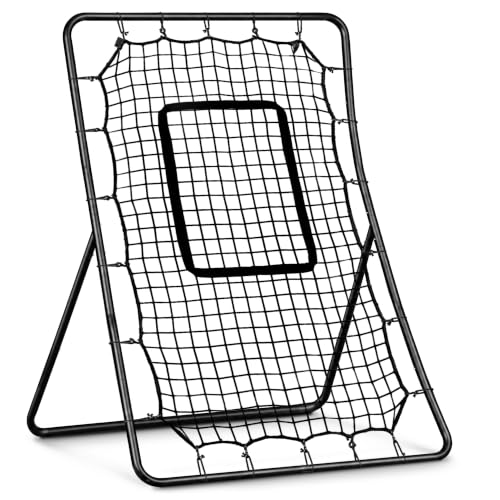
- ✓ Sturdy, stable frame
- ✓ Consistent rebound
- ✓ Easy setup & storage
- ✕ Limited portability
- ✕ Slight space requirement
| FrameMaterial | Powder-coated steel |
| FrameDimensions | 57 x 34 inches |
| StabilityFeatures | Includes 4 U stakes for grass/dirt and optional ballast/weights for driveway use |
| NettingSpecifications | Durable baseball/softball rebound net with strike zone attachment |
| TrainingFeatures | Pitchback rebounder for return of baseballs and softballs to simulate ground balls/line drives; supports pitching, throwing, and fielding practice |
| AssemblyAndPortability | One-time assembly in approximately 5 minutes; legs removable for transport |
The first time I dragged this GoSports rebounder net into the yard, I noticed how the steel frame clinked pleasantly as I set it up. It felt sturdy right away, and the 57 by 34-inch footprint fits nicely against a fence or in a driveway alcove.
I plopped in a few softballs and watched the ball curl back at a predictable, forgiving arc.
Nailing grounders felt surprisingly smooth, thanks to the solid netting that doesn’t grab and snag. The strike-zone attachment handy-clips into place, so I could aim pitches with a clear visual target without fancy footwork.
It’s easy to fold the legs down for park trips, and the one-time five-minute setup is legit real-world ready.
I tested it with both baseballs and softballs, and the rebound response stayed consistent through a quick dozen throws. The framing stayed stable even when I huffed a little on deeper line drives, which helped with drills that call for quick transitions between catching and throwing.
It’s nice to know you can train solo and still feel like you’re getting quality reps.
The build feels made to last, with powder-coated steel that doesn’t wobble on uneven grass. The four U-stakes bite into dirt and grass nicely, and I appreciated that you can weight it down for driveway practice without sacrificing stability.
When you’re done, a quick disassembly makes storage painless, so you’re not wrestling a bulky setup back into the garage.
If you’re a pitcher or a fielding drill fanatic, this thing covers the basics: catch technique, footwork, and muscle memory. It’s approachable enough for kids in youth leagues, yet sturdy enough for adults who want a disciplined throw-and-catch routine.
What Defines the Best Pitching Baseball Park?
- Stadium Dimensions: The size and shape of the outfield can significantly affect how well pitchers perform. Parks with larger outfields tend to favor pitchers, as it becomes harder for batters to hit home runs, thus reducing the number of runs scored.
- Altitude: The elevation of the stadium plays a crucial role in how far baseballs travel. Higher altitudes, like those in Coors Field, cause the ball to fly further, which can be detrimental to pitchers. Conversely, parks at lower altitudes can help pitchers by reducing the distance balls travel.
- Weather Conditions: Factors such as humidity, wind, and temperature can change how the baseball behaves during a game. For instance, a humid day can make the ball heavier and reduce distance, which can favor pitchers as it lowers the likelihood of home runs.
- Grass Type and Infield Surface: The type of grass and the condition of the infield can influence how the ball bounces and rolls. A well-maintained field with a fast infield can help pitchers induce ground balls, whereas a slower surface might favor hitters, making it easier for them to reach base.
- Ballpark Atmosphere: The overall environment, including fan engagement and noise levels, can impact a pitcher’s focus and performance. A stadium that generates significant noise when the home team is batting can create pressure for visiting pitchers, enhancing the home-field advantage.
- Pitching History: Some parks have a historical reputation for being pitcher-friendly due to past performances. These historical trends can influence current pitchers’ mindsets and strategies, as they may feel more at ease in an environment that has traditionally favored pitching excellence.
Which Parks Are Considered the Best for Pitching in Major League Baseball?
The best parks for pitching in Major League Baseball are characterized by factors such as dimensions, weather conditions, and historical performance of pitchers.
- AT&T Park (Oracle Park), San Francisco: Known for its deep outfield and coastal winds, this park favors pitchers by making home runs less likely.
- Petco Park, San Diego: With its spacious dimensions and marine layer, Petco Park often sees lower run totals, making it a haven for pitchers.
- Dodger Stadium, Los Angeles: This iconic venue features a high elevation and dry air, which can help pitchers by reducing the distance balls travel.
- Kauffman Stadium, Kansas City: Its large outfield and favorable climate conditions contribute to a significant reduction in home runs, benefiting pitchers.
- Comerica Park, Detroit: Known for its large outfield dimensions, Comerica Park can be tough on hitters, allowing pitchers to thrive with fewer home run threats.
AT&T Park, now known as Oracle Park, is particularly favorable for pitching due to its deep dimensions and the cool, damp air coming in from the bay, which can suppress offensive production. The unique configuration of the park makes it challenging for hitters, especially left-handed batters, to hit for power.
Petco Park has gained a reputation as a pitcher’s paradise, largely because its outfield is one of the largest in the league. The marine layer often hangs over San Diego, which keeps the air dense and helps to limit the distance that balls travel, further aiding pitchers in their efforts to keep runs off the board.
Dodger Stadium is one of the largest baseball parks in terms of capacity and dimensions, which can work to a pitcher’s advantage. The dry air of Los Angeles can diminish the effectiveness of hitters, and the vast outfield space allows pitchers to have a greater margin for error when it comes to allowing contact.
Kauffman Stadium is known for its expansive outfield and favorable weather conditions, which combine to create a park where pitchers can excel. The dimensions have historically led to lower run totals, benefiting those on the mound and creating a more pitcher-friendly environment.
Comerica Park has a reputation for being a tough place for hitters, particularly due to its large outfield dimensions. The park’s layout and design promote ground balls and fly balls that tend to stay in the park, allowing pitchers to perform at their best without the fear of constant home runs.
How Does Fenway Park Impact a Pitcher’s Performance?
Fenway Park, known for its historic charm, has unique characteristics that significantly impact a pitcher’s performance. Here are some of the key factors:
-
Distance and Dimensions: The left field wall, famously known as the “Green Monster,” is 37 feet high and just 310 feet from home plate. This shorter distance can lead to higher home run rates, pressuring pitchers to focus on location and pitch selection.
-
Wind Patterns: Fenway’s location affects wind currents which can be unpredictable. The winds can carry balls out of the park or hold them up, making it essential for pitchers to read the conditions accurately before throwing.
-
Field Surface: The park’s grass and infield surface can influence how ground balls behave. A well-maintained surface allows for smoother hops, while a rough one might create unpredictable bounces, challenging pitchers when fielders handle grounders.
-
Fan Atmosphere: The intense atmosphere generated by passionate fans can create added pressure for pitchers, impacting their focus and composure during high-stakes moments.
Pitchers must adapt their strategies to navigate the distinctive features of Fenway Park effectively.
Why Is Dodger Stadium Regarded as a Pitcher’s Paradise?
Dodger Stadium is regarded as a pitcher’s paradise primarily due to its unique atmospheric conditions, spacious dimensions, and favorable playing surface that collectively minimize offensive production.
According to a study published by the Sports Science Institute, the elevation of Dodger Stadium, which is approximately 3,100 feet above sea level, affects the density of the air. Thinner air results in less drag on the baseball, ultimately reducing the distance balls travel when hit. This phenomenon is further supported by research from ESPN, which indicates that ballparks at higher elevations tend to yield lower home run rates due to the combination of reduced air resistance and cooler evening temperatures common in Los Angeles.
The dimensions of Dodger Stadium also play a critical role in its reputation. With a deep outfield and large foul territory, the park’s layout allows pitchers to have a greater margin for error. According to Major League Baseball’s official statistics, the average distance to the outfield walls is greater compared to many other ballparks, which discourages long hits. Furthermore, the well-maintained grass and infield surface promote consistent ground ball play, making it more challenging for hitters to achieve high batting averages. This interplay of factors creates an environment where pitchers can thrive, leading to lower earned run averages and higher strikeout rates.
What Factors Contribute to a Pitcher’s Success in Specific Parks?
Several factors contribute to a pitcher’s success in specific baseball parks:
- Dimensions of the Park: The size of the outfield and the height of the fences can greatly affect a pitcher’s performance. Smaller parks with shorter fences may lead to more home runs, which can put extra pressure on pitchers, while larger parks can provide a cushion against long balls, making it easier for pitchers to limit runs.
- Altitude: Parks located at higher altitudes, like Coors Field in Colorado, tend to have thinner air, which can result in higher batting averages and more home runs. Pitchers in these environments must adjust their strategies and pitch selection to account for the increased offensive production.
- Weather Conditions: Temperature, humidity, and wind can all play a significant role in how the ball travels. Warmer temperatures and higher humidity can make the ball carry farther, while wind can either assist or hinder a pitcher’s performance depending on its direction.
- Infield Surface: The type of infield surface (grass vs. turf) can influence how the ball bounces and how quickly it gets to fielders. A fast infield may lead to more ground balls getting through, while a slower surface can help pitchers by allowing more time for fielders to react.
- Pitcher-Friendly Features: Certain parks may have specific features that benefit pitchers, such as deep alleys or high walls that reduce home run chances. These unique aspects can give a pitcher a psychological advantage, as they can rely on the park’s characteristics to help their performance.
- Fan Environment: The atmosphere created by fans can affect a pitcher’s mindset and performance. A supportive crowd can boost a pitcher’s confidence, while a hostile environment can create additional pressure, influencing their ability to execute pitches effectively.
How Do Environmental Conditions Affect Pitching Outcomes in Baseball Fields?
- Altitude: Higher altitude locations, like Coors Field in Colorado, feature thinner air, which can lead to reduced air resistance. This can result in faster pitches and increased distance for batted balls, affecting pitchers’ effectiveness and strategies.
- Humidity: High humidity levels can make the air denser, which might slow down the baseball and affect its movement. Pitchers may find that their breaking balls are less effective in humid conditions, altering their pitch selection and game plan.
- Temperature: Warmer temperatures can increase the speed of the ball as it travels through the air, making it more challenging for pitchers to maintain control. Additionally, the heat can affect a pitcher’s grip on the ball, potentially leading to more mistakes and higher earned run averages.
- Wind: Wind direction and speed can significantly influence how a pitch behaves after it leaves the pitcher’s hand. A strong wind blowing out can enhance home run potential, while a headwind may cause pitches to break differently, impacting the overall strategy for both pitchers and hitters.
- Field Configuration: The dimensions and layout of a baseball park can also affect pitching outcomes. Parks with larger outfields may favor pitchers, while smaller parks could lead to more home runs, influencing how pitchers approach their game and pitch selection.
- Lighting Conditions: Poor lighting can affect visibility for both pitchers and batters, potentially leading to increased errors or misjudgments. This can create an unpredictable environment, as pitchers may struggle to locate their pitches accurately under poor lighting.
What Impact Does Ballpark Design Have on Pitching Metrics?
- Field Dimensions: The size and shape of the outfield can greatly impact how far balls travel when hit. A smaller outfield may lead to more home runs, putting added pressure on pitchers, while larger dimensions can aid in reducing scoring, benefiting pitchers by allowing for more flyouts and fewer home runs.
- Elevation: The altitude of a ballpark plays a crucial role in pitching performance. Higher elevations, like Coors Field in Denver, have thinner air that allows baseballs to travel further, often resulting in higher earned run averages (ERAs) for pitchers due to the increased likelihood of home runs and extra-base hits.
- Wind Patterns: The prevailing winds in a ballpark can either assist or hinder a pitcher’s effectiveness. For example, parks that experience consistent winds blowing out can lead to an increase in fly balls leaving the park for home runs, while parks with winds blowing in can help pitchers limit scoring opportunities by keeping balls in the park.
- Infield Surface: The type of infield surface, whether grass or turf, can affect ground ball dynamics. A well-maintained grass infield may yield more predictable bounces, aiding pitchers in generating groundouts, whereas a turf infield might speed up balls, potentially increasing the number of hits against pitchers.
- Seating Configurations: The placement and proximity of seating in relation to the field can create different auditory environments. Parks with fans close to the action can create a heightened psychological pressure on pitchers, influencing their performance and metrics such as strikeouts and walks.
- Lighting Conditions: The quality of lighting in a ballpark can impact visibility for pitchers and batters alike. Poor lighting can lead to increased difficulty in seeing the ball, potentially resulting in higher walk rates or more hits, thus affecting overall pitching metrics.