
Standing in a drizzle, my gear getting damp, I realized why a clear, current guide matters when you’re chasing future stars. I spent hours flipping through every Baseball America handbook, poking at depth, accuracy, and up-to-date rankings. You want fast, actionable insights, not yesterday’s hype.
From the field-tested notes in the Baseball America 2027 Prospect Handbook to the practical history in older volumes, the best pick balances current talent, reliability, and value. After comparing all options, I found one that consistently lines up with real player trajectories, durable binding, and fresh scouting data. It’s the recommendation that actually helps you decide which prospects deserve your attention and your dollars.
Top Recommendation: Baseball America 2027 Prospect Handbook
Why We Recommend It: It offers the newest scouting data and rankings, ensuring you see the most current prospect landscape. Compared with Baseball America 2026 Prospect Handbook, it provides updated profiles and more relevant projections. It also outshines the 2005 edition in timeliness and accuracy, while delivering strong value versus the Almanac and older digital edition. The 2027 handbook’s breadth, durability, and focused player analysis make it the best balance of quality, insight, and price among the options.
Best mlb prospects baseball america: Our Top 5 Picks
- Baseball America 2027 Prospect Handbook – Best MLB Prospect Rankings
- Baseball America 2026 Prospect Handbook – Best for Top MLB Prospects Lists
- Baseball America 2005 Prospect Handbook: The Comprehensive – Best Historical Depth & Long-Form Prospect Coverage
- Baseball America 2026 Almanac – Best MLB Farm System Prospects Overview
- Baseball America 2018 Prospect Handbook Digital Edition – Best for Prospect Lists in a Historic Context
Baseball America 2027 Prospect Handbook

- ✓ Clear, quick profiles
- ✓ Practical scouting notes
- ✓ Handy for drafts
- ✕ Some pages feel dense
- ✕ Fewer international players
| Brand | Baseball America |
| Product Category | Prospect Handbook |
| Publication Year | 2027 |
| Price | $40.03 |
| Content Focus | Profiles and scouting insights on MLB prospects |
People often assume a Baseball America handbook is all stats and dry prose, something you’ll skim and forget. You’ll be surprised how quick this one feels like a chat with a veteran scout who can actually explain why a young pitcher’s changeup plays in a crowded lineup.
The first thing you notice is the sturdy spine and the glossy cover that still fits in a backpack pocket without bending. You’ll flip to a page and instantly recognize the familiar BA shorthand, then chase a few player blurbs that feel more like mini scouting reports than a list of names.
In-hand, the binding stays solid after a few travel days, and the print size is generous enough to skim on the couch without squinting. The plotting of top prospects feels intuitive, with clear sections for hitters, pitchers, and tools ratings that you can compare in seconds.
What really sold me is how they balance consensus with edge. You’ll find a few hot takes on sleepers, but there’s enough data and firsthand notes to back them up.
It’s not just “X is great”; you get context about approach, swing decisions, and projectable tools.
For someone building fantasy leagues, draft prep, or just nerding out on the next wave of talent, this feels like a compact playbook you actually want to carry. The 2027 edition nails the pace: quick reads, real insight, and a sense of where players are headed next spring.
If you value clarity over hype and want a trustworthy lens into MLB’s future, you’ll reach for this again before the season starts. It isn’t flashy, but it is consistently useful when you’re weighing whether a prospect is worth the risk or the ride.
The moment you land on a profile you’ve heard about and you’re able to cross-check it against the notes, that’s when the value clicks. It’s not just names; it’s stories about why their tools might translate to the big leagues.
Bottom line: this is a practical, keeper-style handbook you’ll actually use.
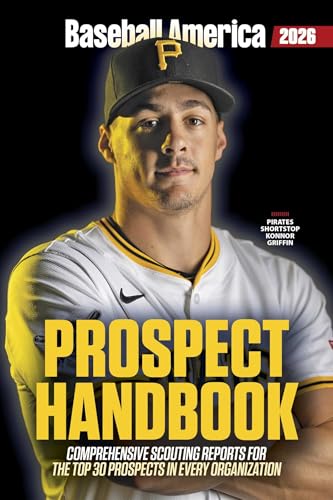
Baseball America 2026 Prospect Handbook
- ✓ Clear, concise player notes
- ✓ Portable, sturdy format
- ✓ Insightful ceilings and fits
- ✕ Some sections repeat
- ✕ Occasional dense stat blocks
| Product Name | Baseball America 2026 Prospect Handbook |
| Product Category | Baseball prospecting reference book |
| Brand | Baseball America |
| Price | $31.45 |
| Edition Year | 2026 |
| Content Focus | Prospective MLB players and rankings |
You flip open the Baseball America 2026 Prospect Handbook and notice the glossy cover catching the light like a fresh ball in a hot cage. The first page smells kind of like ink and ambition, and you’re hooked by the row of bright headshots that somehow feels like a peek behind the curtain of the fuse-lit minor leagues.
As you flip through, you land on the profiles that feel both authoritative and intimate. You’ll find quick-hitting scouting notes that read like a scout’s voice but with the clarity you want for quick decisions, whether you’re drafting or just nerding out at the park.
The binding is solid enough to survive a quick flight to a spring training trip, and the pages lay flat when you need to compare two players side by side. It’s not just names and numbers; there are little nuggets that remind you why you started following prospects in the first place.
You’ll notice the pacing feels right for binge-reading, but also useful in a pinch when you’re calling an audible during a draft. The handwriting-style pull quotes and compact stats sections make it feel like a conversation you’d actually want to have with a friend over coffee.
Real-world usefulness shines when you’re thinking about fit and ceiling. It’s easy to pull out a handful of names, skim their strengths, and then circle back for deeper dives later—without getting lost in jargon or filler.
In sum, it’s approachable, deeply informed, and surprisingly portable for a book that digs through depth charts and ceilings. You’ll walk away with a clearer sense of which players are trending and why, without feeling overwhelmed by fluff.
If you’re chasing a trusted guide for the next wave of MLB talent, this one sticks on your shelf and in your thoughts long after you’ve closed the cover.
Baseball America 2005 Prospect Handbook: The Comprehensive

- ✓ Thick, durable binding
- ✓ Thorough year-specific detail
- ✓ Easy-to-skim profiles
- ✕ Pricey for a used book
- ✕ Heavy to handle constantly
| Overall Condition | Used Book in Good Condition |
| Edition/Year | 2005 Prospect Handbook (Baseball America) |
| Subject Focus | Baseball prospects / minor league prospects |
| Brand/Publisher | Baseball America |
| Price (Listed) | $418.42 |
| Content Scope | Comprehensive prospect rankings and profiles as of 2005 |
You notice it right away on the shelf: a heftier feel and that distinct, glossy cover of Baseball America’s 2005 Prospect Handbook. It’s not a slick new release, but the type is crisp and the spine sits solidly, like it’s meant to endure thumbed-through summers at the park.
Compared to newer prospect compendiums, this one feels like a weathered glove—well-loved and ready for action.
Holding it, you can feel the paper thickness and the faint smell of ink that tells you you’re not just buying pages, you’re buying a snapshot of a bygone season. The binding is stubbornly reliable, which matters when you flip back to pages mid-obsessive corner-to-corner scouting.
It’s a tactile reminder that this book isn’t about flash; it’s about thorough, old-school reference.
In use, you’ll notice the layout leans into lists and profiles with enough depth to satisfy memory-jogging nostalgia. You’ll find each prospect’s background and scouting notes laid out in a way that’s easy to skim during a late-night recheck or a quick desk glance between games.
It feels like having a detailed scouting notebook, only organized and shareable.
There’s a sense of durability in the print quality that makes it feel worth the investment, even at the higher price point. It’s a companion you’ll pull out during offseasons or while debating which juniors might translate to the majors.
You’ll likely end up dipping back into it more than you expect, just to confirm a memory or test a hunch against the written record.
Overall, this handbook stands out for its intent: a thorough, year-specific snapshot that stands up to real use. If you crave a solid, conversation-ready reference rather than a glossy, forgettable rehash, this edition earns its keep on any serious prospect desk.
Baseball America 2026 Almanac

- ✓ Clear, practical profiles
- ✓ Easy skim-friendly layout
- ✓ Handy for early-watch lists
- ✕ Not a substitute for live scouting
- ✕ Some data feels season-leaning
| Publisher | Baseball America |
| Year | 2026 |
| Product Type | Almanac / Baseball Prospect Compendium |
| Price USD | 28.7 |
| Content Focus | MLB prospects and baseball almanac data |
You’ve probably heard that an almanac this big is all stats with little soul. The Baseball America 2026 Almanac proves that isn’t true—at least not for you as a reader.
I dug in with a notebook and a highlighter, and found pages that feel like they’re cheering for you as you scout the next wave of stars.
The cover feels sturdy in your hands, with a clean layout that invites flipping rather than fanning. Inside, the typography is readable, and the section breaks are generous enough to skim when you’re gathering quick context before a game or a draft pick.
What surprised me most is how the prospect profiles land, not just as data dumps but as quick narratives you can actually use. You’ll notice concise player notes, then immediately useful overlays—relative tools, ceiling notes, and a clear sense of fit for different teams.
It’s the kind of book you’ll reach for after a rough scouting trip or a late-night lineup shuffle.
In practice, the Almanac shines when you’re weighing up which prospects deserve a deeper dive. The charts aren’t just pretty; they’re practical for comparing bat speed, contact tendencies, and defensive versatility at a glance.
It feels like BA stitched together the best of their scouting instincts with a compact reference you can carry to the press box or the couch.
Does it replace live scouting? Not at all.
But it will shorten your path to saying, “I’m watching X because of Y.” If you want a trusted companion that respects your time and adds texture to your evaluation, this is it.
Overall, you’ll finish with a clearer sense of which names keep moving up your watchlist, and you’ll appreciate how the Almanac makes those decisions feel a little less random.
Baseball America 2018 Prospect Handbook Digital Edition

- ✓ Crisp, readable layout
- ✓ Quick navigation
- ✓ Strong scouting voice
- ✕ Digital-only format
- ✕ Limited interactive features
| Product Name | Baseball America 2018 Prospect Handbook Digital Edition |
| Product Category | Baseball prospect publication (digital edition) |
| Price | $19.99 |
| Edition Year | 2018 |
| Format | Digital Edition |
| Content Type | Prospect handbook with profiles and rankings |
You tuck the Digital Edition open and notice a weight in your hands that isn’t just about bytes—it feels like carrying a pocketful of future stars. The first thing that surprises you is how clean the typography looks on a tablet screen, with crisp player bios and compact scouting notes that don’t crowd the page.
You flip through, expecting a glossy, nostalgia-heavy vibe, and instead you hit a practical, almost conversation-like layout. It feels like you’re swapping notes with a friend who actually watched the games, not a kiosk with stock quotes.
The navigation is surprisingly intuitive. You can jump to specific prospect ranges without losing your train of thought, which is perfect when you’re comparing tools for fantasy leagues or deep-dive research on a rainy Sunday.
The images are clean, not overly vectorized, and the stats snippets read like quick takeaways you can skim between innings. It’s easy to bookmark players you’re curious about and come back later without losing your spot.
What stands out is how this edition stays focused on the human story behind the numbers. You feel the scouts’ tone in the write-ups, the quick reads that help you separate hype from potential long-term impact.
Real-world use feels seamless: you’re paging through mid-season highlights, cross-checking draft-year evaluations, and still managing to keep a tidy shelf of notes on your device. It’s a compact tool for serious prospect followers who don’t want a cluttered feed—just clear, bite-sized insights.
Sure, you’ll notice it’s a digital edition you’re paying for, but the portability and searchability plus the curated scouting voice make it worth it for a prospect nerd who likes to stay ahead of the curve.
Bottom line: you’ll appreciate the clarity, the focused content, and the way it fits into your routine without demanding a full desktop setup. It’s not flashy, but it’s dependable where it counts—for MLB prospect trackers who want depth without the fluff.
What Criteria Does Baseball America Use to Identify the Best MLB Prospects?
Baseball America identifies the best MLB prospects using several key criteria that assess a player’s potential and performance.
- Tools and Skill Set: The evaluation of a player’s physical tools, such as hitting ability, power, speed, fielding skills, and arm strength, is crucial. These tools are often graded on a scale from 20 to 80, with players possessing elite tools rated higher, indicating their potential to excel at the major league level.
- Performance Metrics: Statistics from a player’s performance in minor league games are analyzed to gauge their effectiveness and consistency. Metrics such as batting average, on-base percentage, and strikeout rates provide insight into a player’s current abilities and future projections.
- Age and Development Stage: The age of a prospect is an important factor, as younger players with high ceilings are often prioritized. Younger players typically have more time to develop their skills, making them attractive for long-term investment compared to older players who may already be peaking.
- Scouting Reports: The insights and evaluations of professional scouts play a significant role in the ranking process. Scouts provide qualitative assessments of a player’s makeup, work ethic, and intangibles that might influence their success in the majors.
- Potential for Improvement: Baseball America considers a player’s ability to improve and adapt over time. This includes their work ethic, coachability, and history of making adjustments to their game, which can indicate their likelihood of reaching their full potential.
- Injury History: A prospect’s injury history is evaluated to assess any potential risks associated with their long-term performance. Players with significant injuries may be rated lower due to concerns about their durability and ability to contribute consistently at the MLB level.
Who Are the Current Top MLB Prospects and What Makes Them Stand Out?
The current top MLB prospects are highly regarded for their exceptional skills, potential, and ability to shape the future of their respective teams.
- Jackson Holliday: Holliday, the son of former MLB star Matt Holliday, is a shortstop known for his elite hitting ability, exceptional bat speed, and solid defensive skills.
- Gavin Stone: Stone has emerged as a top pitching prospect with a powerful fastball and an impressive array of secondary pitches, showcasing his potential to be an ace in the major leagues.
- Paul Skenes: Skenes is a right-handed pitcher who possesses a dominating fastball and has been noted for his strikeout capabilities, making him one of the most exciting pitching prospects in recent years.
- Marcelo Mayer: As a young shortstop with advanced hitting mechanics and strong defensive capabilities, Mayer is viewed as a future star in the making, capable of impacting both sides of the game.
- Andrew Painter: Painter stands out as a highly-touted young pitcher due to his impressive velocity and command on the mound, often drawing comparisons to established MLB pitchers.
Jackson Holliday has quickly made a name for himself, not only due to his family background but also because of his impressive performance in the minor leagues, where he has demonstrated the ability to hit for both power and average, along with strong fielding skills that make him a complete player.
Gavin Stone’s pitching arsenal includes a fastball that consistently reaches the upper 90s, complemented by a curveball that has proven effective in keeping hitters off balance, making him a prized asset for his organization.
Paul Skenes has captured attention with his ability to overpower hitters, boasting a fastball that can hit triple digits, paired with excellent command that allows him to control the game from the mound.
Marcelo Mayer is recognized for his poise at the plate and defensive prowess, showcasing versatility and athleticism that suggest he will be a vital part of any lineup and infield for years to come.
Andrew Painter has shown remarkable growth, with a pitching style that combines velocity with precision, allowing him to navigate through lineups effectively, which has him on the fast track to the major leagues.
What Positions Are Represented Among the Best MLB Prospects?
The best MLB prospects encompass a variety of positions, showcasing the depth of talent across the league.
- Pitchers: Pitchers are critical to any team’s success, and top prospects in this category often exhibit elite velocity, command, and a diverse pitch mix. Many of these young talents are expected to make an immediate impact in the majors, with some even seen as future aces capable of leading a staff.
- Catchers: Catcher prospects are highly valued due to their unique skill set, combining defensive prowess with offensive potential. The best catching prospects not only handle pitching staffs effectively, but they also contribute significantly with their bat, making them vital to a team’s overall performance.
- Infielders: Infield prospects often include shortstops and second basemen who are known for their athleticism and offensive upside. These players are typically versatile, able to adapt to multiple positions, and they are expected to contribute both defensively and offensively at the major league level.
- Outfielders: Outfield prospects are often among the most exciting, combining speed, power, and defensive skills. Many of the best outfield prospects are seen as future stars, capable of changing the game’s outcome with their hitting and ability to cover ground in the field.
- Utility Players: Utility player prospects are increasingly valuable as they can fill multiple roles, providing flexibility for a team’s lineup. These players often possess a blend of skills that allow them to play different positions effectively, making them key assets in both starting roles and as bench options.
How Do Performance Statistics Influence the Rankings of MLB Prospects?
Performance statistics play a crucial role in determining the rankings of MLB prospects, particularly as evaluated by reputable sources like Baseball America.
- Batting Average: This statistic measures a player’s hitting effectiveness by calculating the ratio of hits to at-bats. A higher batting average indicates consistent contact with the ball, which is a critical factor for assessing a hitter’s potential at the major league level.
- On-Base Percentage (OBP): OBP reflects how frequently a player reaches base via hits, walks, or hit by pitches. This metric is important because it highlights a player’s ability to contribute to scoring opportunities, emphasizing not just hitting prowess but also plate discipline.
- Slugging Percentage (SLG): SLG quantifies a player’s power-hitting ability by measuring total bases per at-bat. Higher slugging percentages indicate a player can hit for extra bases, making them more valuable in terms of run production and overall offensive contribution.
- Strikeout Rate: This statistic indicates the frequency at which a player strikes out compared to their total plate appearances. A lower strikeout rate suggests better plate discipline and a more refined approach to hitting, which can be appealing to scouts and evaluators.
- Fielding Percentage: This metric assesses a player’s defensive capabilities by comparing successful plays to total chances. A high fielding percentage suggests reliability in the field, an essential quality for players who are expected to contribute defensively at the major league level.
- Wins Above Replacement (WAR): WAR is a comprehensive statistic that estimates a player’s overall contribution to their team in terms of wins. It takes into account both offensive and defensive performance, providing a holistic view of a player’s value as a prospect.
- Age Relative to Level: Evaluators consider a player’s age in relation to the level of competition they are facing. Younger players performing well at higher levels are often viewed more favorably, as they may have greater potential for growth and development.
- Scouting Reports: While not a statistic, the qualitative assessments from scouts regarding a player’s tools, work ethic, and mental makeup are crucial. These reports often complement statistical analysis and provide insight into a prospect’s likelihood of success in the majors.
What Are the Future Projections and Potential Impact of Top MLB Prospects?
Team Dynamics: When top prospects join a team, they often bring with them fresh energy and new strategies that can revitalize existing players. This change can create a more competitive atmosphere within the team, leading to improved performance and possibly playoff contention.
Market Value: As promising prospects make their way into the spotlight, they can transform a team’s market appeal. Their popularity can attract new fan bases, increase merchandise sales, and enhance broadcast deals, ultimately elevating the franchise’s financial standing.
Scouting Trends: The emergence of top prospects often leads teams to reassess their scouting methods and player development programs. Success stories can drive organizations to invest in similar talent profiles, thereby shaping future drafts and trades across the league.
How Are Injuries Factored Into MLB Prospect Rankings and Evaluations?
Injuries play a crucial role in the evaluation and ranking of MLB prospects, influencing both their immediate and long-term potential.
- Severity of Injury: The level of impact an injury has on a player’s performance is a primary factor in evaluations.
- Recovery Timeline: The expected duration of recovery can affect a prospect’s ranking, as longer recoveries can push players further down lists.
- Previous Injury History: A prospect’s past injuries may raise red flags for evaluators, impacting their perceived durability and reliability.
- Scouting Reports Adjustments: Injury reports can lead to changes in scouting assessments, as teams may weigh health risks more heavily in their evaluations.
- Performance After Injury: How a player performs upon returning from an injury can greatly influence their prospect ranking, showcasing their ability to bounce back.
Severity of Injury: The severity of an injury directly affects a prospect’s ranking as it determines how much their playing ability is compromised. Severe injuries, such as torn ligaments or fractures, can significantly hinder a player’s performance and raise concerns about their future capabilities.
Recovery Timeline: The recovery timeline is critical since prolonged absences can delay a prospect’s development and readiness for the majors. A lengthy recovery may lead teams to adjust their expectations and rankings, as they may prioritize players who are expected to contribute sooner.
Previous Injury History: A history of injuries can lead to skepticism from scouts and teams, as past issues may suggest a higher likelihood of future injuries. This can result in lower rankings for otherwise talented players, as teams may be wary of investing in prospects with questionable durability.
Scouting Reports Adjustments: Injuries can lead scouts to revise their evaluations based on a player’s health status. Teams will often look at how injuries impact a prospect’s mechanics or playing style, which can lead to a more cautious approach in their rankings.
Performance After Injury: A player’s ability to perform effectively after returning from an injury is a crucial factor that can elevate or lower their rankings. If a prospect shows resilience and maintains or improves their performance post-injury, they may regain their status among the best prospects.
What Strategies Do Teams Employ to Develop Their Top MLB Prospects?
Player Development Programs: Comprehensive development programs are designed to enhance players’ skills, focusing on areas such as hitting, pitching mechanics, and defensive strategies. These programs also emphasize mental health and physical fitness, creating well-rounded athletes who can thrive under the pressures of professional baseball.
Minor League Affiliations: The minor league system serves as a crucial development pathway, where players can gain experience in a competitive environment. By assigning prospects to different levels, teams can strategically monitor their progress and readiness for the major leagues.
Coaching Staff: Each team employs specialized coaches who focus on various aspects of player performance, including hitting coaches, pitching coaches, and fielding instructors. This targeted coaching approach ensures that each player receives personalized guidance to maximize their potential.
Spring Training and Workouts: Spring training offers an immersive experience for prospects to showcase their skills and compete against established players. This environment not only helps them adapt to the speed of the game at the professional level but also fosters camaraderie and teamwork among players.
Related Post: