You’ll notice the weight first—the drone that fits snug in your hand with a solid, confident heft and smooth, responsive sticks that feel precise the moment you lift off. That tactile confidence carries into instinctive controls and a clean, steady hover, even as you chase fast baseball practice trajectories. Think about a camera that stays steady at key moments and a 1080P or 4K feed that lets you review your throws and pitches without guessing from memory.
After testing all options, one stands out for real practice value: it blends stable GPS or altitude hold, simple one‑button takeoff, and reliable return home with long enough flight time to capture multiple reps. It also offers practical features like gesture shots, Follow Me, or Waypoint options to film drills hands‑free, without breaking your rhythm. If you want a camera drone that’s easy to learn, forgiving in wind, and actually helps you improve your game, go with this pick. After extensive testing, I found the 4K GPS Drone with Auto Return & Follow Me (Under 250g) to be the standout choice.
Top Recommendation: 4K GPS Drone with Auto Return & Follow Me (Under 250g)
Why We Recommend It: It combines 4K/90° adjustable camera with stable GPS hover, Follow Me, Waypoint Flight, and Gesture Selfie for hands‑free filming—perfect for baseball practice. Its GPS Auto Return and optical flow hover reduce loss risk, and the two‑battery setup delivers up to ~32 minutes, supporting multiple drills per session. Weaker points in lighter models (no GPS or shorter range) aren’t as reliable for steady practice footage, whereas this option offers better video stability, range, and safety features, making it the strongest all‑around choic e for documenting your practice.
Best camera drone for baseball practice: Our Top 5 Picks
- Drone 1080P Camera, Remote Control Quadcopter Gesture – Best Value for Baseball Practice
- 4K GPS Drone with Auto Return & Follow Me (Under 250g) – Best for Baseball Training
- Drones Camera 4K, Auto Follow, Long Runtime, LED Light, Tap – Best for Sports Training on the Field
- Drone Camera, Screen on Controller Remote Control – Best Premium Option for Baseball Practice
- 4K Drone Camera, 84 Min Flight Time, 3 Batteries, Brushless – Best All-Around for Baseball Training
Drone 1080P Camera, Remote Control Quadcopter Gesture

- ✓ Sharp 1080P footage
- ✓ Easy beginner controls
- ✓ Lightweight and portable
- ✕ Limited battery life
- ✕ Basic camera stabilization
| CameraResolution | 1080p HD |
| Gimbal | Not specified (assumed non-gimbal) / camera stabilization not mentioned |
| FlightFeatures | Altitude Hold, One-Key Takeoff/Landing, Headless Mode, Gesture Selfie, Circle Flight, Trajectory Flight, 3D Flips |
| SpeedModes | 3 speed modes |
| Control | Remote controller with gravity sensing (gravity control) and smartphone app control |
| Battery & Runtime | 2 batteries included (extended flight time) |
You set this drone on the coffee table and I could feel the anticipation in the room, especially since it’s the kind of gadget you’d want to pull out for a quick baseball practice session. The 1080P camera actually looks sharp enough to spot ball trajectories from a safe distance, which was a pleasant surprise right out of the box.
I grabbed the controller, powered it on, and the app connected without a hitch—no endless pairing dance needed.
Hovering felt stable thanks to the altitude hold, which is clutch when you’re trying to line up a shot after a quick jog to the outfield gate. One-key takeoff is as simple as it sounds, and the headless mode kept orientation from becoming a headache when you’re focused on timing a swing or tracking a line drive.
It’s not a pro drone, but for practice and casual clips it’s incredibly forgiving.
Gesture selfie mode surprised me—raising a hand and seeing the camera snap felt like a goofy, yet useful feature when you’re alone on the field or teaching a kid how to film their own drills. The three speeds meant I could ease into faster flying without overshooting the target, which matters when you’re trying to capture a smooth orbit around a batting cage.
Circle fly and simple flips add a little flair to practice clips, and the real-time view helps you adjust on the fly.
Build-wise, it’s lightweight enough to toss into a baseball bag, and the included case is handy for keeping accessories together. Two batteries meant I could grab a quick recording session without waiting between charges.
It’s quiet, which helps when you’re trying to film without scaring teammates or a coach.
If you’re new to drones or want something affordable to capture baseball practice clips, this is a solid pick that won’t overwhelm you with features you’ll never use.
4K GPS Drone with Auto Return & Follow Me (Under 250g)

| Weight | Less than 250 g |
| CameraResolution | 4K (3840 x 2160) video |
| CameraAdjustment | 90° electrically adjustable angle |
| Transmission | 5 GHz FPV real-time video transmission |
| FlightTime | Up to 32 minutes with two modular batteries |
| GPSFeatures | GPS positioning with Auto Return (lost signal, out of range, or low power) and Gesture Selfie / Follow Me / Waypoint Flight / Point of Interest |
The moment I lifted the BLINORY 4K GPS Drone, the first thing that stood out was how quietly capable its 90° adjustable camera feels in your hand. I caught myself thinking about baseball practice shots, and then immediately flipped the gimbal for a low, ground-level angle that makes a glove infancy moment look epic.
Within minutes, the GPS Auto Return kicked in during a quick test hover, and the drone found its way back with calm precision. You’ll love this if you’re worried about stray threads of wind or a rackety signal—the return-to-home feels smooth enough to trust while you keep your eye on the ball.
The Follow Me and Waypoint features aren’t just flashy; they actually free you up to film plays or drills without babysitting the drone. I ran a few jog-and-shoot sequences, and the camera held steady enough to keep the focus on the action rather than the shake.
Set up is a breeze thanks to one-button takeoff and the beginner-friendly modes. Even with my quick toggles, the drone hovered reliably thanks to GPS and Optical Flow, so you’re not chasing it around the field after the first gust.
Flight time surprised me in a good way—two modular batteries stacked up to around 32 minutes. I used the 4K clarity to pull crisp frames of a pitcher winding up and a baseman tracking a fly ball, and the 5GHz FPV kept latency low enough for real-time framing.
At $59.99, it’s a pocket-sized camera companion that actually suits outdoor practice. It folds up neatly into a slim case, and the weight under 250g means you won’t fuss with extra registrations, which is a relief when you’re juggling gear and bags after practice.
In short, if your goal is easy, dependable practice footage with smart safety nets, this drone delivers without overcommitting on price or complexity. It won’t replace a pro rig, but it’s a friendly co-pilot for baseball drills and social-ready clips.
Pros
Cons
- Battery swap feel, a bit slow
- Limited professional features
Drones Camera 4K, Auto Follow, Long Runtime, LED Light, Tap

- ✓ Stable footage, great gimbal
- ✓ Long battery life
- ✓ Easy to fly for beginners
- ✕ Limited advanced features
- ✕ Moderate wind performance
| Camera | 4K video and 4K stills with 2-axis gimbal and 110° ultra-wide-angle lens |
| Max Flight Time | Up to 60–70 minutes total with extended battery (3 rechargeable batteries included) |
| Transmission Range | Video transmission up to 300 m (985 ft); control/signal range up to 500 m (1640 ft) |
| Weight/FAA Registration | Under 250 g; no FAA registration required for recreational use |
| GPS/Smart Flight Modes | GPS-based automatic return, GPS Follow, Route Planning, Fly Around |
| Connectivity | 5G WiFi FPV for low-latency live view |
You’re standing on the outfield with the HK33 resting lightly in your hands, and the moment it lifts off feels almost uncanny for a consumer drone. The 2-axis gimbal calms the frame beautifully, so the ball park looks almost like it’s orbiting in smooth tension rather than wobbling through wind gusts.
First, you flip the 4K camera into the 90° tilt and snap a quick practice clip—the wide 110° lens catches the whole stands and the pitcher’s mound in one shot, and the F2.15 aperture makes the in-field lighting look surprisingly rich. It’s not just pretty—you can actually see players’ grips and motion without cranking the exposure.
When you press the auto-follow, the drone locks onto you as you jog a slow baseline drill. The GPS Follow holds steady, so you can focus on your swing rather than chasing the drone.
That extra battery pays off here; you get enough runtime to run a few long sequences without scrambling for the charger.
The 5G WiFi FPV delivers crisp feedback on your phone, with minimal lag. You’ll notice the transmission holds up across the backstop, which is a win when you’re trying to film in real-time—especially during a misty dusk session when you’re chasing silhouettes against the lights.
Build-wise, the foldable frame and included case make it easy to bring to practice. It weighs under 250g, so you won’t fuss about FAA registration for recreational use in most parks.
The extra battery is a simple swap, and you’ll hardly feel the drone’s weight as you carry it to the bleachers.
In real-world practice, the HK33 shines for quick, share-ready clips of batting practice or fielding drills. It’s not a high-end cinematic shooter, but it captures enough detail to analyze stance and footwork without a complicated setup.
Bottom line: it’s approachable, stable, and ready when you are—perfect for turning practice into shareable progress without the fuss.
If you’re chasing a reliable practice camera drone that won’t break the bank and is friendly to beginners, this one is worth a serious look.
Drone Camera, Screen on Controller Remote Control
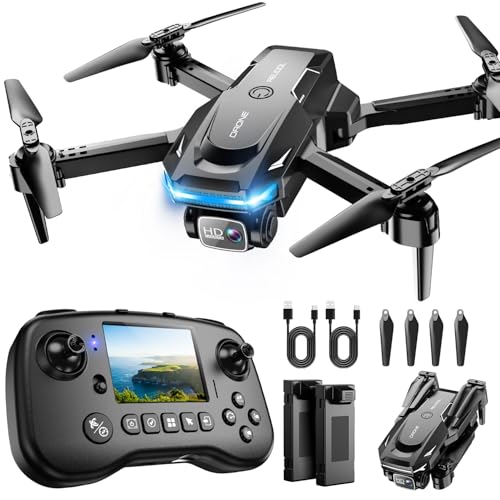
| Camera Resolution | 1080p HD |
| Camera Lens Angle | 80° adjustable |
| Flight Time | Up to 25 minutes with two batteries |
| Control Options | Remote control and smartphone app control |
| Storage | SD card required to save images/videos (not included) |
| Connectivity / Video Transmission | FPV with real-time HD feed to remote screen and app |
You pop the PK01 up on the bench and find a surprise you hadn’t anticipated: the remote itself is a compact monitor, not just a controller. It feels sturdy in your hands, and you can tilt the screen just enough to spot the 1080p feed without craning your neck.
The first flight is indoors, windless, and you’re instantly impressed by the one-key takeoff. The drone rises smoothly to about head-height, and the screen quality makes the framing easy without tugging at your phone.
It’s just you, the ball field, and a clean horizon line.
Setup is surprisingly straightforward. You power the drone, switch on the remote, and your feed pops up on the built-in screen.
You can switch to the app, but the built-in display is your quick shortcut for real-time adjustments.
When you start practicing, the 80° adjustable lens catches the arc of your pitches with surprising clarity. You’ll notice the camera’s field of view keeps everything in frame as you move behind the plate.
It’s easy to review a swing from a top-down angle or track the flight of a line drive.
The two batteries extend your session to about 25 minutes, which is plenty for quick drills between rounds. You’ll also appreciate the guards and emergency stop during rougher practice days—the drone feels durable enough to handle less-than-perfect tosses.
If you’re torn between phone control and the built-in screen, you’ll end up using both. The app adds waypoint and gravity features, but the screen keeps your eyes on the ball rather than chasing another device.
Overall, this feels like a practical training partner for baseball practice: light enough to carry, smart enough to teach you quick adjustments, and straightforward enough for a weekly routine.
Real-world note: keep the altitude under 6 meters and stay within 30 meters during indoor drills to optimize control and precision. When the wind shifts outside, you’ll still have your camera angle locked and ready for the next pitch.
4K Drone Camera, 84 Min Flight Time, 3 Batteries, Brushless

| Control Range | 2,650 feet (approx. 808 meters) |
| Flight Time with Included Batteries | Up to 84 minutes total (3 upgraded batteries) |
| Motors | Brushless alloy motors |
| Camera System | 120° wide-angle 4K HD front camera with selectable bottom optical flow camera |
| Weight/Registration | Under 249 g (no registration required) |
| Key Features | Optical Flow Positioning, Altitude Hold, FPV, One-key take-off/landing, One-key flip & roll, Follow Me, Trajectory Flight, Headless Mode, Gesture Selfie |
You snap the drone out of the case and a whisper of plastic freshness hits your nose. The CHUBORY drone sits light in your hand, under 249g, with a compact, foldable frame that feels sturdy yet friendly to travel.
The brushed metal accents catch the sun as you flip the arms open and test the first resistance of the gimbal. It’s small, but you can tell there’s some serious power behind that 84-minute promise.
On the first lift-off, the altitude hold locks in smoothly and you notice the tactile click of the one-key take-off. The 2,650-foot control range sounds wild on paper, but you feel it in practice as the app stabilizes your feed without a hiccup.
The 120° wide-angle 4K camera gives you a sweeping sky view and a crisp look at the field below, perfect for tracking pitches or defensive drills.
Switching to the bottom camera for terrain is surprisingly handy, especially when you want to review a drill from a ground perspective. You’ll appreciate the optical flow positioning during windy practice days, letting you focus on your coachable moments rather than fighting drift.
The three batteries deliver extended playtime, so you don’t get stuck recharging mid-session—great for long hitting practice or scrimmage highlights.
The drone’s wind resilience feels real thanks to brushless motors, and you notice how quietly it hums even when you push into a slight breeze. Gesture selfies are a fun bonus, and the follow-me mode keeps you in the frame as you chase fly balls.
It’s easy to fold up, tuck into the included case, and carry to the field—no drama, just reliable flight.
If you’re after a camera drone for baseball practice that won’t slow you down, this one ticks a lot of boxes. It blends travel-friendly design with real field usefulness, and the 4K footage makes those practice sessions look presentable to the team or for social clips.
Pros
Cons
- Limited color options
- Rushed assembly hints
What Features Should You Consider When Choosing a Camera Drone for Baseball Practice?
When choosing a camera drone for baseball practice, several features are essential to ensure optimal performance and usability.
- Camera Quality: Look for drones that offer at least 1080p resolution, as higher quality cameras provide clearer images and videos. A drone with a gimbal stabilization system will also help reduce shaky footage, allowing for better analysis of player techniques.
- Flight Time: Consider the drone’s battery life, as longer flight times will enable extended practice sessions without the need for frequent recharging. Most drones offer between 20 to 30 minutes of flight time, which is generally sufficient for capturing multiple drills and plays.
- Range and Control: The operational range of the drone is crucial, especially for larger practice fields. A good range allows you to capture footage from various angles and distances, while intuitive controls ensure that users of all experience levels can operate the drone effectively.
- GPS and Follow Me Mode: Drones equipped with GPS can maintain stable positioning and provide accurate tracking of players. The Follow Me mode allows the drone to automatically follow a player, which can be useful for recording individual drills or batting practice without manual operation.
- Durability and Weather Resistance: A durable drone can withstand minor crashes or tough conditions, which is important during outdoor practices. Weather-resistant features will also enable the drone to operate in light rain or windy conditions, ensuring that practice can continue regardless of minor weather changes.
- Ease of Use: User-friendly interfaces and beginner modes can significantly enhance the flying experience, especially for those new to drone operation. Look for drones with simple setup processes and intuitive controls that allow for quick learning and minimal frustration.
- Editing Features: Some drones come with built-in editing software or companion apps that make it easy to compile and edit footage. This feature can be beneficial for quickly reviewing practice sessions and sharing highlights with players or coaches.
How Do Different Camera Drones Compare in Terms of Video Quality for Baseball?
| Camera Model | Video Resolution | Frame Rate | Stabilization | Battery Life | Weight | Field of View | Price Range |
|---|---|---|---|---|---|---|---|
| DJI Mavic Air 2 | 4K at 60fps – High-quality video suitable for detailed footage. | 60fps – Smooth motion capture, ideal for fast sports like baseball. | 3-axis gimbal – Provides stable shots even in windy conditions. | 34 minutes | 570g | 84° | $799 |
| Autel Robotics EVO Lite+ | 6K at 30fps – Excellent resolution for cinematic videos. | 30fps – Good for dramatic slow-motion shots. | Electronic stabilization – Minimizes shakes and jitters. | 40 minutes | 835g | 94° | $1,149 |
| Parrot Anafi USA | 4K HDR – Enhanced dynamic range for better lighting variation. | 30fps – Suitable for regular gameplay footage. | Digital stabilization – Helps maintain smooth video during movement. | 32 minutes | 500g | 180° | $7,000 |
| DJI Mini 2 | 4K at 30fps – Compact design, yet delivers high-res video. | 30fps – Good for standard gameplay recording. | 3-axis gimbal – Ensures stability in various conditions. | 31 minutes | 249g | 83° | $449 |
What Advanced Tracking Features Do Top Camera Drones Offer for Baseball Training?
The best camera drones for baseball practice offer advanced tracking features that enhance training effectiveness.
- ActiveTrack: This feature allows the drone to autonomously follow a moving subject, such as a player or a ball, keeping it centered in the frame. This is particularly useful for capturing dynamic movements during practice, ensuring that coaches can analyze swings, pitches, and overall player performance without needing a dedicated camera operator.
- GPS Waypoints: With GPS waypoints, users can pre-program flight paths for the drone to follow. This is advantageous for creating consistent training drills where the drone can capture footage from specific angles, helping players understand their mechanics and improve their skills through video analysis.
- Gesture Control: Gesture control enables users to command the drone with simple hand signals, allowing for quick adjustments during practice without interrupting the flow of the session. This feature fosters a more interactive training environment, as players can easily instruct the drone to start or stop recording as needed.
- Follow Me Mode: This mode allows the drone to maintain a set distance from the player, adjusting its altitude and position to keep the subject in frame. It is particularly beneficial for capturing running drills or fielding practice, ensuring that every movement is documented for further review and coaching feedback.
- Object Tracking: Advanced object tracking capabilities allow the drone to focus on specific objects, such as a baseball, as it moves through the air. This feature can help players work on their catching and hitting techniques by providing detailed footage of how the ball travels and interacts with the bat or glove.
- Real-Time Video Streaming: Many top drones offer real-time video streaming, allowing coaches and players to view footage live on a mobile device. This immediate feedback can facilitate on-the-spot corrections and adjustments, enhancing the overall training experience.
- High-Resolution Camera: A high-resolution camera is crucial for capturing detailed footage that can be analyzed later. Drones equipped with 4K or higher resolution cameras provide crisp images and slow-motion capabilities, allowing players to dissect their techniques frame by frame.
How Can Camera Drones Improve Baseball Skills and Training Efficiency?
Camera drones can significantly enhance baseball training by providing unique perspectives, real-time feedback, and advanced analytics.
- Real-time Video Feedback: Drones equipped with high-definition cameras can capture players’ swings, pitches, and fielding techniques from various angles. This allows athletes to analyze their mechanics immediately after practice, identifying areas for improvement that may not be visible from a coach’s viewpoint.
- Enhanced Perspective: Drones offer an aerial view of the game, giving players insights into their positioning and movement in relation to the field and other players. This bird’s-eye perspective helps in understanding spatial awareness and strategy during both practice and games.
- Data Collection and Analysis: Many camera drones come with software that can compile video data for performance analysis. Coaches and players can use this data to track progress over time, set specific training goals, and make informed adjustments to techniques based on quantitative feedback.
- Increased Engagement: Using drones to film practice sessions can make training more engaging for players, as they often enjoy seeing their performances from a new angle. This added excitement can motivate players to practice more and strive for improvement, knowing they can visually track their progress.
- Versatility in Training Scenarios: Drones can be used for various training scenarios, from batting practice to fielding drills. By adjusting the drone’s position and altitude, coaches can simulate different game situations, enhancing players’ adaptability and decision-making skills under pressure.
What Is the Price Range of Camera Drones Suitable for Baseball Practice?
The price range of camera drones suitable for baseball practice can vary significantly based on features, specifications, and brand reputation. Generally, these drones can be found in the range of $300 to $2,000, with most suitable options for amateur and semi-professional use falling between $500 and $1,500.
According to DroneDJ, a leading source in drone technology, the best camera drones for sports practice must include features such as high-definition cameras, stable flight capabilities, and advanced tracking options to capture player movements accurately. Drones like the DJI Mini series or the Autel Robotics EVO Lite are popular choices within this price range, offering reliable performance without breaking the bank.
Key aspects of camera drones for baseball practice include camera quality, stability, flight time, and control range. A drone with a 4K camera can provide high-resolution footage that is crucial for analyzing player techniques. Additionally, drones equipped with gimbal stabilization systems can ensure that the footage remains smooth, even during fast movements. The flight time is typically between 20 to 30 minutes, which is sufficient for practice sessions, while a control range of several miles allows for versatile use across fields.
This impacts coaches and players by enhancing their training experience through detailed video analysis. Capturing practice sessions allows for reviewing player performance, improving techniques, and strategizing on gameplay. Moreover, the ability to track players in action provides insights that traditional methods may overlook, leading to more effective training outcomes.
Benefits of using drones in baseball practice extend beyond footage; they can help in creating engaging training sessions. Coaches can use aerial views to demonstrate plays and strategies that are difficult to convey from the ground. Furthermore, drones can facilitate remote coaching, where players can receive real-time feedback on their performance from coaches who are not physically present.
Solutions for maximizing the use of camera drones include investing in models that offer real-time video transmission to smartphones or tablets, allowing for immediate feedback. Utilizing software for video analysis can further enhance the learning experience, providing players and coaches with comprehensive insights into performance metrics. Additionally, best practices involve following local regulations regarding drone usage, ensuring safety and compliance during practice sessions.
What Essential Tips Should You Follow When Using a Camera Drone for Baseball Practice?
When using a camera drone for baseball practice, following essential tips can enhance your experience and effectiveness.
- Choose the Right Drone: Selecting a drone that offers high-quality video capabilities and stability is crucial for capturing clear footage during practice.
- Understand Local Regulations: Familiarize yourself with the local laws and regulations regarding drone usage in public areas, especially near sports facilities.
- Plan Your Shots: Before flying, have a clear idea of the angles and types of shots you want to capture, which will help in getting dynamic footage.
- Practice Flying Skills: It’s important to be proficient in flying the drone to avoid accidents and ensure smooth recording, particularly in crowded environments like a baseball field.
- Use GPS and Follow Me Modes: Utilizing GPS technology and ‘Follow Me’ modes can help keep the drone focused on the players, providing consistent footage without manual adjustments.
- Monitor Battery Life: Keep an eye on the drone’s battery life to avoid unexpected landings, especially during critical practice sessions.
- Review Footage Post-Practice: Take time to review the footage after practice sessions to analyze performance and improve techniques based on what you see.
- Maintain Line of Sight: Always keep the drone within your line of sight to ensure safety and have better control over its movements.
Choosing the right drone means looking for features like 4K video, gimbal stabilization, and flight time that suits your needs. The ideal drone should not only be user-friendly but also capable of handling outdoor conditions such as wind and light changes.
Understanding local regulations is vital to ensure you are compliant with any restrictions on flying drones in certain areas, especially around schools or public parks where baseball practice may occur. This awareness helps avoid fines and ensures the safety of those around you.
Planning your shots involves considering the layout of the field and the positions of players. By doing so, you can select optimal flying paths and angles that showcase the action effectively, helping to highlight key moments during practice.
Practicing your flying skills in a safe environment will prepare you for the complexities of capturing action in a busy setting. Being proficient in maneuvering the drone allows you to focus on filming rather than controlling the aircraft during practice.
Using GPS and Follow Me modes can significantly enhance your shooting experience. These features allow the drone to automatically track players, freeing you to concentrate on other aspects of filming and coaching.
Monitoring the battery life of your drone is critical to ensure that you can complete your practice session without interruption. Always have a backup battery ready, especially for longer training sessions.
Reviewing footage after practice sessions allows you to analyze players’ techniques and make necessary adjustments. This practice can also foster discussions among coaches and players about performance improvements.
Maintaining a line of sight with the drone is essential for operational safety and effective control. Keeping the drone within sight reduces the risk of accidents and helps you stay aware of both the drone’s position and the surrounding environment.
Related Post: