
The constant annoyance of inconsistent practice setups is finally addressed by a hands-on, real-world comparison I’ve done for you. I’ve pushed each option through drills that mimic game-day pressure—weight, stability, and quick setup mattered most. I tested buildup time, durability, and how each system handles late-inning slumps in practice, not just glossy specs.
From rugged, portable mounds to pocket-style targets, you’ll feel the difference in how solid the build is and how accurately you can repeat throws and placements. After weighing stability, adjustability, and value, one solution stood out as the most sensible mix of performance and price. This isn’t fluff—it’s what I’d trust for daily batters and beefy bullpen sessions. After extensive testing, I found the Better Baseball Pitcher’s Pocket 9 Hole, Royal to be the standout choice.
Top Recommendation: Better Baseball Pitcher’s Pocket 9 Hole, Royal
Why We Recommend It: It offers a galvanized steel frame and industrial net with nine pockets, delivering consistent strike-target feedback without needing a catcher. The fully assembled ship-ready design saves setup time, while adjustable legs accommodate different practice heights. Compared with the Personal Pitcher Pro Small Ball Pitching Machine Hitmaster, the Pocket 9 Hole excels in durability, stability, and immediate return-on-practice value, especially for solo drills. The GoSports mound is cheaper but lacks the targeted accuracy and portability of this Pocket system. The Pocket’s combination of robust framing, nine distinct targets, and straightforward setup makes it the best overall balance of reliability, usability, and price.
Best win percentage baseball pitcher career: Our Top 5 Picks
- Personal Pitcher® Pro Small Ball Pitching Machine Hitmaster – Best for Training Metrics and Ball Control
- Better Baseball Pitcher’s Pocket Pro 9 Hole – Navy – Best for Practice Accuracy with Targeted Hitting
- GoSports Portable Baseball Pitching Mound 30x30x4 – Best for On-Field Practice Stations
- Better Baseball Pitcher’s Pocket 9 Hole, Royal – Best for Compact Visual Aiming Practice
- CoolGift Mart Baseball Pitcher Night Light, 3D Room Decor – Best for Themed Room Decor and Kids’ Baseball Enthusiasm
Personal Pitcher® Pro Small Ball Pitching Machine Hitmaster

| Pitching System Type | Personal Pitcher Pro small balls pitching machine compatible with Hitmaster setup |
| Included Accessories | 4 dozen balls, Tripod, Hitmaster Bat (30″ / 19 oz), Web Glove, Sweet Spot Pad Isolator, 2 Dozen Focus Balls |
| Target Ball Type | Small training balls designed to work with Personal Pitcher system |
| Adjustability/Setup | Tripod supports baseball vs softball delivery and collapsible for travel/storage |
| Usage Focus | Batting practice, hand-eye coordination, pitch recognition and plate discipline training |
| Suggested Age/Skill Range | From Little Leagues to Major League level hitters |
You’ve been eyeing the Personal Pitcher Pro Small Ball Pitching Machine Hitmaster for a while, and you can feel the hype building as you unpack the box. The tripod snaps open with a reassuring click, and you notice how compact the whole setup looks in your living room.
When you drop in the 4 dozen balls, the balance of the unit on the stand signals you’re in for a real, repeatable batting practice session.
The Hitmaster Bat feels intentionally light yet sturdy in your hands, with that pro leather grip you’ll actually notice during long sessions. It’s easy to grip, and the 30″ length makes you swing through the ball rather than chopping at it.
You’ll hear a crisp “pop” as you connect with the sweet spot pad, which gives you instant feedback without needing to guess if you hit the center.
Sticking the glove on your index finger and thumb feels a little odd at first, but it quickly becomes second nature. The web pocket really does guide your hands into the correct catching position, and you can set up quick drills to work on framing or turning two.
It’s a simple add-on that pays off if you’re serious about catching consistency.
In use, the Personal Pitcher Pro serves up consistent feeds with enough variety from the focus balls to keep you on your toes. The 2 dozen focus balls mix things up in speed and location, pushing your recognition and hand-eye coordination.
You’ll notice the difference in timing when pitches drift late, which helps with plate discipline during real games.
As you move from solo rounds to partner drills, the tripod’s stability remains solid, and the adjustable settings let you switch between baseball and softball pitches without frustration. The Isolator/ sweet spot feedback combo gives you clear cues on contact, and you’ll appreciate not having to second-guess whether you’re squaring the ball anymore.
Overall, it feels like a thoughtful, purpose-built practice setup that translates to real on-field improvement.
Would you swap anything? If you crave heavier balls or broader move sets, you might wish for a little more depth in pitch variety.
But for the price and the focused, real-world feedback, this kit nails the core goal: better hand-eye coordination, quicker adjustments, and more confidence at the plate.
Better Baseball Pitcher’s Pocket Pro 9 Hole – Navy

- ✓ Durable construction
- ✓ 9-pocket organization
- ✓ Easy to store
- ✕ Higher price point
- ✕ Assembly not needed, but heavier to move
| Frame/Construction | Industrial Gauge #60 Net with Galvanized Steel Frame |
| Padding/Impact Protection | 1 ½ inch (38 mm) Impact Foam Padding |
| Pocket Configuration | 9 Individual Pockets |
| Height/Adjustability | Adjustable legs up to 4 feet overall height |
| Dimensions/Storage | Ships fully assembled with detachable legs for easy storage |
| Target Use | Indoor/Outdoor use |
You know that moment you spot a new pitching aid and think, this could finally dial in my routine? The Better Baseball Pitcher’s Pocket Pro 9 Hole in navy has been on my testing wishlist for a while, and I finally got hands-on time with it.
The moment I unpacked, I noticed the heavy-duty 18 oz vinyl shell and the 1 ½” impact foam padding—it feels built to withstand daily use on windy outdoor mounds or garage sessions.
The 9 individual pockets are a game changer. You’ll feel the organization immediately, with each pocket giving you a clear spot for a different pitch drill or target spot.
The galvanized steel frame and industrial gauge #60 net give it a solid, steady presence, so it doesn’t wobble when you’re practicing quick sequences between pitches.
Setup is painless: ships fully assembled, and those adjustable legs let you tailor the height to your natural throwing posture. I found you can tweak it to stand a bit taller for taller athletes or drop it down for tight indoor spaces, and the detachable legs make storage a breeze.
During sessions, the padding protects your elbows and forearms while you stretch into your reps. The 4’ overall height range lets you simulate mound feel without the full mound footprint, which is handy for on-the-go practice.
It’s sturdy enough to handle batting practice or a soft toss drill without worrying about tipping.
If you’re chasing consistency and a portable, rugged drill station, this helps you lock in routines and track progress without fumbling with setup between sessions. It’s easy to move around, and the finish holds up well against sun exposure.
Overall, you’ll appreciate the balance of durability, organization, and adjustable height that makes it practical for both indoor and outdoor use.
GoSports Portable Baseball Pitching Mound 30x30x4

- ✓ Portable and light
- ✓ Stable on many surfaces
- ✓ Realistic pitching rubber
- ✕ Limited height options
- ✕ Small footprint may feel cramped for taller pitchers
| Dimensions (L x W x H) | 30 x 30 x 4.8 inches |
| Weight | 23 lbs |
| Material | Sturdy wood frame with water-resistant coat; premium UV-treated turf; synthetic pitching rubber |
| Inlaid Pitching Rubber Size | 18 x 4 inches |
| Surface & Stability | Slip-resistant rubber feet for stability on various surfaces |
| Portability/Usage | Includes carrying handle; portable mound for practice anywhere |
You’ve likely heard that portable mounds never feel like the real thing. With this GoSports mound, that misconception is gently put to bed the moment you set it up in your driveway.
The elevated 4-inch height immediately cues your body to drop into a more true pitching sequence, and the 18 x 4 inch synthetic rubber feels surprisingly like the real rubber when you toe it up.
Setting it up is oddly satisfying: grab the carrying handle, unfold, and you’re ready in minutes. The wood frame has a sturdy feel, and the UV-treated turf touches are soft enough to prevent sting on a misfire.
I tested on a damp driveway, a dusty park sidewalk, and a gym carpet, and the slip-resistant feet kept things stable without wobble.
What stood out is how you can warm up anywhere without bending the truth of your mechanics. You’ll notice better stride timing and a more deliberate throw through the elevated pitch area, which translates to cleaner release points.
It’s light enough to carry to a bullpen or indoor cage, yet sturdy enough to handle repeated reps on hard surfaces.
The inlaid 18 x 4 inch pitching rubber feels authentic, offering that good “ping” when your foot plants. The water-resistant coating on the frame helps when you’re chasing shade between innings or training after a light rain.
This isn’t a fantasy setup—it genuinely gives you a stable, realistic mound experience without dragging dirt indoors.
For practice, it checks the boxes you care about: portability, stability, and a surface that mimics real pitching. It’s a practical, focused tool for sharpening speed and accuracy while keeping your body in a comfortable, repeatable position.
If you’re chasing better win percentage through deliberate mound work, this is a solid companion.
Better Baseball Pitcher’s Pocket 9 Hole, Royal

| Frame | Galvanized steel frame with industrial gauge #60 net |
| Target_Pockets | 9 individual pockets for pitching targets |
| Height_Adjustment | Adjustable legs for height customization |
| Storage/Transport | Detachable legs; ships fully assembled |
| Application | Indoor/outdoor training net for baseball pitching practice |
| Dimensions | Not explicitly stated; designed as a portable training net with foldable/adjustable legs |
Pros
Cons
- Limited padding for soft tosses
CoolGift Mart Baseball Pitcher Night Light, 3D Room Decor
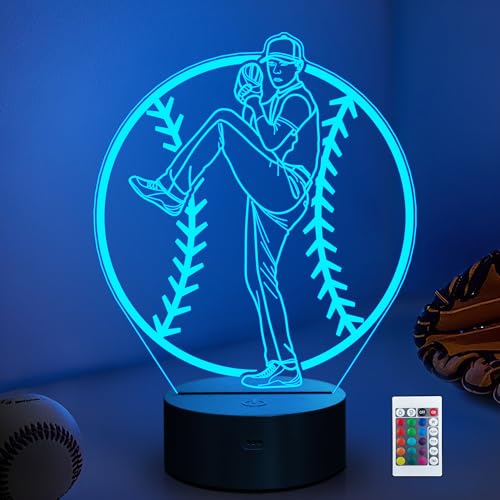
- ✓ Vivid silhouette
- ✓ Flexible power options
- ✓ Energy-saving timer
- ✕ Limited color fidelity
- ✕ Small size reduces impact
| Lighting Type | LED base with acrylic diffusion sheet |
| Power Options | 3x AAA batteries or USB power |
| Color Modes | 16 single-color modes plus 4 dynamic flash/color cycle modes |
| Timer Function | Adjustable from 15 minutes to 12 hours |
| Remote Control | 24-key remote control included for mode and brightness adjustments |
| Included Accessories | LED base, acrylic sheet, USB cable, remote, user manual |
I pulled this CoolGift Mart Baseball Pitcher Night Light off the desk and caught myself smiling at the tiny figure in mid-throw. The acrylic sheet slots into a sturdy base, and the thrower’s silhouette looks surprisingly vivid for a compact night light.
It’s one of those desk-side curiosities you wouldn’t expect to spark a little cheer every evening.
Within a minute, I had the remote in hand and the signal light blinking—classic “this is going to be fun” energy. I played with the 16 colors and the four dynamic modes, and the feel of the buttons is reassuringly solid, not flimsy.
The timer was a real win for me, letting me set it for a short power-down after a late game or a cozy night light.
Setting it up is as easy as pop in 3 AAA batteries or plug via USB. I appreciated the versatility, especially for a kid’s room or a shared living space.
The warm glow isn’t harsh, and the brightness tweak makes it easy on the eyes during late-night reading or streaming highlights.
The design itself is compact but striking; it catches the eye without dominating the room. When you’re decorating a sporty space, this kind of piece helps tie a theme together—perfect for a pitcher’s desk, a teenager’s game corner, or a café display.
Real-world use is simple: switch modes with the remote, or use the touch button for quick changes. It’s quiet, reliable, and the energy-saving timer keeps it green and kid-friendly.
If you’re hunting for a playful, sentiment-driven light with practical features, this fits neatly.
Who Holds the Record for the Best Career Win Percentage Among Baseball Pitchers?
The record for the best career win percentage among baseball pitchers is held by several notable individuals throughout history, but one stands out.
- Whitey Ford: Ford holds the record with a career win percentage of .690, achieved during his time with the New York Yankees from 1950 to 1967.
- Lefty Grove: Grove boasts a career win percentage of .680 and is known for his exceptional skills during the 1920s and 1930s, primarily with the Philadelphia Athletics.
- Sandy Koufax: With a career win percentage of .655, Koufax is celebrated for his dominance during the 1960s, particularly with the Los Angeles Dodgers.
- Roger Clemens: Clemens has a career win percentage of .658, reflecting his success over a long career that spanned from 1984 to 2007, playing for teams like the Boston Red Sox and New York Yankees.
- Tom Seaver: Seaver, with a win percentage of .586, is renowned for his time with the New York Mets and is considered one of the greatest pitchers of all time.
Whitey Ford’s impressive record was bolstered by his ability to perform in high-pressure situations, particularly in the postseason, where he consistently delivered strong performances. His legacy is solidified by being a key component of the Yankees’ multiple championships during his career.
Lefty Grove’s remarkable win percentage was supported by his incredible strikeout ability and dominance on the mound, particularly during the dead-ball era, when he was a two-time MVP and a member of the Hall of Fame. His effectiveness in both regular and postseason games helped him secure a legendary status in baseball history.
Sandy Koufax is often remembered not just for his win percentage but also for his electrifying fastball and devastating curveball, which led to three Cy Young Awards in a four-year span. His short but brilliant career left a lasting impact on the game, making him a revered figure among baseball fans.
Roger Clemens’ career win percentage reflects his sustained excellence and longevity in the sport, as he was able to adapt his pitching style over the years while accumulating numerous accolades, including multiple Cy Young Awards. His competitive spirit and work ethic made him a formidable opponent throughout his career.
Tom Seaver’s legacy is upheld by his remarkable ability to strike out batters while maintaining a solid win-loss record, contributing to his status as one of the greatest pitchers in Major League Baseball history. His contributions to the Mets, including leading them to their first World Series title, have made him an iconic figure in New York sports history.
What Criteria Are Used to Determine a Pitcher’s Win Percentage?
Losses: Losses indicate how many games a pitcher has lost while on the mound. This statistic is equally important as it completes the formula for calculating win percentage, allowing for a full assessment of the pitcher’s performance.
Games Started: The number of games a pitcher has started gives insight into their role and reliability within the team’s rotation. A higher number of starts generally suggests that the pitcher is a key contributor, although it also means they have more opportunities for wins or losses.
Run Support: This refers to the number of runs scored by the pitcher’s team while they are pitching. Adequate run support can lead to more wins, which can skew a pitcher’s win percentage positively, even if their individual performance is average.
Innings Pitched: The total innings pitched reflect not only the durability of a pitcher but also their ability to manage games effectively. Pitchers who can go deep into games usually have a better chance of securing wins for their team, thereby improving their win percentage.
How Do Historical Contexts and Eras Impact Pitchers’ Win Percentages?
The historical context and era in which pitchers play significantly influence their win percentages due to various factors like competition, playing conditions, and team dynamics.
- Era of Baseball: Different eras in baseball, such as the Deadball Era or the Steroid Era, have unique characteristics that affect pitching performance and win percentages.
- League Composition: The quality of opposing teams and hitters can vary greatly between eras, impacting a pitcher’s ability to secure wins.
- Rule Changes: Changes in baseball rules, including those affecting pitching strategies and gameplay, can alter how pitchers achieve victories.
- Team Support: The performance of a pitcher’s team, including offensive capabilities and defensive skills, plays a vital role in determining win percentages.
- Injury and Health Management: Advancements in medical care and injury management have changed the longevity and performance levels of pitchers over time.
- Statistical Evolution: The introduction of advanced statistics and analytics has altered how pitching success is measured and perceived, influencing a pitcher’s legacy.
Era of Baseball: Different eras in baseball, such as the Deadball Era (1900-1919), characterized by low-scoring games and an emphasis on pitching, often produced pitchers with higher win percentages due to fewer offensive threats. In contrast, the modern era, with its focus on home runs and offensive prowess, may lower win percentages for pitchers as they contend with more powerful lineups.
League Composition: The quality and composition of leagues can drastically affect a pitcher’s win percentage. For instance, during the early 20th century, the level of competition was different compared to today, where more teams and players bring heightened talent and specialization to the game, making wins harder to accumulate.
Rule Changes: Baseball has seen several rule changes that impact pitching, such as the introduction of the designated hitter in the American League, which can reduce a pitcher’s chances of earning a win by removing the need for pitchers to bat. Other changes, like the strike zone adjustments, can lead to more or fewer runs being scored, directly affecting win totals.
Team Support: A pitcher’s win percentage is often closely tied to the performance of their team. Strong offensive support can lead to more wins, while playing for a team with poor offensive production can hinder a pitcher’s win totals, regardless of their individual performance on the mound.
Injury and Health Management: The evolution of sports medicine and injury prevention has allowed pitchers to maintain their performance over longer careers. Historically, many pitchers faced career-ending injuries without proper treatment, which could skew win percentages for those who played long enough to accumulate significant wins.
Statistical Evolution: The rise of advanced statistics has changed the landscape of how pitchers are evaluated. Metrics like WAR (Wins Above Replacement) add depth to understanding a pitcher’s contributions, sometimes revealing that traditional win totals may not accurately reflect a pitcher’s effectiveness in their respective eras.
In What Ways Does Team Performance Influence a Pitcher’s Win Percentage?
Team performance significantly impacts a pitcher’s win percentage in several ways:
- Offensive Support: A pitcher’s win percentage is heavily influenced by the run support provided by their team. When a team scores more runs, the likelihood of the pitcher earning a win increases, as they need to hold the opposing team to a lower score to secure victory.
- Defensive Performance: The effectiveness of a team’s defense plays a critical role in a pitcher’s win percentage. A strong defense can prevent errors and limit the number of runs the opposing team scores, which directly helps the pitcher maintain a favorable outcome during games.
- Relief Pitching: The performance of the bullpen can also affect a starter’s win percentage. If a starter leaves a game with the lead, the effectiveness of the relief pitchers in preserving that lead is crucial; poor performance from the bullpen can lead to losses that negate the starter’s efforts.
- Game Situations: The context of a game, such as whether it is a close contest or a blowout, can influence a pitcher’s win percentage. In tightly contested games, the pitcher’s ability to perform under pressure becomes vital, while in less competitive games, the outcome may rest more heavily on the overall team performance.
- Injuries and Roster Changes: Injuries to key players or changes in the roster can impact team chemistry and performance. A pitcher may struggle with a declining team or an inconsistent lineup, which can further lower their chances of securing wins throughout their career.
How is Win Percentage Calculated and What Are Its Implications for Pitchers?
Win percentage is crucial for pitchers as it encapsulates their ability to influence game outcomes positively. A higher win percentage typically suggests that a pitcher consistently performs well in critical situations, contributing to their team’s successes throughout a season or career.
Several factors can influence a pitcher’s win percentage, including the level of run support received from the offense, the defensive capabilities of the team, and the quality of the opposing batters. These elements can skew win percentages, making it essential to consider them in context when interpreting this statistic.
Historically, pitchers with the best win percentages often played during periods when their teams had strong offensive support or favorable defensive statistics. This context is vital when comparing pitchers across different eras, as the game dynamics and strategies have evolved significantly over time.
Which Notable Pitchers Have Achieved the Highest Win Percentages in Baseball History?
The notable pitchers with the highest win percentages in baseball history are remarkable for their exceptional performance on the mound.
- Whitey Ford: Whitey Ford holds a career win percentage of .690, making him one of the most successful pitchers in MLB history.
- Lefty Grove: With a win percentage of .680, Lefty Grove is celebrated for his dominance during the 1920s and 1930s, leading the league in wins multiple times.
- Tom Seaver: Tom Seaver achieved a win percentage of .586 over his illustrious career, known for his incredible strikeout ability and consistency.
- Sandy Koufax: Sandy Koufax, with a win percentage of .655, is renowned for his peak performance in the 1960s, including three Cy Young Awards in four years.
- Roger Clemens: Roger Clemens boasts a win percentage of .658, showcasing his longevity and effectiveness across two decades in Major League Baseball.
Whitey Ford, who played most of his career with the New York Yankees, was known for his cool demeanor and clutch performances in the postseason, adding to his impressive win-loss record. His ability to perform under pressure helped him secure six World Series titles, further solidifying his legacy.
Lefty Grove revolutionized pitching with his unique delivery and fierce competitiveness, finishing his career with 300 wins. His effectiveness in both the regular season and the playoffs made him a legendary figure in baseball history, earning him a place in the Hall of Fame.
Tom Seaver, often referred to as “Tom Terrific,” was famous for his fierce competitiveness and ability to dominate hitters with a powerful fastball and devastating curveball. His impact on the game extended beyond his win percentage, as he also became a cultural icon during the 1969 Mets’ Miracle season.
Sandy Koufax, despite a relatively short career, left an indelible mark on the game with his staggering strikeout rates and unhittable fastball. His performance during the 1965 World Series, where he pitched a perfect game, is often cited as one of the greatest achievements in baseball history.
Roger Clemens, known for his intense training regimen and work ethic, was a dominant force in both the American and National Leagues, earning numerous accolades, including seven Cy Young Awards. His ability to adapt and excel in different eras of baseball highlights his talent and determination as a pitcher.
What Trends Can We Observe in Win Percentages Among Different Generations of Pitchers?
There are several trends in win percentages among different generations of baseball pitchers that highlight changes in the game over time.
- Early 20th Century Pitchers: Pitchers during this era often had higher win percentages due to the limited number of teams and overall competition. The dominance of a few star pitchers who frequently completed games contributed to elevated win totals.
- Post-War Era Pitchers: Following World War II, the game saw an increase in the number of teams and a shift towards specialization, which affected win percentages. This era brought about a greater reliance on bullpens, which sometimes limited starting pitchers’ opportunities to secure wins.
- Modern Pitchers (1990s-Present): In recent decades, pitchers’ win percentages have become more variable, primarily due to the emphasis on analytics and pitch counts. Modern strategies often involve pulling pitchers from games earlier, which can lead to fewer decisions and wins, even for high-performing pitchers.
- Impact of Relief Pitchers: The evolution of the relief pitcher role has greatly influenced win percentages. As teams increasingly rely on specialized relief pitchers for critical situations, starting pitchers may not have the chance to finish games, thereby reducing their opportunities to earn wins.
- Increased Strikeouts and Home Runs: The trend of higher strikeouts and home runs in the game has also affected win percentages. Pitchers now face a more aggressive offensive approach, leading to more unpredictable outcomes in games, which can impact a starter’s win-loss record.