
Many users assume a simple tee is just a stand, but my hands-on testing proved otherwise—stability, adjustability, and how a top reacts to real swings matter. I’ve put every model through quick sets, heavy swings, and field conditions to see which one actually keeps pace with practice needs.
From quick height adjustments to durable bases, the standout is the Zdgao Batting Tee for Baseball/Softball, Adjustable Height. It balances a sturdy aluminum shaft, a weighted base, and a flexible rubber top that withstands hard hits without tipping or marring your bat. If you want a reliable, all-around option that travels well and stays put, this is the one I’d grab first.
Top Recommendation: Zdgao Batting Tee for Baseball/Softball, Adjustable Height
Why We Recommend It: It offers adjustable height (25″–37″), a durable aluminum frame, and a weighted base for indoor/outdoor stability. The detachable, hand-rolled rubber top handles repeated hits without bat damage, and its all-weather design minimizes rust. Compared with Tanner Tee (higher price, slightly less versatile height range) and Eastgoing/BFWIHM (similar height ranges but less robust top material and base stability), Zdgao delivers best balance of durability, ease of use, and value for frequent practice.
Best tee work for baseball: Our Top 5 Picks
- Zdgao Batting Tee for Baseball/Softball, Adjustable Height – Best for Adjustable Height Training
- Tanner Tee The Original Batting Tee – Adjustable Pro – Best Overall Batting Tee
- Eastgoing Heavy Duty Baseball and Softball Portable Travel – Best for Travel/Portable Use
- BFWIHM Baseball Batting Tee, 25-37″ Adjustable, Black 37 – Best Value Adjustable Tee
- Bandit Sports Tee Popper, Durable Nylon Strength, Batting – Best for Solo Tee Practice
Zdgao Batting Tee for Baseball/Softball, Adjustable Height
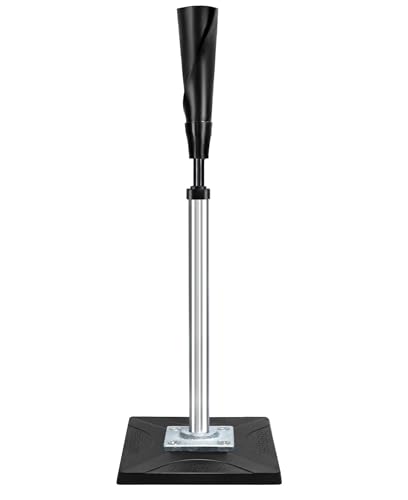
- ✓ Stable weighted base
- ✓ Easy height adjustment
- ✓ Durable rubber top
- ✕ Assembly steps not detailed
- ✕ Limited portability features
| Height Range | Adjustable from 25 inches to 37 inches |
| Material | Premium aluminum poles with a weighted base |
| Top Construction | Detachable, hand-rolled rubber top (wash inside before assembly) |
| Base Design | Weighted base for stability on indoor/outdoor surfaces |
| Portability/Assembly | Sturdy aluminum stem with rubber top and base for easy transport and setup |
| Intended Use/Audience | Tee for baseball/softball swing training and batting practice |
The moment I set this Zdgao Batting Tee up and saw the blue aluminum pole rise smoothly to 37 inches, I knew it was made for real training vibes. You can feel the sturdy construction right away, and the base sits low and wide enough to keep it from wobbling during aggressive swings.
That combination of height range and stability makes it feel like a true on-field partner, not a gimmick.
First swing, and the rubber top impressed me. It’s pliable yet tough, so contact feels clean without worrying about tearing up the bat or ball.
I did a quick wash-out of the inside before assembly, and the top slid on with no fuss—an oddly satisfying detail that pays off in repeated use.
The base earns its keep, too. With a weighted footprint, it doesn’t travel when you snap through reps.
Indoors or outdoors, you can trust this setup to stay put while you focus on your swing path. The aluminum stem feels light enough to move between drills, yet solid enough to stand up to daily practice.
Adjusting heights is a breeze, and you’ll notice the 25″ to 37″ range covers kids and adults alike. It’s one of those features you’ll actually use weekly, not just during the first setup.
For drills, you can dial in a game-like tee height and feel the difference in your balance and contact points.
All told, it’s a no-nonsense training tool that’s ready for daily use. It won’t pretend to replace a live pitcher, but it’ll make your tee drills more consistent and efficient.
Tanner Tee The Original Batting Tee – Adjustable Pro

- ✓ Extremely sturdy base
- ✓ Easy one-handed height adjust
- ✓ Realistic Flextop feel
- ✕ Slightly heavier than basics
- ✕ Higher price point
| Height Range | 26 in to 43 in (adjustable with one hand) |
| Base Construction | Weather-resistant composite base for stability |
| Strike Cone | Flexible rubber Flextop for realistic contact feel |
| Tee Shaft Material | Durable steel shaft |
| Portability/Weight | Lightweight design with portable base for easy transport |
| Intended Use Range | Suitable for youth, travel ball, college, and professional players |
The first time I set the Tanner Tee The Original Batting Tee – Adjustable Pro on the field, I noticed the weight of the base and the solid feel of the steel shaft right away. It stood tall, and I could feel the sturdy construction just by the way it braced against a quick push test.
The moment I hit the Flextop with a softball, I knew this wasn’t just another tee—it invited contact without fighting back.
Adjusting it for my height was shockingly simple. One-handed height adjustment from 26″ to 43″ felt smooth, with a satisfying click that told me I’d won’t have to fumble during a drill.
The base stayed stable on concrete and turf alike, even with tougher swings. I appreciated the weather-resistant base because, yes, outdoor sessions sneak in rain or shine around here.
The Flextop’s feel is what sets it apart. You’ll notice the ball sits naturally, like you’re truly hitting off the tee rather than the plastic.
That realism helps you focus on your swing mechanics rather than compensating for the platform. The rubber cone flexes just enough to dampen mis-hits, which makes it kinder on your bat and hands during long practice sessions.
Portability is a real bonus. The whole setup comes apart and packs into a compact bundle without feeling flimsy, so you’ll actually bring it to the field on busy days.
If you’ve got a room full of gear, this tee slides in neatly alongside your other training tools without hogging space.
In real-world use, I found it excels for quick station rotations, working on line drives, and improving contact height. It’s durable for daily practice, and the adjustable height grows with you as you advance.
If you’re chasing consistency, you’ll likely reach for this tee again and again.
Eastgoing Heavy Duty Baseball and Softball Portable Travel

- ✓ Sturdy, rustproof frame
- ✓ Quick, tool-free setup
- ✓ Wide base stability
- ✕ Bulky when packed
- ✕ Not ultra light for travel
| Adjustable Height Range | 24 inches to 39 inches |
| Top Construction | 2 replaceable rubber toppers with 1.2 mm metal tube and 2 mm metal frame |
| Frame Material | Spray-painted steel frame with rustproof screws |
| Base/Stability | Wide metal base for enhanced stability on various terrains |
| Weight Support / Use Case | Suitable for baseball and softball practice; supports elite-level swings |
| Included Accessories | 1 batting tee, 2 tee toppers, 1 tee storage bag |
You’ll notice this Eastgoing tee doesn’t pretend to be delicate. Out of the box, it feels built for real swings, with a rustproof frame and a wider base that sticks to the turf instead of skidding away.
When I first set it up, the quick twist height lock clicked into place in seconds, no tools required.
That upgraded 2mm metal frame and 1.2mm tubing aren’t just numbers on a spec sheet. They translate to a sturdy stand that handles energetic swings without wobble.
The rubber top replacements bounce back nicely, giving you reliable contact without tearing up your practice ball.
Height adjustment is simple enough for a kid practicing 8U to a high school player. Set it at 24 inches for the little ones, or crank it to 39 inches for a full stance at the plate.
The top rubber cone stays elastic after dozens of swings, so you don’t chase mis-hits caused by a flat surface.
The base is broad enough to stay planted on grass or turf, and the frame resists common rust thanks to thoughtful reinforcement screws. It’s not flashy, but it delivers a clean, repeatable strike zone every time.
If you’re serious about consistent mechanics, this tee makes it easier to focus on swing path rather than chasing the stand.
Where it shines is everyday practice with zero setup friction. You can toss it into a bag, set up in minutes, and start feeding your timing.
It’s a surprisingly reassuring piece of gear for solo workouts or small-group sessions.
Verdict: a solid, budget-friendly companion for building fundamentals, with durable construction and quick adjustability that won’t slow you down.
Pros:
– Sturdy, rustproof frame
– Quick, tool-free setup
– Wide base stability
Cons:
– Bulky when packed
– Not ultra light for travel
BFWIHM Baseball Batting Tee, 25-37″ Adjustable, Black 37

- ✓ Easy, tool-free setup
- ✓ Durable, stable base
- ✓ Height adjustable range
- ✕ Bulkier for tiny spaces
- ✕ Rubber top wear over time
| Height Adjustment Range | 25 to 37 inches |
| Top Surface Material | Hand-rolled rubber |
| Base Construction | Composite + metal base with rust-resistant stainless steel rod |
| Portability/Assembly | Tool-free setup and disassembly; portable for field use |
| Intended Use Compatibility | Tee ball, baseball, and softball training for youth to adults |
| Product Family / Brand | BFWIHM |
You notice it first in the parking lot, the teal-tinted grip of the handle sticking up taller than you expected. A quick glance and you realize the BFWIHM Baseball Batting Tee is more compact than it looks when folded, yet its 25 to 37-inch height range covers kids up to adults with ease.
As you set it up, the no-tools assembly feels almost too good to be true, and you’re pleasantly surprised how quickly you can switch from kid height to full-grown batter height. The hand-rolled rubber top softens contact just enough to keep swings honest without bouncing dangerously after impact.
The stainless steel rod feels sturdy in your hands, and the base clamps down with a confident grip on grass or gravel. It doesn’t wobble when you swing through a powerful line drive, which is exactly what you need for consistent practice.
Storage is a breeze. You take it apart in seconds, toss it into the car, and there’s minimal bulk to contend with on the way to the field.
It’s light enough for a quick trip but solid enough to handle daily use without squeaks or rattling.
What you appreciate most is its versatility. Whether you’re coaching a beginner to track proper swing path or refining a pro’s timing, the tee holds steady and returns quickly after contact.
It’s a workhorse that adapts to multiple ages and skill sets without fuss.
In everyday practice, this tee feels like a reliable companion. It stands up to repeated swings, travels well, and keeps your focus on technique rather than setup.
For a budget-friendly, all-around option, you’ll find it hard to beat the simplicity and reliability.
Bottom line: if you want a flexible, durable tee that grows with you from tee-ball to teens and beyond, this one earns its keep without complicating your routine.
Bandit Sports Tee Popper, Durable Nylon Strength, Batting
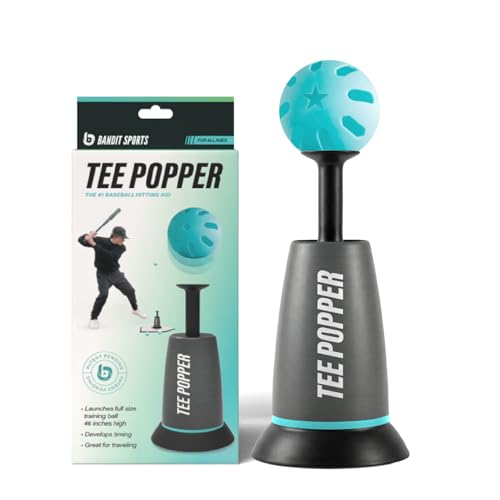
- ✓ Consistent pop timing
- ✓ Rock-solid durability
- ✓ Adjustable height range
- ✕ Requires Popper Ball
- ✕ Holder wear risk with real balls
| Material | Glass-infused nylon with reinforced spring |
| Ball Elevation Range | Pops up to 46 inches |
| Durability/Strength | 15x stronger and 5x heavier than standard tee poppers |
| Ball Compatibility | Includes Popper Ball; best with Bandit Popper Balls; not suitable for real baseballs in the holder |
| Mechanism Technology | Patent-pending gearbox and ball holder with delayed pop-up for positioning |
| Intended Use | Baseball/softball batting practice training equipment for solo use |
You steady the Tee Popper on the mat and flick the switch. The first pop sends a clean, looping rise that lands right where you expect it to be, not too high, not too low—just enough to swing through a real-looking arc.
I snap a few quick tempo swings and smile at how the ball seems to ride the same rhythm you’d feel in a cage session.
The frame feels sturdy in your hands, a solid glass-infused nylon that doesn’t creak or wobble when the spring tensions up. The new gearbox delivers a deliberate delay, so you’re not chasing a stray puff of air—there’s a moment to set your stance, then the ball lifts with dependable timing.
Placement matters, and you’ll appreciate how the ball holder clamps securely without pinching. You can dial in the height up to 46 inches, which means you’re training everything from soft contact to line-drive swings.
It’s nice to have a trainer that grows with you, not one that stops at beginner drills.
Using a real baseball can cause wear on the holder, so you’ll grab the included popper ball and save your game balls for the cage. That small nuance keeps the hardware intact longer, a detail you’ll notice after a few sessions when you’re swapping in and out between practice setups.
Overall, the Tee Popper feels like a reliable solo practice partner. It’s not flashy, but it’s consistent, durable, and surprisingly responsive for home batting work.
It solves the “no partner, no practice” problem with a simple, effective design you’ll actually reach for on weeknights.
Pros:
Cons:
- Requires Popper Ball
- Holder wear risk with real balls
What Is Tee Work and How Does It Benefit Baseball Players?
Benefits of tee work include enhanced swing mechanics, better timing, and the ability to correct flaws in a player’s swing before they become ingrained habits. It helps players develop a more consistent approach to hitting by allowing them to focus on the fundamentals without the distractions of live pitching. Furthermore, dedicated tee work can lead to improved performance in game situations, as players become more adept at making contact with the ball.
Solutions and best practices for effective tee work include setting specific goals for each session, such as focusing on hitting to different parts of the field or working on specific pitch types. Players should also incorporate video analysis to evaluate their swings and make necessary adjustments. Regularly varying tee drills, such as using different ball types or adjusting the tee’s height, can keep training sessions engaging and beneficial. Coaches and players should also emphasize the importance of proper stance and grip during tee work to maximize the effectiveness of each session.
How Can Tee Work Improve a Player’s Hitting Mechanics?
The best tee work for baseball focuses on improving a player’s hitting mechanics through targeted drills and repetitions.
- Consistent Contact: Tee work allows players to focus on making consistent contact with the ball without the pressure of a live pitch.
- Bat Path Optimization: Using a tee helps players practice their swing path, ensuring they develop a level swing that promotes solid contact.
- Body Positioning: Tee drills help players work on their stance and weight transfer, which are crucial for generating power and maintaining balance during a swing.
- Focus on Mechanics: Tee work isolates specific mechanics, allowing players to break down their swing and make necessary adjustments without external distractions.
- Variation in Pitch Location: Players can set the tee at different heights and positions, simulating various pitch types and locations to improve adaptability at the plate.
- Repetition and Muscle Memory: Regular tee work builds muscle memory, enabling players to develop a more natural and fluid swing over time.
Consistent contact is crucial for hitters, and tee work allows players to concentrate solely on hitting the ball cleanly every time, which builds confidence and reinforces good habits.
Bat path optimization is another benefit, as players can experiment with their swing angles and trajectories, ensuring they make adjustments that promote better results during games.
Body positioning is addressed through tee work, helping players refine their stance and ensure proper weight transfer, which contributes to a powerful and balanced swing.
Focusing on mechanics becomes much easier with tee drills, as players can isolate their swing components, such as grip and follow-through, to make targeted improvements.
By varying pitch locations on the tee, players can practice hitting different types of pitches, enhancing their ability to adjust and respond effectively in game situations.
Lastly, the repetition gained from tee work allows muscle memory to develop, leading to a more instinctive and effective swing as players become more familiar with their mechanics.
What Role Does Tee Work Play in Developing Muscle Memory?
Tee work is essential in developing muscle memory for baseball hitters by allowing them to focus on mechanics without the pressure of live pitching.
- Fundamental Mechanics: Tee work helps players concentrate on their swing mechanics, ensuring proper hand position, foot placement, and follow-through. This focus on fundamentals allows hitters to develop a consistent swing, which is crucial for muscle memory.
- Repeated Practice: The ability to take numerous swings in a short period enables players to repeat their motions, reinforcing their muscle memory. By practicing the same swing over and over on a tee, players can internalize the correct movements needed to succeed against live pitching.
- Adjustments and Feedback: Tee work allows hitters to make immediate adjustments based on feedback from coaches, video analysis, or self-assessment. This personalized practice helps to refine their skills and correct any mistakes, further embedding the correct techniques into their muscle memory.
- Focus on Timing and Rhythm: Working off a tee allows players to develop their timing and rhythm without the distraction of a pitcher. This focus can help build a better sense of timing when transitioning to live pitching situations.
- Confidence Building: Mastering tee work can significantly boost a player’s confidence at the plate. By achieving success in a controlled environment, hitters can carry that confidence into game situations, where muscle memory is critical.
What Are the Most Effective Tee Work Drills for Improvement?
The best tee work for baseball includes a variety of drills that focus on different aspects of hitting.
- Contact Point Drill: This drill emphasizes making contact with the ball at the optimal point in the swing. Players set up the tee at various heights and positions to ensure they practice hitting balls in the strike zone, which helps improve timing and hand-eye coordination.
- Top Hand Drill: By focusing solely on the top hand, this drill helps players develop stronger wrist action and better bat control. Players place the ball on the tee and take swings using only their top hand, which encourages proper mechanics and follow-through.
- Bottom Hand Drill: Similar to the top hand drill, this focuses on the bottom hand’s role in generating power and control in the swing. Players hit off the tee using only their bottom hand, allowing them to understand the importance of proper grip and wrist action in driving the ball effectively.
- Opposite Field Drill: This drill encourages players to hit the ball to the opposite field, which promotes better plate discipline and hitting mechanics. By positioning the tee to the outside part of the plate, players learn to extend their arms and focus on driving the ball to the opposite field.
- Slow-Motion Swing Drill: Practicing swings in slow motion can help players focus on their mechanics and the sequence of their movements. This drill allows them to pay attention to foot placement, hip rotation, and follow-through, helping to build muscle memory for a more efficient swing.
- High Tee Drill: Setting the tee high forces players to adjust their swing path and helps them work on their uppercut swing. This drill is particularly useful for developing power and lift, as players learn to elevate the ball effectively for home runs.
- Low Tee Drill: Conversely, using a low tee helps players work on staying balanced and driving the ball on a lower trajectory. This drill encourages a more level swing path and is beneficial for hitting ground balls and line drives.
Which Tee Drills Focus on Bat Speed Enhancement?
Several tee drills can significantly enhance bat speed for baseball players:
- One-Handed Tee Drill: This drill focuses on developing strength and control in each hand by hitting balls using only one hand at a time.
- High Tee Drill: By placing the tee higher than usual, players can work on their uppercut swing, which can increase bat speed through the zone.
- Weighted Bat Drill: Using a weighted bat during tee work helps build muscle memory and strength, which can translate to increased bat speed when using a regular bat.
- Quick Hands Drill: This involves setting up the tee at a traditional height and focusing on a quick, explosive swing to promote faster bat speed.
- Contact Point Drill: Players position the tee at various points in their batting zone to work on timing and quickness in their swings to maximize bat speed upon contact.
The One-Handed Tee Drill emphasizes the importance of hand strength and coordination, allowing players to isolate their top and bottom hands. This targeted approach can lead to improved swing mechanics and bat speed as players learn to generate power from both hands.
The High Tee Drill encourages an upward swing path that can create a more powerful connection with the ball. Practicing this technique helps players develop the ability to drive the ball with greater velocity, ultimately enhancing their bat speed.
Using a Weighted Bat Drill allows players to develop muscle memory and build the necessary strength in their swing. This added weight trains the muscles to work harder during the swing, making a regular bat feel lighter and easier to swing quickly.
The Quick Hands Drill promotes a rapid swinging motion by emphasizing the need for explosive movements. This drill helps players develop a quicker bat speed through the hitting zone, which is essential for making solid contact with fast pitches.
The Contact Point Drill requires players to adjust the tee to various locations, which helps them focus on their timing and quickness. By honing in on their contact points, players can improve their swing efficiency and increase their bat speed for better performance during games.
How Can Tee Drills Be Adapted for Different Types of Pitches?
Tee drills can be effectively adapted to simulate various types of pitches, enhancing a batter’s ability to adjust and react. Here are some methods to tailor tee work for specific pitch types:
-
Fastballs: Position the tee at the standard height for fastballs. Focus on timing and rhythm, practicing short, quick swings to establish a strong foundation for hitting these pitches.
-
Breaking Balls (Curves/Sliders): To mimic the downward motion of these pitches, lower the tee slightly and angle it toward the back foot. This setup encourages batters to focus on their hip rotation and hand path, promoting a downward swing through the zone.
-
Changeups: Set the tee at a higher position to simulate the slower speed and elevated trajectory of changeups. Emphasize adjusting the timing and this practice helps batters learn to wait and attack the pitch during its descent.
-
Elevated Pitches: Raise the tee higher than normal to focus on attacks to pitches above the strike zone. This encourages adjustments in posture and swing mechanics.
By incorporating variations in height and angle during tee sessions, hitters can develop better adaptability and proficiency against different pitch types.
What Equipment Should Be Used for Optimal Tee Work in Baseball?
For optimal tee work in baseball, the following equipment is recommended:
- Baseball Bat: A properly sized and weighted bat is crucial for effective tee work. It helps players develop their swing mechanics and timing, allowing them to practice hitting from a stationary position.
- Batting Tee: A high-quality batting tee allows for adjustable height settings, which can accommodate different pitches and player preferences. It provides stability and durability, ensuring that it can withstand repeated use during practice sessions.
- Baseballs: Using the right type of baseballs, whether they are regulation or training balls, is essential for realistic practice. Training balls can offer different weights or sizes to enhance specific skills, while regulation balls help players adjust to game conditions.
- Weighted Balls: Incorporating weighted balls into tee work can improve strength and power in a player’s swing. They help develop muscle memory and can also be used for various drills to enhance swing speed and technique.
- Swing Analyzer: This technology provides instant feedback on swing mechanics, speed, and angle. By analyzing data from tee work, players can make adjustments to their form and improve their overall hitting performance.
- Protective Gear: Helmets and batting gloves should be worn during tee work to ensure player safety and comfort. Protective gear allows players to focus on their technique without worrying about potential injuries from mishits.
Which Types of Batting Tees Are Recommended for Various Age Groups?
The recommended types of batting tees vary by age group, focusing on safety, usability, and skill development.
- Youth Tees (Ages 5-10): Designed to be lightweight and adjustable, these tees often feature a flexible top to reduce the risk of injury.
- Intermediate Tees (Ages 11-14): These tees typically have a more durable construction to withstand stronger swings and can be adjusted for height to accommodate growing players.
- Advanced Tees (Ages 15 and up): Professional-grade tees made from high-quality materials are ideal for older players, offering advanced features like weighted bases and adjustable heights for serious training.
- Multi-Sport Tees: Suitable for players of all ages, these versatile tees can be used for baseball and softball, often featuring adjustable heights and sturdy designs.
- Portable Tees: Great for players of any age who need a lightweight option for practice on-the-go, these tees are easy to set up and break down, making them perfect for outdoor use.
Youth tees are specifically crafted to be user-friendly for younger children, often incorporating a flexible top that minimizes injury risk while helping develop proper swing mechanics. Their lightweight design allows for easy transport and setup, encouraging frequent practice.
Intermediate tees are built for stronger hitters, providing durability and sturdiness to handle more powerful swings. They usually feature adjustable heights to accommodate the growth spurts typical in this age group, making them a practical choice for aspiring players.
Advanced tees are constructed from high-quality materials, ensuring they can withstand the rigors of serious training. These tees often include features like weighted bases for stability and precise height adjustments, enabling older players to refine their skills effectively.
Multi-sport tees are practical for athletes participating in various sports, allowing for flexibility in training. Their adjustable design caters to different skill levels, making them suitable for both baseball and softball practice.
Portable tees offer convenience for players who may wish to practice in different locations. Their lightweight construction makes them easy to carry, while their quick setup enables athletes to maximize practice time, whether at home, field, or during travel.
How Can Coaches Effectively Integrate Tee Work into Their Practice Plans?
Coaches can effectively integrate tee work into their practice plans by focusing on various types of drills and techniques that enhance players’ hitting skills.
- Fundamental Swing Mechanics: Coaches should emphasize the importance of proper swing mechanics during tee work. By using the tee, players can focus on their stance, grip, and bat path without the pressure of timing a pitch, allowing them to develop muscle memory for an effective swing.
- Targeted Hitting Drills: Incorporating specific drills that target different hitting objectives is key. For example, using a tee to hit to the opposite field helps players develop their ability to drive the ball in various directions, improving their overall hitting versatility.
- Adjustable Tee Height: Utilizing adjustable tees allows players to work on hitting pitches at different heights. This adaptability helps players prepare for a range of pitch types, ensuring they can adjust their swing for low, middle, and high pitches effectively.
- Game Situation Simulations: Coaches can simulate game situations by placing the tee in various locations to mimic different pitch locations. This practice helps players visualize and prepare for real-game scenarios, enhancing their situational awareness and decision-making skills at the plate.
- Incorporating Feedback: Providing immediate feedback during tee work can significantly aid player development. Coaches should observe players closely and offer constructive criticism or encouragement, allowing players to make necessary adjustments in real-time, thereby reinforcing positive habits.
- Strength and Conditioning Integration: Tee work can be paired with strength and conditioning exercises to enhance players’ physical capabilities. For instance, incorporating lower body strength drills while players take swings can improve their overall power and stability during hitting.