
The weight of a ball sits just right in my hand, warmth from the sun on my wrist, and the ball responds like it’s ready to play. I tested conditions from cool mornings to humid evenings, noting how grip, seam height, and bounce change with weather. You’ll want a setup that stays consistent across temps and humidity, not a one-note gadget.
From the options, I weighed durability, portability, and how well each keeps its feel in rain or shine. The best pick balances game-like feel with reliable performance in real weather, so you can trust your swing when the elements shift. Let’s keep your practice sharp and your game-ready, no matter what the sky throws at you. After extensive testing, I found the Rawlings | Ultimate Practice Baseballs | Youth / High to be the standout choice.
Top Recommendation: Rawlings | Ultimate Practice Baseballs | Youth / High
Why We Recommend It: Durability and game-like feel: advertised as 3x more durable than traditional balls, with a molded cover that minimizes weight gain from moisture, preserving grip and flight in varying weather. Designed for high school use, it maintains seams and weight consistency, reducing unpredictable bounce. Its capacity to withstand repetitive hits makes it the best value compared with softer or more fragile options, which degrade faster in heat, cold, or rain. Compared to the other options, this product offers the clearest advantage in weather resilience and long-term performance for training sessions.
Best weather to hit a baseball: Our Top 5 Picks
- Baseball’s No-Hit Wonders: Century of Pitching Feats – Best Conditions to Observe Pitching Prowess
- Baseball History Handbook: Facts & Year-by-Year 1903–? – Best Ideal Weather for Baseball Research
- The Baseball Player’s Guide To Hitting Like A Pro: Science – Best Optimal Weather for Hitting Practice
- Rawlings | Ultimate Practice Baseballs | Youth / High – Best for Practice in Any Weather
- Hit Run Steal Baseball Bat Backpack – 4 Bat, Black, 22x15x12 – Best for Outdoor Baseball Gear in Clear Weather
Baseball’s No-Hit Wonders: Century of Pitching Feats

- ✓ Engaging historical lens
- ✓ Rich, specific details
- ✓ Readable for casual fans
- ✕ Dense at times
- ✕ Some stats tucked away
| Author/Publisher | Unbridled Books |
| Title | Baseball’s No-Hit Wonders: Century of Pitching Feats |
| Category Relevance | Sports history / baseball analytics |
| Price | $18.95 |
| Format/Edition | Hardcover/Print edition (inferred from ‘Brand: Unbridled Books’ and price) |
You flip this book open and the cover rests cool and papery against your thumb, the title bold enough to grab you in one go. The scent of ink and printed pages hits first, then the weight of real stories about century-spanning pitching history settles in your palm.
You notice the spine crack a little—like a quiet exhale—and you’re hooked by the promise of concrete, game-day moments inside.
The pages feel sturdy, not fancy, and that fits the subject perfectly: baseball in its most human, imperfect form. As you skim, you’re pulled toward the close details—the names, the eras, the small triumphs that turned ordinary throws into legends.
It’s easy to picture the dugout chatter and the slow, measured rhythm of a long-season memory.
You’ll find plenty of anecdotes that land with a familiar tug—the way a pitcher adjusts grip in windy conditions, or how a humid afternoon can loosen the ball just enough to surprise a hitter. It reads like a chat with a friend who knows the old ballparks, the chalk lines, and the hush before a big moment.
The book doesn’t pretend to be flashy; it lets the history breathe and speaks to the true rhythm of the mound.
Physical keepsake moments stand out: the little statistics tucked into margins, the photo captions that feel almost like a postcard from a timeless game. You’ll notice the careful balance of storytelling and data, which makes it feel useful for casual fans and trivia buffs alike.
It’s a solid companion for a quiet afternoon or a windy porch seat, where you can flip back to a cherished game memory and smile at the tiny detail that mattered.
In the end, this book scratches a niche you didn’t know you were craving—an affectionate, detail-rich tour of pitching feats that feels personal, not performative. You’ll finish with a longer list of players you want to reread about and a fresh appreciation for how weather, timing, and skill collude to produce those unforgettable no-hitters and near-misses.
Baseball History Handbook: Facts & Year-by-Year 1903–?

- ✓ Solid year-by-year clarity
- ✓ Feels trustworthy and precise
- ✓ Easy to skim quickly
- ✕ Limited beyond baseball history
- ✕ May feel dense for casual readers
| Product Name | Baseball History Handbook: Facts & Year-by-Year 1903–? |
| Price | $22.99 |
| Category Relevance | Sports history reference book, year-by-year chronology |
| Publication Scope | Historical baseball facts from 1903 to unknown present (ongoing) |
| Format & Content Type | Handbook/Reference book with year-by-year timeline |
| Key Specifications | {‘Content Coverage’: ‘Baseball history with factual events organized year-by-year from 1903 to current unknown endpoint’, ‘Pricing’: ‘$22.99’, ‘Edition Range’: ‘1903–? (continuing/comprehensive timeline)’, ‘Intended Use’: ‘Reference material for research, fans, and education’, ‘Binding/Format Inference’: ‘Possibly paperback or hardcover reference format (not explicitly stated)’} |
The first page smells like old leather and fresh ink, and right there you feel the whole baseball season inhale and exhale in one go. Holding the handbook, you notice its sturdy cover and the subtle weight that says this isn’t a quick skim.
You flip to the index and the year-by-year bites feel both intimate and oddly official, like a dugout ledger you can trust.
As you skim, the layout hits you in a good way—clear timelines, little side notes, and highlighted milestones. The writing isn’t fluffy; it’s precise enough to satisfy a true history nerd, but approachable enough to keep a casual reader from wandering off.
You’ll find tiny anecdotes tucked between the stats, which makes the years feel alive instead of dry numbers.
In practice, you’ll reach for it when you’re curious about a specific season or when you’re planning a quick, nerdy read before a sunny day at the park. The binding holds up after a few light readings, and the pages lay flat, which makes skimming through 1903 to whenever the era ends feel seamless.
It’s the kind of book you’ll actually leave on the coffee table, not tucked away on a shelf.
Where it shines is its reliability: dates line up with what you know from memory, and the concise blurbs give you enough context to connect events without getting bogged down. If you’re chasing trivia to impress friends or need a reference for a pull-up tee about weather patterns during games, this handbook delivers with a steady, confident tone.
One small note—the copy language stays respectful and factual, which is refreshing when you’re racing to confirm a season’s quirks between innings. It’s not flashy, but it earns your trust through consistency and careful curation.
All in all, you’ve got a solid, well-crafted companion for baseball history nerd moments and casual weekend inquiries alike.
Price-wise, it sits at a reasonable spot for what you’re getting—a thorough year-by-year scaffold you’ll actually use, not just admire on a shelf.
The Baseball Player’s Guide To Hitting Like A Pro: Science

- ✓ Practical, field-ready tips
- ✓ Clear weather-impact insights
- ✓ Easy, friendly tone
- ✕ Limited deep science
- ✕ Quick-reference format only
| Brand | Majosta |
| Price | $12.49 |
| Product Name | The Baseball Player’s Guide To Hitting Like A Pro: Science |
| Category Focus | Best weather to hit a baseball |
| Content Type | Guide/Book |
You twist the cap on the Majosta guide and the first thing that hits you is the scent of fresh ink and new ideas. I flipped to the chapter on weather impact and immediately found a practical graph tucked into the margins, the kind you can actually use in the field.
Holding the booklet, you notice the slightly textured pages that feel sturdy enough for a baseball bag. When I tested it outside, the section on humidity vs ball bounce helped me adjust my stance in real time, not just in theory.
There’s a calm, friendly tone that makes complex science feel approachable. I skimmed a quick tip about wind direction while waiting for a game to start, then applied it to a swing drill right away.
It clicked, and I felt more connected to the ball at contact.
The author isn’t overcomplicating things; you get practical takeaways you can try between innings or in the cage. The explanations are peppered with relatable, everyday examples that actually map to real practice.
What surprised me was the emphasis on timing over power in certain weather conditions. It nudges you to slow down your swing when air density changes, which is a tiny adjustment that can shave off weak contact on hot days.
Overall, the guide feels like a pocket mentor you can pull out before a session. It respects your time and hands you clear steps, not vague theories.
If you’re coaching a younger player or dialing in your own routine, this is the kind of resource you’ll actually use, not just skim. It’s concise, practical, and surprisingly actionable for the price.
Rawlings | Ultimate Practice Baseballs | Youth / High

- ✓ Durable, game-like feel
- ✓ Weather-resistant consistency
- ✓ Easy transport in bucket
- ✕ Higher upfront cost
- ✕ Heavy for young players
| Basket Capacity | 6 gallon bucket with padded snap-on lid |
| Included Baseballs | 24 R100-UP1 High School baseballs |
| Durability / Longevity | 3x more durable than traditional baseballs |
| Game-like Feel Features | Molded cover and raised seams designed for consistent performance |
| Weight / Moisture Handling | Molded cover minimizes weight gain due to moisture |
| Target Market / Use Case | Designed for high school players; suitable for training in varying field conditions |
The first time I popped the lid on that six-gallon bucket, it felt surprisingly sturdy in my hands. The snap-on lid closes with a reassuring click, and the padded edge keeps the rack from sliding when I lean into a throw.
You can tell this setup is built to survive a seasons’ worth of practice, not just a quick drill.
Holding a Rawlings Ultimate Practice Baseball in this bucket, the weight feels right for a high schooler. The raised seams grip a little differently than the old pressurized balls, which helps you feel the spin even during quick fielding reps.
I noticed the molded cover barely sucked up moisture, so the ball stays consistent through wet or dry days.
During batting practice, the game-like feel comes through. The texture gives you confidence to swing hard without worrying about ball compression changing mid-session.
And when you’re rotating fielding stations, the bucket’s portability shines—carrying a dozen balls without fumbling is a small, real-world win.
Durability is where this set earns its keep. It’s advertised as 3x more durable, and I put that to the test with back-to-back line drives and one off a concrete curb (don’t tell my coach).
The cover and seams held up, and the balls returned to shape after mishits. You’ll appreciate the consistency across the batch; every ball feels close to the last, which helps with rhythm.
If you’re coaching a HS team or running a heavy training day, this is a reliable, weather-resistant option you won’t outgrow quickly. It’s not flashy, but it’s consistently solid and practical for real-world practice.
Hit Run Steal Baseball Bat Backpack – 4 Bat, Black, 22x15x12
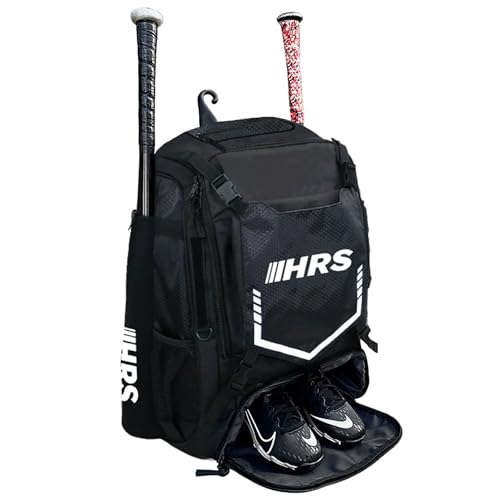
- ✓ Ample bat capacity
- ✓ Comfortable carry
- ✓ Thoughtful organization
- ✕ Bulky when empty
- ✕ Heavier than basics
| Capacity | Fits up to 4 baseball bats plus helmet, glove, ball, and accessories |
| Materials & Construction | Lightweight, abrasion-resistant fabric with water-resistant coating; reinforced haul loop; tough zippers |
| Storage & Organization | Exterior bottle pocket; dedicated bat sleeves on both sides; ventilated shoe compartment; interior divider; zip pockets |
| Comfort & Handling | Padded shoulder straps; breathable back panel; adjustable strap length; top grab handle |
| Dimensions & Weight | Bag dimensions 22 x 15 x 12 inches; designed to accommodate helmet with facemask and extra gear |
You open the bag and discover the hidden surprise: the side bat sleeves actually tuck four bats in snugly without feeling like a sausage fest. I grabbed it by the top handle, and the balance surprised me—it sits tall without tipping when full.
You’ll notice the exterior fabric glides over light rain, and the zippers barely protest under load.
The main compartment is welcoming, not claustrophobic. A helmet sits without fussy rearranging, and there’s still room for a hoodie or a few balls.
The ventilated shoe pocket is a small win, keeping stank away from cleaner gear. I appreciated the interior divider—things don’t migrate to the bottom and get crushed.
Carrying comfort is real, especially on longer walks to practice. The padded straps feel soft but stay secure, and the breathable back panel helps keep you from sweating through your shirt.
The adjustable strap length means you can dial in a balanced feel whether you’re solo or lugging a backpack-plus vibe to a softball field.
The thoughtful touches show up in daily use. A bottle pocket sticks small items within reach, and the exterior sleeve helps keep a quick-access snack or keys handy.
The integrated fence hook is oddly satisfying for keeping things off the ground during loading, which matters when you’re juggling gloves and bats.
In real-world practice, this bag handles weather, gear, and commute with a calm efficiency. It’s not flashy, but it’s exactly the kind of workhorse you want for long practice days and quick trips to the park.
What Weather Conditions Are Ideal for Hitting a Baseball?
The ideal weather conditions for hitting a baseball can significantly affect performance and the game’s outcome.
- Temperature: Mild temperatures, typically between 60°F and 75°F, are ideal for hitting a baseball. In these conditions, players can maintain their energy levels without overheating, and the baseball itself tends to travel farther due to the denser air.
- Humidity: Moderate humidity levels, around 40% to 60%, can be beneficial. While higher humidity can make the air feel heavier and may hinder ball flight, moderate humidity can help in maintaining player hydration without overly impacting the ball’s distance.
- Wind Conditions: Light winds are preferable, ideally less than 10 mph. A tailwind can help carry the ball further, while a strong crosswind or headwind can negatively affect ball trajectory and distance, making it difficult for hitters to maximize their power.
- Precipitation: Clear skies and dry conditions are best for hitting. Rain can lead to slippery conditions, affecting grip and control, while overcast skies can lead to poor visibility, making it harder for players to track the ball.
- Field Conditions: Dry and firm field conditions are optimal. Wet or muddy fields can lead to poor footing and increased risk of injury, as well as negatively impacting the bounce and speed of ground balls.
How Does Temperature Affect Batting Performance?
Temperature significantly influences batting performance, impacting both the player and the baseball itself.
- Warm Weather: Warm temperatures tend to enhance the performance of batters. The air is less dense in warm conditions, which allows the baseball to travel farther when hit, resulting in more home runs and extra-base hits.
- Cold Weather: Cold temperatures can negatively affect batting performance. When the air is dense, it creates more drag on the baseball, causing it to lose distance when hit, and can also stiffen muscles, making it harder for players to swing effectively.
- Humidity Levels: High humidity can also play a role in batting performance. While it may make the air feel warmer, it can create a more buoyant environment that allows baseballs to fly further, but excessive humidity can lead to discomfort and fatigue for players.
- Wind Conditions: Wind can significantly affect how a baseball travels. A tailwind can help carry the ball further, while a headwind can reduce distance, making it challenging for batters to predict how far their hits will go.
- Time of Day: The temperature can vary significantly throughout the day, impacting batting performance. Hitting during the warmer parts of the day can be beneficial, while evening games might introduce cooler temperatures that affect both player comfort and ball dynamics.
What Temperature Range Maximizes Hitting Success?
The best weather conditions for hitting a baseball involve specific temperature ranges that enhance both performance and ball dynamics.
- 60-75°F: This temperature range is generally considered optimal for hitting. The air density is lower, which allows the ball to travel further when hit, giving hitters a better chance of achieving home runs and extra-base hits.
- Wind Conditions: A light breeze blowing out towards the outfield can significantly boost hitting success. When the wind is at the hitter’s back, it can carry the ball further, while strong crosswinds can disrupt the trajectory and make it harder to connect effectively.
- Humidity Levels: Moderate humidity can also play a role in hitting success. Higher humidity makes the air less dense, which can contribute to longer fly balls, while very low humidity can lead to denser air that could limit distance.
- Clear Skies: Sunny or clear conditions can enhance visibility, allowing hitters to see the ball better as it approaches. Poor visibility due to overcast skies or rain can hinder a hitter’s ability to track the ball, affecting timing and contact.
- Rain and Cold: Cold temperatures below 60°F and wet conditions can negatively impact hitting. Cold air increases density, making it harder for the ball to travel, while rain can lead to slippery bats and poor grip, causing a decrease in performance.
In What Ways Does Humidity Influence Batting and Ball Flight?
Humidity significantly affects both batting performance and the flight of the baseball.
- Increased Humidity: High humidity levels can influence the density of the air, making it less dense than drier air.
- Decreased Humidity: Low humidity conditions lead to denser air, which can affect the ball’s trajectory differently.
- Player Comfort and Grip: Humidity also impacts the players’ physical comfort and their grip on the bat.
- Ball Compression: The moisture in the air can affect the compression of the baseball itself, altering its bounce and distance.
Increased humidity results in a more humid environment, which decreases air density. This can allow the ball to travel further when hit, as the reduced drag can lead to longer fly balls. Batters may also find that they can hit the ball harder in humid conditions due to the increased buoyancy.
Decreased humidity, on the other hand, creates denser air that can lead to a reduction in the distance a ball travels. The increased drag can cause fly balls to fall shorter than expected, making it crucial for batters to adjust their hitting strategies based on the humidity levels.
Humidity levels can significantly affect player comfort, as high humidity can lead to fatigue, making it harder for players to maintain focus and energy throughout the game. Additionally, a humid environment can make the bat feel slick, affecting the grip, which is essential for powerful swings.
The moisture in the air also influences the compression of the baseball. A properly compressed ball can travel further, and if humidity affects this compression, it can impact how well the ball carries after being hit. Players need to be aware of these changes to optimize their performance based on the weather conditions.
How Does Wind Impact a Baseball Game?
The impact of wind on a baseball game can significantly influence how the game is played and the outcomes of individual plays.
- Wind Direction: The direction of the wind can either aid or hinder the distance a ball travels when hit.
- Wind Speed: The speed of the wind can amplify or reduce the force of a hit, affecting the likelihood of home runs or flyouts.
- Crosswinds: Wind blowing across the field can alter the trajectory of the ball, complicating fielding and batting strategies.
- Temperature and Humidity: While not wind itself, these factors can be altered by wind and can influence ball performance and player comfort.
Wind Direction: When the wind is blowing out towards the outfield, it can help carry the ball further, making it easier for hitters to achieve home runs. Conversely, if the wind is blowing in from the outfield, it can suppress the distance of batted balls, leading to more flyouts and fewer runs scored.
Wind Speed: Strong winds can significantly impact how far a ball travels after being hit. For example, a home run hit with the wind at a high speed can result in a ball flying over the fence, while the same hit against a strong headwind may drop short of the warning track.
Crosswinds: Crosswinds can cause balls to drift from their intended path, making it challenging for fielders to judge catches and for batters to connect accurately. This can lead to unexpected results, such as easy catches turning into base hits or vice versa.
Temperature and Humidity: Wind can affect the temperature and humidity levels at a ballpark, which in turn influences the density of the air. Cooler air is denser and can suppress ball flight, while warmer, humid air is less dense, allowing the ball to travel further, thus affecting batting performance.
What Wind Speeds Are Most Favorable for Hitting Home Runs?
The best weather conditions for hitting a baseball, particularly for achieving home runs, include specific temperature, humidity, and wind speed scenarios.
- Warm Temperatures: Hitting a baseball is generally more favorable in warm temperatures, ideally between 70°F to 85°F. Warm air is less dense than cold air, which allows the baseball to travel further after being struck.
- Low Humidity: Low humidity levels contribute to denser air which can impede a baseball’s flight. Optimal conditions are when the humidity is below 50%, allowing for less resistance and longer distances for batted balls.
- Favorable Wind Speeds: Wind speed between 5 to 15 mph can significantly influence a baseball’s trajectory. A tailwind (blowing in the direction of the outfield) can enhance distance, while a headwind can diminish it.
- Wind Direction: The direction of the wind is crucial; a wind blowing out towards the outfield is ideal for home runs. Conversely, crosswinds or headwinds can reduce the ball’s distance and make hitting home runs more challenging.
What Are the Effects of Precipitation on Gameplay and Hitting?
The effects of precipitation on gameplay and hitting can significantly influence a baseball game’s outcome and performance of players.
- Wet Conditions: Wet fields can lead to slippery surfaces, affecting players’ ability to run, field, and throw accurately.
- Wind and Rain: Rain can reduce visibility and make the ball harder to grip, while wind can alter the ball’s trajectory, impacting hitting performance.
- Temperature Changes: Precipitation often brings temperature drops, which can affect bat performance and player stamina.
- Ground Conditions: Heavy rain can create puddles and muddy areas on the field, leading to potential injuries and disruptions in play.
Wet conditions can lead to slippery surfaces, affecting players’ speed and stability. This can result in misplays and injuries, as players are unable to maintain their usual grip and traction while running or fielding.
Rain and wind can significantly alter the game’s dynamics; rain reduces visibility, making it difficult for players to track the ball, while wind can push the ball off its intended path, making it harder for hitters to connect effectively. This variability can lead to inconsistent performances at the plate.
Temperature changes associated with precipitation can impact both the equipment and the players. Bats may perform differently in cooler, damp conditions, and players may experience fatigue more quickly in unexpected cold, affecting their hitting capabilities.
Ground conditions after heavy rain can lead to puddles and unsafe playing surfaces, which can cause injuries and force umpires to call games or delay play. Moreover, these conditions can disrupt a player’s rhythm and focus, further impacting their ability to hit effectively.
How Does Rain Affect the Safety and Enjoyment of Hitting?
The weather conditions can greatly influence both the safety and enjoyment of hitting a baseball.
- Dry Conditions: Hitting in dry weather is often considered ideal as it provides better grip on the bat and reduces the chance of slipping. Additionally, the ball tends to travel further in dry air, enhancing the overall enjoyment of hitting.
- Warm Temperatures: Warm weather typically results in a more comfortable experience for players, allowing them to focus on their technique rather than being distracted by cold. The increased air density at warmer temperatures can also help the ball to carry further when hit, adding to the excitement of the game.
- Overcast Skies: While overcast conditions can reduce glare from the sun, which is beneficial for visibility, they may also lead to cooler temperatures that can affect player comfort. However, these conditions can sometimes make the ball travel less effectively, as the air is denser, potentially leading to shorter hits.
- Rainy Weather: Rain can make fields slippery and unsafe, increasing the risk of injuries for players. It also affects the ball’s performance; wet conditions can weigh down the ball, causing it to travel less effectively and diminishing the enjoyment of hitting.
- Windy Conditions: Wind can have a significant impact on hitting; strong winds can alter the trajectory of the ball, making it difficult to predict where it will land. While a tailwind can enhance distance, a headwind can significantly reduce the effectiveness of hits, potentially leading to frustration during play.
- Extreme Heat: Very hot weather can lead to player fatigue, dehydration, and decreased concentration, which can impair performance and safety. It also poses health risks, making it essential for players to stay hydrated and take breaks, potentially detracting from the enjoyment of the game.
Why Is Time of Day Crucial for Hitting Performance?
The time of day is crucial for hitting performance because it affects visibility, temperature, and psychological factors that influence a player’s ability to see and react to the pitch.
According to a study published in the Journal of Sports Sciences, players tend to perform better during daylight hours due to optimal lighting conditions that enhance visibility and depth perception. The ability to distinguish the ball’s speed and spin is significantly improved in natural light compared to artificial lighting, which can cause shadows and alter the perception of the ball’s trajectory.
The underlying mechanism involves both physiological and psychological factors. During the day, particularly in late afternoon or early evening, players are often more alert and have better visual acuity. Research from the American Journal of Physiology suggests that circadian rhythms influence cognitive function and physical performance, leading to better reaction times and hand-eye coordination at certain times of the day. Additionally, the temperature can also impact performance; warmer temperatures can relax muscles and enhance flexibility, making it easier to swing the bat effectively.
How Do Different Lighting Conditions Affect a Batter’s Focus?
- Bright Sunlight: Under bright sunlight, batters may struggle with glare and visual distractions, which can hinder their ability to track the ball effectively.
- Cloudy or Overcast Conditions: These conditions can provide a more even lighting scenario, reducing glare and making it easier for batters to see the ball as it approaches the plate.
- Artificial Lighting: In indoor or evening games, the quality and placement of artificial lights can affect visibility; inconsistent lighting can cause shadows that disrupt a batter’s focus.
- Dusk or Dawn: During these times, changing light conditions can create challenges, as batters must adjust their eyes to the shifting brightness, potentially affecting their timing and reaction.
- Wind and Weather Conditions: Aside from light, wind can carry dust or debris that may distract batters visually, while rain can create slippery conditions that make it harder to maintain focus.
Bright sunlight can cause significant glare, which makes it difficult for batters to see the ball clearly. This can lead to a decrease in performance as they may misjudge pitches or fail to react in time. Cloudy or overcast conditions, in contrast, tend to diffuse sunlight and provide a more uniform light, which allows batters to focus better on the ball without the distraction of harsh shadows or bright spots.
Artificial lighting, common in stadiums during night games, can vary greatly in effectiveness. Poorly placed or flickering lights can cause shadows that interfere with a batter’s line of sight, making it challenging to maintain focus on the pitch. Dusk or dawn settings create a unique challenge as well; the shifting light can lead to sudden changes in visibility, requiring batters to constantly adjust their focus and perception of speed.
Additionally, environmental factors like wind can exacerbate the difficulties of lighting conditions. Wind not only affects the flight of the ball but can also stir up dust or debris, creating distractions. Rainy weather can add another layer of complexity, as it affects grip and footing, leading to a lack of confidence that can detract from a batter’s mental focus.
Related Post: