
As summer tournaments approach, you’ll notice that clean mechanics aren’t just nice to have—they separate solid pitchers from the rest. I’ve grip-tested every option and focused on feedback, durability, and how quickly you can lock in a repeatable release. Think of this as your coffee-break chat with a friend who actually did the reps.
From real-feel towels that cue release and follow-through to weighted balls and motion trainers, the best pick combines instant feedback with durable construction and practical drills you can use solo. The goal is consistent arm action under pressure, not flashiness. Let’s cut through the hype and find the tool that nails your mechanics when it counts. After extensive testing, I found the FEYRUN Baseball Pitching Towel Trainer for Fastball (Black) to be the standout choice.
Top Recommendation: FEYRUN Baseball Pitching Towel Trainer for Fastball (Black)
Why We Recommend It: This towel offers immediate feedback on release point, wrist snap, and follow-through, directly addressing common flaws. It doubles as arm-speed training with added resistance, helping you build power while refining mechanics. Its detachable design suits both indoor and outdoor sessions, and its versatility fits players of all ages and skill levels. Compared with weighted balls or leather-based padders, this option provides clear, actionable cues and easy cleanup, making it the most practical, value-driven choice for improving throwing mechanics.
Best mechanics for throwing a baseball: Our Top 5 Picks
- FEYRUN Baseball Pitching Towel Trainer for Fastball (Black) – Best for Baseball Pitching Mechanics
- GoSports 2.8 inch Weighted Training Baseballs – Hitting & – Best for Throwing Baseball Mechanics
- The Original Spin Right Spinner Baseball Pitching Mechanics – Best for Baseball Throw Mechanics
- Performance Pitch Training Towel for Baseball & Softball – Best for Baseball Pitching Form
- Rev Arm Path Baseball Throwing & Pitching Trainer – Best for Improving Throwing Mechanics
FEYRUN Baseball Pitching Towel Trainer for Fastball (Black)

- ✓ Immediate feedback on release
- ✓ Quick transition to resistance
- ✓ Durable, easy to clean
- ✕ Limited ballast on some days
- ✕ Need extra space for setup
| Material | Soft training towel with attached resistance feature |
| IntendedUse | Baseball/Softball pitching mechanics training for both indoor and outdoor use |
| KeyFunctions | Focus on release point, wrist snap, follow-through; arm speed resistance; detachable design for easy cleaning |
| ResistanceandProgression | Variable resistance via detachable ball attachment to simulate game conditions |
| Maintenance | Detachable design allows disassembly for cleaning and hygiene after each session |
| AgeRange | Suitable for all ages and skill levels |
You notice something surprising the moment you unbox the FEYRUN pitching towel: the towel itself has a surprisingly sturdy feel, and the fabric grip reminds you of a real on-deck practice setup. It’s not just a soft prop—it’s built to resist you pulling your release point off track.
As you loop it over a short drill, the realistic tension invites your wrist to snap in a controlled way. The feedback is immediate: when your release is late, you feel a slight tug that nudges your follow-through back on line.
It’s like having a tiny coach whispering, “try again, but smoother.”
What stands out is the detachable design. You start purely with the towel to focus on mechanics, then snap on the ball for added resistance.
The transition is seamless, and you can feel your arm demanding more precision as the tension increases.
The towel’s size and texture are comfortable for all ages, and you don’t fight with slippage during a set. Indoors or outdoors, the feel stays consistent, which makes it easier to move from quick warm-ups to longer routines without losing form.
There’s something oddly satisfying about the instant feedback. You see your wrist snap timing improve after a few reps, and that boost in confidence translates to cleaner drills when you hit the mound.
It’s a small tool with a surprisingly tangible impact on your pitching rhythm.
For pregame routines, you’ll appreciate how quick it is to set up and clamp back down. It’s light enough to carry in a bag, yet rugged enough to withstand regular sessions without wearing out its grip.
All in all, this FEYRUN towel feels like a focused training partner—simple, effective, and ready to push you toward better mechanics in real games.
Feels great, looks simple, and delivers real feedback you can trust.
GoSports 2.8 inch Weighted Training Baseballs – Hitting &

- ✓ Deliberate follow-through
- ✓ Durable shell
- ✓ Controlled flight design
- ✕ Heavier to swing initially
- ✕ Requires space for practice
| Weight per Ball | 16 oz (1 lb) each |
| Diameter | 2.8 inches |
| Pack Size | 6 balls per set |
| Usage Type | Weighted training for batting and pitching mechanics |
| Construction | Soft yet durable shell designed for repeated hitting and practice |
| Intended Use Scenario | Backyard, batting cages, and practice fields with limited flight |
There’s a common belief that weighted training balls are just heavier versions of the real thing, slowing you down and throwing off your rhythm. In practice, these 2.8-inch GoSports balls caught my eye because of the soft-but-rugged shell and how quickly you notice the difference in mechanics without sacrificing control.
You’ll feel the weight immediately in your grip, but the shell remains forgiving enough to swing through with the same line you’d use for a standard throw. In a garage setup, I could clearly sense how the heavier mass forces a deliberate follow-through, keeping my elbow in the right slot and my hips loaded before release.
During batting practice, the 16-ounce feel isn’t just a gimmick—you end up focusing on a compact swing, not rushing through contact. It’s the kind of tool that makes you slow down just enough to line up your eyes with the ball and keep your wrists from flipping too early.
The limited flight design matters in tighter spaces. I appreciated that these don’t sail off like a normal ball, so you can work on your timing without chasing rogue pitches.
The durable shell holds up to repeated swings, which is nice when you’re drilling for consistency rather than speed alone.
As you use them to build strength, you’ll notice improvements in both pitching and batting mechanics. It’s not about brute force; it’s about reinforcing the path you want to take your hands and body along.
On game day, you’ll probably notice smoother follow-throughs and better balance through the zone.
Overall, the GoSports set hits a sweet spot for home practice and cage work. They feel purposeful, not gimmicky, and they push you to refine form with real feedback from the ball’s resistance.
Bottom line: if you’re chasing better mechanics and more controlled power, these are a solid, backyard-friendly option that won’t derail your routine.
The Original Spin Right Spinner Baseball Pitching Mechanics

| Material | Genuine leather with traditional baseball-style stitching |
| Regulation Size and Weight | Matches diameter and weight of a regulation baseball |
| Feedback Mechanism | Instant visual feedback on release and hand action (no radar gun or camera required) |
| Grip/Throw Grips Supported | Multiple pitch grips including fastball, two-seam, changeup, split-finger, slider |
| Intended Use | Training for pitching mechanics, throwing drills, and improving velocity and spin with reduced arm stress |
| Target Users | Youth, high school, college and advanced players (pitches, catchers, and position players) |
You notice it the moment you unbox: a strip of genuine leather that feels like a real baseball in your hand, not a cold plastic toy. The spinner’s stitch pattern is spot-on, and you half-expect a game ball to come with it.
A quick spin confirms the grip matches what you’d use on the mound, which already feels reassuring.
When you start tossing into an empty net, the instant visual feedback hits you right away. No radar gun needed—you can see the release wobble or clean rotation with your own eyes.
It’s oddly satisfying to watch the ball settle into a smooth spin, then notice a tiny wobble and correct it on the very next throw.
Behind the release, you find a surprising amount of nuance. The device teaches you to get behind the baseball, which translates into a more consistent release.
It’s not just about spin; it’s about building repeatable mechanics you can carry into a real game.
Several grips feel genuinely different, and that variety matters when you’re trying to simulate fastball, two-seam, or changeup throws. The regulation size and weight help you train with the same feel as a real baseball, which makes transitions to the diamond feel more natural.
Use it during solo sessions or in small-group drills, and you’ll notice how the feedback loop reduces guesswork. It’s a practical drill tool for youth through college players who want to improve throwing efficiency without overloading the arm.
One caveat: while the leather texture is premium, it does pick up sweat a little faster than a typical training ball. A quick wipe-down after sessions keeps it feeling game-ready.
Overall, it’s a solid, practical tool that makes you think about your mechanics with every throw.
Performance Pitch Training Towel for Baseball & Softball

- ✓ Real leather feel
- ✓ Reduces arm strain
- ✓ Solo-friendly drills
- ✕ Slightly pricey
- ✕ Requires careful grip setup
| Materials | Premium handmade leather baseball + 100% cotton towel |
| PrimaryUse | Baseball/softball throwing trainer to reinforce throwing mechanics |
| Target Activities | Throwing warmups, bullpen sessions, pregame routines, year-round practice |
| Authorship/Endorsement | Designed by a former 2-time MLB All-Star with 16 years of professional playing experience |
| Price | $46.95 |
| Compatibility/Scope | Suitable for pitchers, catchers, and position players of all ages and skill levels |
You plant the Performance Pitch towel in your bag and immediately notice the weight of that handmade leather baseball kissing the fabric. It sits with a quiet confidence, and the feel makes you grin because it’s more real than any towel drill you’ve tried before.
The moment you snap the strap and align your grip, you can feel the balance shift toward proper arm slot right away.
During warmups, the real baseball feel pays off. The leather seam texture against your hand reminds you to stay centered, and you don’t have to fuss with unnatural twists to keep your follow-through clean.
It’s easy to focus on extension and direction without fighting the gear, which is exactly the kind of drilling you need before a bullpen.
What surprised me is how the towel and ball combination reduces strain. You’ll still feel the motion, but the joint feels steadier as you repeat the arc.
That subtle dampening helps you stick to a repeatable rhythm, which you’ll notice most in the balance of your lead foot and hip rotation.
Setup is quick, and you can practice solo or with a partner nearby just for feedback. The trainer’s design makes it intuitive to cradle the ball correctly, so you’re not guessing where your hand should land at the release point.
It’s a practical, year-round tool that fits into a quick 10-minute routine before your field work.
As you work through the reps, you’ll appreciate how the device nudges you toward a consistent arm slot and a smoother finish. It isn’t gimmicky; the feel and feedback are tangible, helping you lock in mechanics you can carry into live throws or catch-and-throw sessions.
Bottom line: if you’re chasing reliable throwing mechanics with a gear that actually feels like real play, this trainer nudges you toward repeatable success without extra complexity.
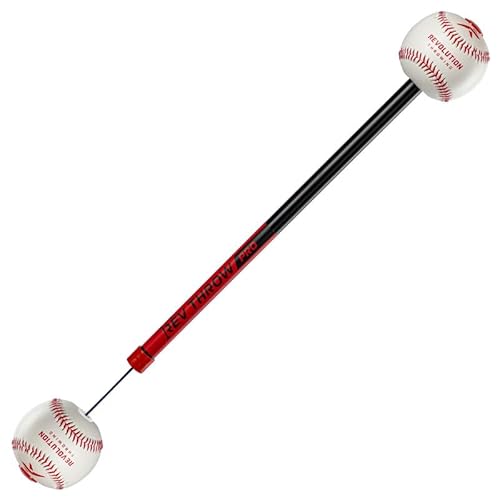
Rev Arm Path Baseball Throwing & Pitching Trainer
- ✓ Immediate feedback
- ✓ Low-stress reps
- ✓ Portable design
- ✕ Limited resistance
- ✕ Requires space
| PrimaryFunction | Throwing trainer for arm path and sequencing with circular motion feedback |
| DrillMotionPattern | Repeatable circular motion to promote rhythm, tempo, and smoother shoulder movement |
| FeedbackMechanism | Instant feedback through movement sensation to enable real-time adjustments |
| UseCase | Warm-ups, cool-downs, and repetition-heavy practice for mechanics improvement |
| Target Sports | Baseball, softball, cricket, water polo, football, volleyball, multisport athletes |
| BrandAndPrice | Revolution Throwing; $84.99 |
The Rev Pro caught my eye the moment I saw its circular motion in action, and you can feel that design intent as soon as you pick it up. You’ll notice the grip and the compact frame fit comfortably in hand, almost inviting you to run through a quick rhythm drill right away.
In use, the feedback is immediate. If your arm path drifts, you’ll feel it in the core of the motion, not just in your shoulder.
The circular pattern gives you hundreds of low-stress repetitions in minutes, which makes warmups feel like a productive, almost meditative sequence.
What surprised me is how easy it is to gauge tempo. The device acts like a coach that never sleeps, guiding your shoulder through smoother sequencing with every pass.
It’s lightweight enough to toss into a bag, yet sturdy enough to handle repeated sessions without wobble.
Comfort is top-notch, too. The textured grip stays secure during fast reps, and the motion feels natural rather than forced.
You’ll notice the rhythm carrying over to actual throws, especially when you’re trying to dial in a clean arm path for both warmups and cooldowns.
If you’re chasing consistency in mechanics, this trainer makes the process feel approachable. It’s a quiet, steady reminder to keep elbow height and shoulder rotation in sync, which is where a lot of errors originate during long practice days.
Overall, it’s straightforward to use, highly actionable, and genuinely helpful for developing muscle memory around throwing mechanics. You’ll likely reach for it regularly as part of your routine, not just as a one-and-done drill.
What Are the Key Mechanics Involved in Throwing a Baseball?
The key mechanics involved in throwing a baseball include several crucial components that contribute to an effective and accurate throw.
- Grip: The grip is fundamental to controlling the baseball and influencing its trajectory. A proper grip involves holding the ball with your fingers across the seams, allowing for better spin and control as you release it.
- Stance: The stance provides the foundation for your throw. Standing with your feet shoulder-width apart and knees slightly bent promotes balance and prepares your body for the kinetic chain involved in the throw.
- Wind-up: The wind-up is the preliminary motion that helps generate momentum. During this phase, the pitcher rotates their shoulders and hips to build energy in the lower body, which is crucial for a powerful throw.
- Stride: The stride is the forward movement of the lead foot and plays a significant role in transferring weight. A strong stride allows for a more explosive throw by utilizing the legs to drive the energy upward through the body.
- Arm Action: Arm action refers to the movement of the throwing arm during the throw. A proper arm path, ideally in a circular motion, ensures that the elbow stays above the shoulder, helping to maximize speed and minimize injury risk.
- Follow-through: The follow-through is the final phase of the throw and is crucial for ensuring accuracy and reducing stress on the arm. A good follow-through allows the body to decelerate smoothly, promoting longevity in a pitcher’s arm health.
How Does the Grip Impact My Throwing Precision?
The grip on a baseball significantly influences throwing precision, as it affects the release, spin, and trajectory of the ball.
- Finger Placement: Proper finger placement on the baseball allows for better control and spin. Fingers should be positioned along the seams, which helps to create a stable grip and enables the pitcher to achieve the desired movement on the ball.
- Pressure Applied: The amount of pressure applied during the grip can impact the ball’s release point and overall accuracy. A firm but relaxed grip can enhance the feel of the ball, allowing for a smoother throw while reducing the risk of losing control.
- Thumb Position: The thumb plays a crucial role in stabilizing the grip and controlling the throw. Positioning the thumb underneath the ball provides balance, aiding in a quicker and more precise release, which is essential for hitting specific targets.
- Grip Style: Different grip styles, such as the four-seam or two-seam grip, can affect the type of pitch being thrown. A four-seam grip generally provides straighter throws with less movement, while a two-seam grip can generate more tail and movement, impacting how the ball reaches its target.
- Wrist and Hand Alignment: The alignment of the wrist and hand during the grip is vital for achieving the optimal throwing motion. Keeping the wrist firm yet flexible allows for better snap during the release, contributing to increased velocity and precision in the throw.
Why Is the Windup Essential for Effective Throws?
The windup is essential for effective throws because it helps generate momentum and tension in the body, which translates into greater power and accuracy during the throw.
According to research published in the Journal of Sports Sciences, a proper windup allows athletes to optimize their kinetic chain, enabling them to use their entire body effectively for throwing motions. This is supported by findings from studies conducted at the American Sports Medicine Institute, which highlight that athletes who utilize a full windup demonstrate superior throwing velocity compared to those who skip this phase.
The underlying mechanism involves the sequential activation of muscle groups. During the windup, a pitcher engages their lower body, core, and upper body in a coordinated manner. This preparation phase stores elastic energy in the muscles, which is released during the acceleration phase of the throw. The timing and synchronization of these muscle contractions enhance the transfer of energy from the legs through the torso and into the throwing arm, resulting in a more powerful throw.
Additionally, the windup serves as a visual cue that prepares both the pitcher and the batter for the impending throw. Research from the International Journal of Sports Science & Coaching indicates that the rhythm and timing established during the windup can influence the batter’s reaction time, providing a strategic advantage. This connection between the windup and performance highlights its critical role in effective throwing mechanics.
What Should My Arm Path Look Like During a Throw?
The best mechanics for throwing a baseball involve several key components that ensure accuracy, power, and reduced risk of injury.
- Initial Position: Start with your feet shoulder-width apart and your knees slightly bent, holding the baseball near your ear with your throwing arm elbow at or above shoulder level.
- Arm Path: Your arm should follow a smooth, circular motion as it moves back and then forward, creating a whip-like effect that maximizes speed and efficiency.
- Elbow Position: Maintain a high elbow position during the throwing motion to ensure the proper alignment and to generate more power while minimizing stress on the shoulder.
- Follow-Through: After releasing the ball, your arm should continue forward in a natural motion, which helps to dissipate energy and prevent injuries.
Starting with the initial position is crucial as it establishes a stable base for your throw, allowing for better balance and control. Holding the baseball close to your ear enables a quick transition into the throwing motion, setting the stage for an effective release.
The arm path should be a fluid, circular trajectory, which helps in generating torque and speed. This motion not only enhances the velocity of the throw but also assists in maintaining proper mechanics throughout the pitch.
Keeping the elbow high during the throw is essential for proper biomechanics; it allows for a more powerful throw while reducing the likelihood of shoulder injuries. An elevated elbow position also enables a more efficient transfer of energy from the body to the ball.
The follow-through is an often-overlooked aspect of throwing mechanics. Continuing the motion of your arm after releasing the ball helps prevent muscle strain and encourages a natural deceleration, which is vital for long-term arm health.
How Can My Follow-Through Technique Enhance Throwing Speed?
The follow-through technique is crucial for enhancing throwing speed when using the best mechanics for throwing a baseball.
- Body Alignment: Proper body alignment during the follow-through ensures that all parts of the body work together effectively. When your shoulders, hips, and feet are aligned correctly, it allows for a smoother transfer of energy from the lower body to the upper body, maximizing the speed of the throw.
- Momentum Transfer: A strong follow-through facilitates the transfer of momentum generated during the pitch. By allowing your arm and body to continue moving in the direction of the throw, you can maintain speed and power rather than abruptly stopping, which can slow down the pitch.
- Arm Path: The follow-through contributes to the optimal arm path, which is essential for velocity and accuracy. If the arm follows a natural arc rather than cutting across the body, it can help release the ball with more force and spin, enhancing the overall speed of the throw.
- Balance and Stability: A well-executed follow-through promotes better balance and stability after the throw. This stability allows the pitcher to remain in control and ready for the next play, which is important for both performance and injury prevention.
- Muscle Relaxation: Following through properly helps relax the muscles after the intense effort of throwing. This relaxation can prevent tightness and fatigue, allowing for quicker recovery and the ability to maintain speed over multiple throws.
Why Is Body Alignment Crucial for Accuracy in Throwing?
Body alignment is crucial for accuracy in throwing because it ensures that the kinetic chain operates efficiently, allowing energy to transfer smoothly from the lower body through to the upper body and ultimately to the arm and ball.
According to research published in the Journal of Sports Sciences, proper body mechanics—specifically alignment of the hips, shoulders, and feet—contribute significantly to the precision of a throw. When a thrower maintains correct posture and alignment, the body can generate maximum force while minimizing the risk of injury, which is essential for sustained performance in baseball (Fleisig et al., 1996).
The underlying mechanism involves the coordination of various muscle groups and joints. When a thrower’s body is aligned appropriately, it allows for optimal rotation and transfer of momentum. This means that the legs initiate the motion, followed by the hips and core, and finally the shoulders and arms. Misalignment disrupts this sequence, leading to inefficient energy transfer and decreased accuracy, as the throw may inadvertently veer off target due to improper angles of release or inconsistent arm motion (Sullivan et al., 2010). Additionally, poor alignment can cause compensatory movements that may hinder performance and increase the likelihood of injury, further emphasizing the importance of mastering the best mechanics for throwing a baseball.
What Drills and Exercises Can Improve My Baseball Throwing Mechanics?
The best mechanics for throwing a baseball can be improved through various drills and exercises that focus on strength, technique, and coordination.
- Long Toss: This drill involves gradually increasing the distance of your throws to build arm strength and improve accuracy. By starting at a shorter distance and progressively moving back, you can enhance your throwing mechanics through a natural motion, allowing your body to adapt to the increased demands of longer throws.
- Shoulder Tube Exercises: Using a shoulder tube or resistance bands, these exercises target the rotator cuff and shoulder muscles essential for a powerful throw. By strengthening these muscles, you can improve your stability and reduce the risk of injury while enhancing your throwing mechanics.
- Weighted Ball Throws: Incorporating a slightly heavier baseball or a specialized weighted ball can help develop arm strength and explosiveness. This exercise should be done with caution, as it emphasizes the throwing motion, allowing you to focus on your mechanics while building strength in the arm and shoulder.
- Step Behind Drill: This drill emphasizes proper footwork and hip rotation by having the player take a step back with the opposite foot before throwing. It helps develop timing and coordination, ensuring that your upper body and lower body work together for an effective throwing motion.
- Kneeling Throws: Performing throws from a kneeling position isolates the upper body and encourages proper mechanics without involving the legs. This drill allows players to focus on arm path and follow-through, promoting better technique and reducing the chances of developing bad habits.
- Mirror Drill: Using a mirror, players can practice their throwing motion while observing their form. This visual feedback helps identify any mechanical flaws in the throwing motion, allowing for immediate adjustments and reinforcement of proper mechanics.
- Rotational Medicine Ball Throws: This exercise involves throwing a medicine ball in a rotational manner to mimic the throwing motion. It not only builds core strength but also reinforces the kinetic chain involved in an effective baseball throw, ensuring that the energy generated by the body is efficiently transferred to the throw.